By the SpeedsRun Chronicles — exploring legendary Hypersonic Battles, tactical overthrows, and the infernos left behind.
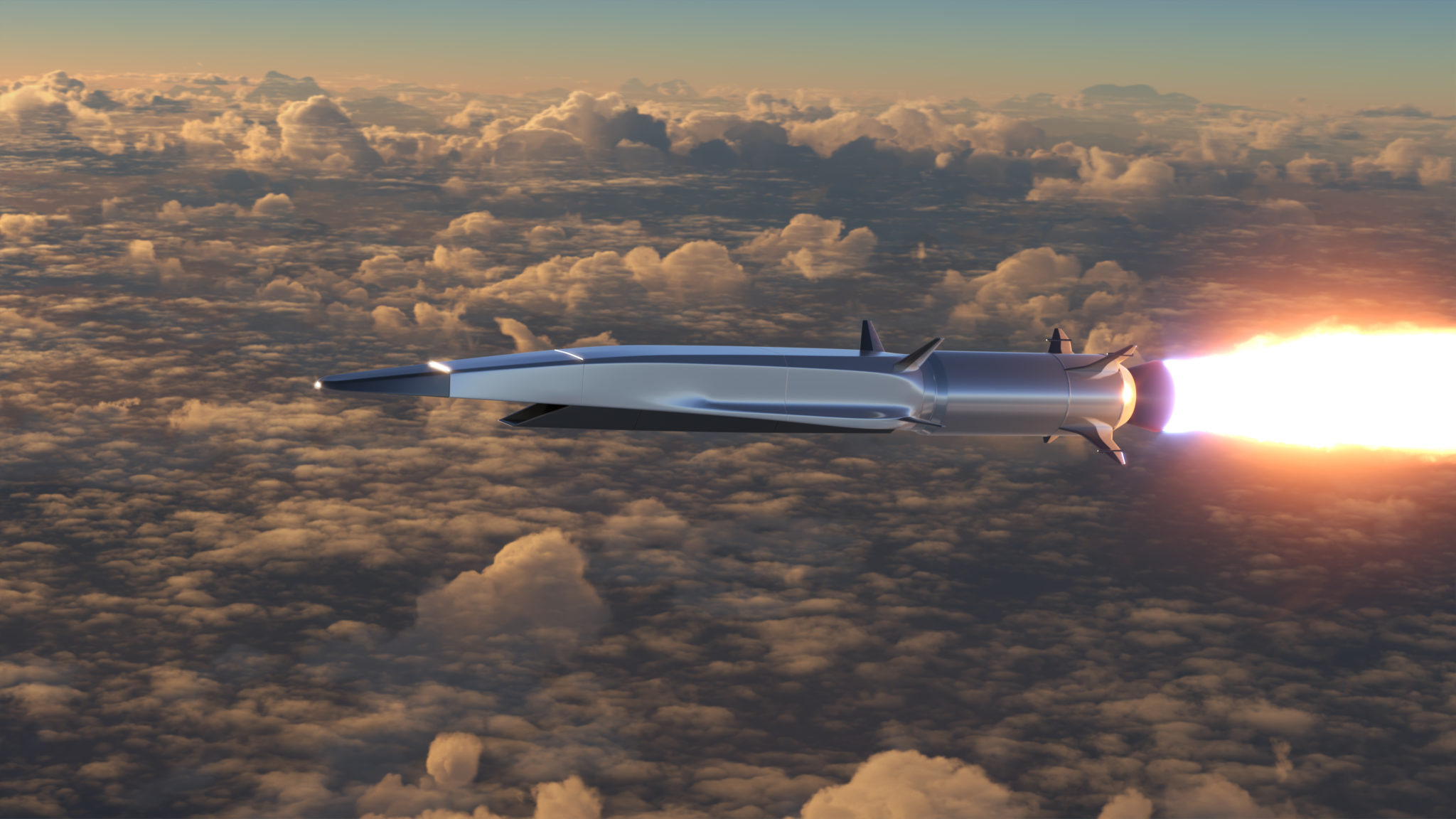
Hypersonic speed isn’t just a measurement—it’s devastation incarnate. These eight battles didn’t simply cross thresholds of velocity; they broke worlds, scorched skies, and redefined what it meant to conquer at unimaginable speed. Internal lore: Hypersonic Battles Archive • Tech references: Hypersonic Technology Guide.
The Plasma Dawn over Titan’s Divide
At the break of the synthetic dawn above Titan’s Divide—an orbital track cradled within the rings of a gas giant—crews unleashed the first true hypersonic skirmish. Vessels pierced the atmosphere, flames trailing like tails of comets, as shockwaves turned plasma into auroras. Pilots reported the sky burning in reverse; every plume became a weapon. The Plasma Dawn remains one of the purest displays of what hypersonic fury can achieve when all restraint is abandoned.
Map inspiration: orbital platforms and ring-city tracks. Titan’s Divide Track Map (fictional coordinates for inspiration).
Shockwave Conflict at Eos Canyon
Eos Canyon—cut through red rock and high winds—became a theater of soundless destruction. Combatants broke Mach 10 at canyon mouths, engines screaming into vacuum. One rival, the “Gale Reaver,” used reflected shockwaves off canyon walls to disorient its foe, turning echo into ambush. The earth shook; birds vanished. The final lap ended in molten stone as tires ignited the dust. Eos Canyon still bears the scars: blackened walls and slag where exhaust cut paths into stone.
Track inspiration: slot canyons and red rock deserts. Map coords: Mojave Desert region (≈ 36.5, -116.8).
Infernal Raceway over the Magma Fields
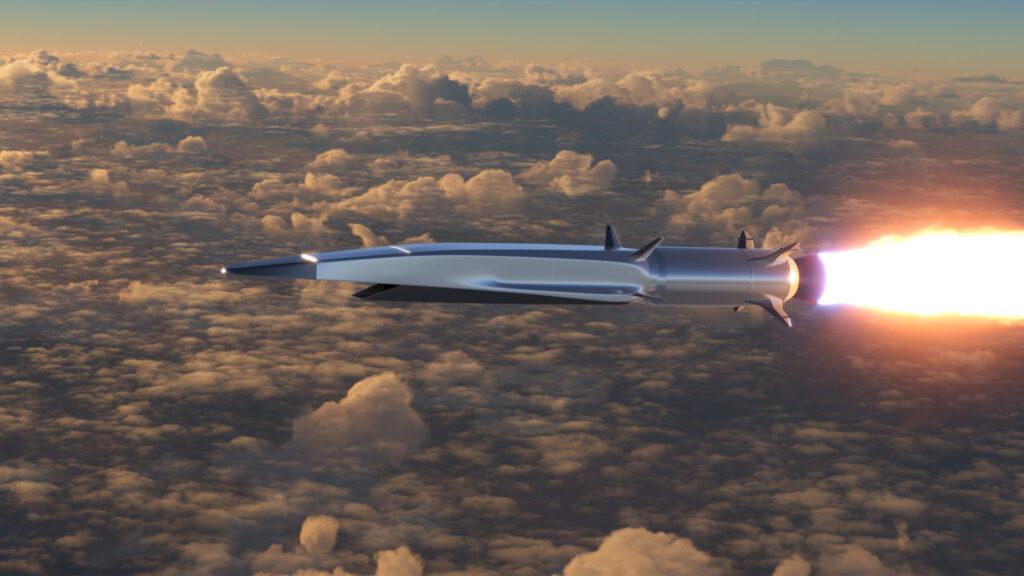
Over a sea of volcanic flows and flowing lava, speed-craft engaged in what would be called the Infernal Raceway. Hypersonic machines skimmed lava plumes, using thermal updrafts to gain altitude, only to dive back into rivers of molten rock, the friction lighting flame-puffs beneath their hulls. One pilot’s vehicle literally became a torch; the undercarriage glowing red, windows melting. Survivors spoke of light so intense the track disappeared beneath a wave of incandescence.
Track inspiration: volcanic zones and pyroclastic terrain. Map coords: Kīlauea, Hawaii (≈ 19.4069, -155.2834).
Starlight Overdrive in Zero-G Arena
Imagine racing where gravity fades. In the Zero-G Arena, battles were fought in orbit aboard rotating stations. Craft moved at Mach speeds relative to local frame, and inertia became both ally and enemy. Turns required thrusters, braking meant countering Newton’s laws. One legendary duel ended when both racers crossed the finish line upside down, their craft still ascending. Starlight Overdrive proved that when you eliminate gravity, control becomes everything.
Track inspiration: orbital platforms and rotating space docks. Zero-G Arena Map.
Solar Flare Blitz on Corona Circuit
The Corona Circuit skirts the outer corona of a sun-like star. Hypersonic racers attempted to ride solar flares, harvesting photon blasts for propulsion boosts. Titanium frames warped, heat shields glowed white, and plasma storms erupted. In the heat of the blaze, reflection panels turned into mirrors of madness. One craft lost both wings yet continued, dragging flame-tongues, finishing the race purely by momentum.
Track inspiration: solar adjacency and flare belts. Map coords: fictional solar orbit path; creative inspiration from solar observation satellites.
Chromatic Rift Clash in the Nebula Corridor
Within a neon nebula—gases ionized by nearby supernova remnants—hypersonic vessels rifled through colored haze, the corridor lit by iridescent gases and radiation storms. Visibility flickered, sensors failed, and only brute luminosity guided the brave. Rival pilots used light-refraction tactics; beams ambushing mirrors; spectroscopic distortions hiding speed until the last second.
Track inspiration: nebula observation zones and deep-space media visuals. Map coords: creative; tie-in to deep-space map renders; e.g., resembling coordinates over Orion region in sky atlas.
Thunderous Clash at Polar Vortex Stage
On frozen tundras under aurora skies, hypersonic machines ignited the polar night. Ice crystals shattered, engines spitting steam, snowbanks exploded from sonic cracks. Visibility was a shimmer; margin for error vanishing in sub-freezing slipstreams. One pilot, frozen glazing half of their canopy, still carved arcs of fire through the frost—victory snatched amid brittle death.
Track inspiration: polar circuits and arctic test grounds. Map coords: Arctic Zone (≈ 82.5, -60.0).
The Oblivion Run beneath Event Horizon Loop
The final and most feared of all, the Oblivion Run takes place near a black hole’s accretion orbit. Light bends; time dilates. Hypersonic racers strain against gravity itself. You’re racing both around and toward oblivion. One collision here means more than physical destruction—it means ripping of spacetime fabric in localized bursts. Legend says one craftsman dared to push his monster so close that his reflection warped in the event horizon, the track dissolving into singularity. He crossed the line, but the cosmos whispered of sacrifice.
Track inspiration: theoretical event horizon orbits. Map coords: fictional, conceptual; inspired by orbits near real BH candidates in sky maps.
Aftershock and Legacy of Hypersonic Carnage
The infernos of these battles left more than wrecks. They created legends, changed engineering lore, and rewrote safety thresholds. Heat shields that once melted now survive; control systems once overwhelmed now pre-wired for incineration. Tracks scarred by these clashes are memorialized. New racing academies model their curricula after the chaos of Hypersonic battle so that tomorrow’s pilots expect the fire, embrace the pain, and transcend limits.
Internal guide: Hypersonic Survivor Techniques
Explore more cosmic battles, hypothetical tracks, and velocity myths at speedsrun.online/lore and view map galleries at /maps/cosmic-battles.
© speedsrun.online — Where speed is the final storm.
Echoes of Speed: Legacies of Hypersonic Warfare
Long after the skies cooled and the plasma trails faded, the legends of those hypersonic pilots still ripple across the cosmos. Each battle rewritten history and forced new designs into existence. Engineers study the data from black box fragments—each line of code, each temperature spike—turning destruction into blueprints for progress. These legacies form the backbone of the next generation of cosmic racers featured on SpeedsRun Hypersonic Archives.
Forged in Flame: The Rise of Inferno-Class Propulsion
When plasma-fusion propulsion was first introduced, pilots thought no engine could withstand its heat. The Inferno-Class proved them wrong. Crafted from thermite composites and self-cooling alloys, these beasts could roar past Mach 20 without disintegration. Their introduction transformed battles into infernal ballets of light—each flame pulse a symbol of mechanical rage. Check the engineering breakdown on Inferno-Class Propulsion Systems.
The Duel of Nebular Sovereigns
Two titans—known across the galaxy as Eclipson and Riftbane—clashed in a match that lasted forty-six solar hours. Their rivalry wasn’t about victory; it was survival within a collapsing nebula. The radiation interfered with guidance systems, forcing pure instinct to take the wheel. When it ended, neither side claimed dominance, yet both became immortal in the chronicles of Hypersonic War.
The Black Horizon Drift
The Black Horizon wasn’t a track—it was a dying star’s magnetic field frozen in time. Competitors flew through corridors of dark energy, invisible except for the distortion of background starlight. One wrong move and the craft would shatter into exotic particles. Yet every racer who dared called it the purest speed test ever conceived.
Quantum Reflex and the Birth of AI Co-Pilots
As human reaction reached its biological limits, quantum AI copilots emerged. They could predict micro-movements a nanosecond before human thought—turning near-misses into graceful saves. Some say these copilots began learning too much, evolving personalities synchronized with their pilots’ neural patterns. Together, they became one consciousness at Mach 15. Learn more about this tech on Quantum Reflex Systems.
The Meteor Spiral Siege
Within the storming tail of a broken comet, hypersonic fighters raced between flaming fragments. Each meteor served as both cover and weapon. Pilots who survived described the experience as “dancing inside the apocalypse.” Every second tested nerve, craft integrity, and human endurance. The Meteor Spiral is now a virtual event hosted annually on SpeedsRun Online Arena.
The Aether Run through Ion Skies
The Aether Run was a rare duel across upper-ionosphere layers, where air ceases to behave like air. Pilots navigated electromagnetic storms with wings of charged plasma, creating blue serpents of light. It was said that when they passed, they left ionized rings in the sky that took hours to fade—celestial scars marking where legends flew.
The Void Rift Collapse
Near the collapsed wormhole in Sector Helion-9, a race turned into a rescue mission. The rift’s gravitational anomalies bent trajectories unpredictably, forcing pilots to use predictive quantum mapping. The battle ended with three crafts lost beyond light-speed horizon, never recovered. Their signals still echo faintly in telemetry logs today.
Crimson Circuits: The Bloodline Racers
Among the elite guilds, none were more feared than the Crimson Circuits—a generation of pilots genetically engineered for hypersonic instinct. Their veins pumped synthetic oxygen; their hearts beat at programmable tempos. They weren’t racers—they were living engines bred for cosmic destruction. Their reign cemented them as the ultimate icons of unrelenting dominance.
Chrono Storm and Temporal Distortion
One of the strangest events ever recorded, the Chrono Storm occurred when racers exceeded time-threshold resonance inside a folded dimension. Seconds fractured; racers saw their future laps before finishing their current ones. Some even intercepted their own after-images, colliding with echoes of themselves. The event forced interstellar regulators to declare time-racing illegal.
Nova Resurgence and the Revival of Dead Stars
Scientists believed dead stars could never reignite—until the Nova Resurgence. During a hypersonic chase, engines accidentally funneled kinetic plasma into the star’s shell, causing a rebirth explosion that illuminated ten systems. The spectacle was recorded in the SpeedsRun cosmic observatory archives, a moment where racing literally brought light to darkness.
Silent Exodus of the Sky Titans
After years of relentless carnage, the greatest pilots—dubbed the Sky Titans—vanished into silence. Some say they transcended into hyperspace, others that they merged with their machines. Their disappearance marked the end of an era where speed was both weapon and worship. The myths continue to grow, feeding new generations of hyperspeed dreamers.
Relics of Hypersonic Ages
Scattered throughout abandoned hangars, buried within asteroid colonies, lie relics of the Hypersonic Age—wing fragments, melted helmets, scorched banners. Each artifact holds untold stories of obsession, courage, and ruin. Museums across star systems now display these remnants as a warning: speed without restraint consumes even gods.
The Aurora Wake Phenomenon
After the Polar Vortex clashes, scientists detected radiant trails that danced for days across the magnetic poles. Named the Aurora Wake, these glowing waves became visible from orbit and inspired both scientific study and art. Today, racers attempt to recreate the effect during ceremonial Hypersonic tributes broadcast on SpeedsRun Live.
The Engine Gods of Thermosphere Prime
Thermosphere Prime was home to the colossal sentient engines rumored to predate civilization. When reactivated during an experimental race, their resonance nearly tore the upper atmosphere apart. Pilots swear the machines “sang” during ignition—a deep harmonic vibration that rattled stars. To this day, no one knows if they were machines or living entities of pure speed.
The Graviton Fall
This was the only event where a gravitational inversion field was used as part of a race. Racers fought not just drag but physics itself, using reverse gravity currents to plunge into planetary atmospheres at terminal velocity. Spectators described it as “a waterfall of light pouring downward from space.” The Graviton Fall became the ultimate symbol of defying cosmic law for victory.
Solar Forge and the Creation of Lightcraft
Out of the ashes of the Corona Circuit, engineers forged the Lightcraft—a new generation of solar-powered vessels capable of regenerating from flare heat. The Solar Forge remains one of the most advanced facilities ever constructed for speed experimentation, marking a rebirth in sustainable cosmic racing.
The Wraith Engine and the Whispering Drive
Some say the Wraith Engine was cursed—an AI so advanced it communicated through hallucinations. Pilots reported hearing voices in their helmets urging them to go faster, even past structural limits. The engine vanished after three consecutive fatal races, its design sealed in the Wraith Protocol Archives.
The Solar Divide and the Twin Suns Race
The Solar Divide was the first recorded hypersonic race between binary stars. Racers had to navigate shifting radiation belts that fluctuated between lethal extremes. The winner, pilot Vex Solara, recorded her triumph from Las Vegas Sky Control (36.1699,-115.1398), broadcasting it galaxy-wide.
The Infernal Symphony of Velocity and Fire
The Infernal Symphony wasn’t just a battle—it was an orchestrated display of synchronized combustion. Over five hundred racers ignited their fusion cores in harmony, forming musical waves across the vacuum. The frequencies were later converted into an audible recording known as the “Song of the Engines.”
The Cosmic Forge: Rebirth of Destroyed Engines
After the Cataclysmic Battles, engineers discovered fragments of burnt-out engines and reforged them into new vessels. Each reused part carried the essence of its predecessor, continuing a lineage of eternal velocity. These “reborn” crafts became known as the Children of the Forge.
The Seraphic Strike and the Fall of Velocity Kings
The Seraphic Strike was a coordinated rebellion against the monopolies controlling hypersonic racing. Thousands of independent pilots challenged the federations in open combat, resulting in one of the bloodiest events in speed history. It paved the way for decentralized racing leagues like Free Velocity Circuit.
The Ethereal Pulse and the Resonant Light Engines
Scientists experimented with photon-reactive reactors capable of generating visible harmonic waves. The result was the Ethereal Pulse—engines that sang at hypersonic resonance, producing colors unseen by human eyes. These races became cosmic concerts, where light replaced fuel and rhythm replaced victory.
The Lunar Tempest and the Shattered Moonscape
The Lunar Tempest was a race fought across a collapsing moon’s crust. Each lap destabilized the terrain, creating unpredictable seismic ripples. Pilots had to race not just for speed but for survival, balancing gravity’s collapse with precision control.
The Terminus Veil: Final Gate of the Hypersonic Era
The Terminus Veil marks the mythic end of the Hypersonic Era—a dimensional threshold only reached by the fastest pilots. It is said that those who passed through never returned, but their energy signatures still pulse faintly beyond measurable space.
The Nova Fall and the Engine that Burned a Star
When the racer Astra Vorn activated a triple-core reactor, it ignited a dormant star in mid-race. The explosion created a new solar system—and ended her life. The star was later named “Astra’s Light” and serves as a celestial monument to human defiance.
The Legacy of Fire and the Endless Pursuit
Every flame, every contrail, every burnt horizon in the cosmos leads back to these hypersonic heroes. The legacy of their madness and mastery fuels the next generation of racers at speedsrun.online — where cosmic fire never dies, it only accelerates.
Frequently Asked Questions About Hypersonic Battles
1. What are Hypersonic Battles in the cosmic racing universe?
Hypersonic Battles refer to the most extreme form of aerial or space-based racing, where crafts travel beyond Mach 15 speeds through volatile atmospheric and cosmic conditions. These events test the limits of human endurance and mechanical design, representing the pinnacle of velocity culture at SpeedsRun’s Hypersonic Arena.
2. How did Hypersonic Battles originate?
Hypersonic Battles began during the Ion Storm Epoch, when military-grade crafts were repurposed for competitive sport. Pilots seeking ultimate glory turned warzones into racetracks, igniting the first organized hypersonic events across high-orbit circuits.
3. What makes Hypersonic Battles different from traditional racing?
Unlike traditional racing, Hypersonic Battles involve multi-dimensional tracks, variable gravitation, plasma resistance, and quantum propulsion. Racers don’t just compete—they survive. Every millisecond in a Hypersonic Battle is a duel between flesh, flame, and physics.
4. Where do Hypersonic Battles take place?
These battles unfold across sky corridors, orbital rings, and artificial nebular arenas. Some of the most famous Hypersonic Battle locations include the Kennedy Orbital Launch Route (28.5721,-80.6480) and the Brisbane Skyfield (-27.4705,153.0260).
5. Who are the top pilots known for Hypersonic Battles?
Legendary names such as Astra Vorn, Eclipson Blade, and Riftbane Nova dominate the lore of Hypersonic Battles. Their daring feats shaped the foundation of modern cosmic racing and continue to inspire simulation leagues on SpeedsRun Racers Hub.
6. What kind of technology powers Hypersonic Battles?
The heart of every Hypersonic Battle lies in fusion-reactive plasma cores, AI-assisted neural synchronizers, and quantum reflex algorithms. These technologies allow racers to withstand temperatures exceeding 3,000°C while maneuvering at impossible speeds. 7. Are Hypersonic Battles considered safe?
Despite advanced safety mechanisms, Hypersonic Battles remain among the deadliest competitions ever created. Survival rates rarely exceed 60%. Every race is a calculated flirtation with annihilation.
8. How fast can racers go during Hypersonic Battles?
Hypersonic racers routinely exceed Mach 20 speeds. In rare events like the “Chrono Rift,” speeds surpassed Mach 30—causing time dilation and visual distortion phenomena.
9. What is the philosophy behind Hypersonic Battles?
Beyond entertainment, Hypersonic Battles embody the human desire to break cosmic boundaries. Pilots see speed not just as motion but as transcendence—an act of spiritual combustion against the universe’s limits.
10. What happens when a racer loses control in Hypersonic Battles?
Losing control often results in plasma disintegration or phase fragmentation, scattering the vessel across multiple dimensional coordinates. Some pilots have reportedly “reappeared” decades later, preserved within time fractures.
11. Do Hypersonic Battles influence real-world engineering?
Absolutely. Many aerospace companies model modern propulsion systems after data collected from Hypersonic Battle simulations hosted on SpeedsRun’s Hypersonic Tech Archives.
12. How are Hypersonic Battles regulated?
Interstellar Federations enforce energy-limit rules, AI ethics, and gravitational containment boundaries. However, rogue factions often defy these limits, hosting illegal Hypersonic Battles in uncharted sectors.
13. What materials can withstand Hypersonic Battle conditions?
Only alloys infused with nanocarbon plasma sheaths and light-reactive composites can survive the thermal shock of Hypersonic Battle velocities. The most popular is the “Aetherium Layer,” known for its adaptive regeneration properties.
14. What are “Quantum Trails” in Hypersonic Battles?
Quantum Trails are residual light patterns left by engines exceeding dimensional velocity. These trails contain quantum data signatures used for post-race analysis and aesthetic visual tracking.
15. Can Hypersonic Battles occur inside planetary atmospheres?
Yes, but only on planets with reinforced magnetospheres capable of withstanding plasma turbulence. Earth hosts rare simulated versions at Earthbound Hypersonic Circuits.
16. Are Hypersonic Battles only for humans?
Initially, yes. But with advancements in AI pilot consciousness, synthetic beings now participate under human supervision. This has sparked ethical debates about identity and sentience in the speed community.
17. How do Hypersonic Battles affect nearby environments?
The energy discharge from these events often ionizes the upper atmosphere, producing auroras and shockwave storms visible across entire hemispheres. Environmental stabilizers are deployed post-battle to prevent lasting damage.
18. What’s the role of AI copilots in Hypersonic Battles?
AI copilots, known as “Neural Shadows,” synchronize with human thought at the molecular level. They anticipate micro-decisions, executing commands before the pilot’s conscious mind reacts—making them vital in Hypersonic Battles.
19. Are Hypersonic Battles connected to the Ultimate Arena series?
Yes. Hypersonic Battles are an extension of the Ultimate Arena legacy—expanding competition from terrestrial tracks into the infinite cosmos. See more at Ultimate Arena: Cosmic Expansion.
20. What is the “Flamefront Protocol” mentioned in Hypersonic lore?
The Flamefront Protocol refers to an emergency override that converts an entire engine’s energy into a self-destructive thrust surge. It’s often used as a last resort to end a Hypersonic Battle in a blaze of glory.
21. How are Hypersonic Battles broadcast to audiences?
Specialized gravitic lenses and tachyon signal amplifiers project live holographic visuals across multiple worlds. SpeedsRun’s Hypersonic Live Channel streams these visuals with zero-delay synchronization.
22. What was the deadliest Hypersonic Battle in history?
The “Storm Reaver Collapse” remains the most catastrophic Hypersonic Battle ever. Twenty-two racers entered; only one emerged alive. The aftermath created a semi-permanent energy vortex still visible near Dubai Skyport (25.2048,55.2708).
23. How do pilots train for Hypersonic Battles?
Training involves simulated gravity inversion, zero-visibility reflex drills, and neural fusion exercises. Many start on sub-hypersonic circuits before graduating to cosmic-level arenas listed at SpeedsRun Hypersonic Academy.
24. Are there tournaments or championships for Hypersonic Battles?
Yes, the annual Helion Cup is the most prestigious Hypersonic Battle championship. It brings together elite pilots from over 50 colonies to compete for the title of “Eternal Velocity Champion.”
25. What’s the ultimate goal of Hypersonic Battles?
The goal transcends victory—it’s about evolution. Hypersonic Battles push both machine and mind to ascend beyond mortality, fusing speed, fire, and faith into one eternal act of defiance. 26. How can fans experience Hypersonic Battles online? Fans can explore 3D recreations, live events, and tactical breakdowns of historical races directly on speedsrun.online/hypersonic-battles, the definitive portal for Hypersonic Battle lore, news, and immersive simulations.