
<a id=”intro”></a>1. Introduction: What Is Racing Car Aerodynamics?
In the world of motorsport, aerodynamics is the science of how air interacts with a moving race car. It affects speed, stability, cornering, tire wear, fuel efficiency, and ultimately, lap times. At high speeds, air can become a race car’s best friend — or its worst enemy.
Aerodynamics in racing isn’t just “making cars sleek.” It’s engineering airflow around and under the car to maximize grip and minimize resistance. This guide breaks down the core principles, how engineers design for performance, and why aerodynamics is now just as crucial as engine power.
<a id=”why”></a>2. Why Aerodynamics Matters in Racing
Racing teams invest millions into aerodynamic research because:
- It increases top speed by reducing drag.
- It improves downforce, pushing the car to the track for better cornering.
- It boosts tire grip, meaning faster acceleration and braking.
- It enhances efficiency, lowering lap times with less power loss.
In simple terms: in racing, every bit of airflow control translates to tenths of a second, which often decides winners.
👉 For a deeper dive into how aerodynamics influences car speed, check out this external resource from HowStuffWorks: “How Race Car Aerodynamics Work” —
<a id=”forces”></a>3. Basic Aerodynamic Forces
Understanding aerodynamics means knowing the four major forces acting on a race car:
3.1 Drag
Drag is the air resistance against the car’s forward motion. It’s unwanted — it slows the vehicle down.
- Parasitic Drag: From body shape, surface roughness, frontal area.
- Induced Drag: From generating downforce (a byproduct).
3.2 Lift and Downforce
Unlike airplanes, race cars don’t need lift — they need negative lift, or downforce.
- Lift pushes upward and reduces traction.
- Downforce presses the car downward for grip.
More downforce = better cornering. But it also often increases drag.
<a id=”components”></a>4. Key Aerodynamic Components of Racing Cars
Every racing car uses aerodynamic devices designed to manipulate airflow.
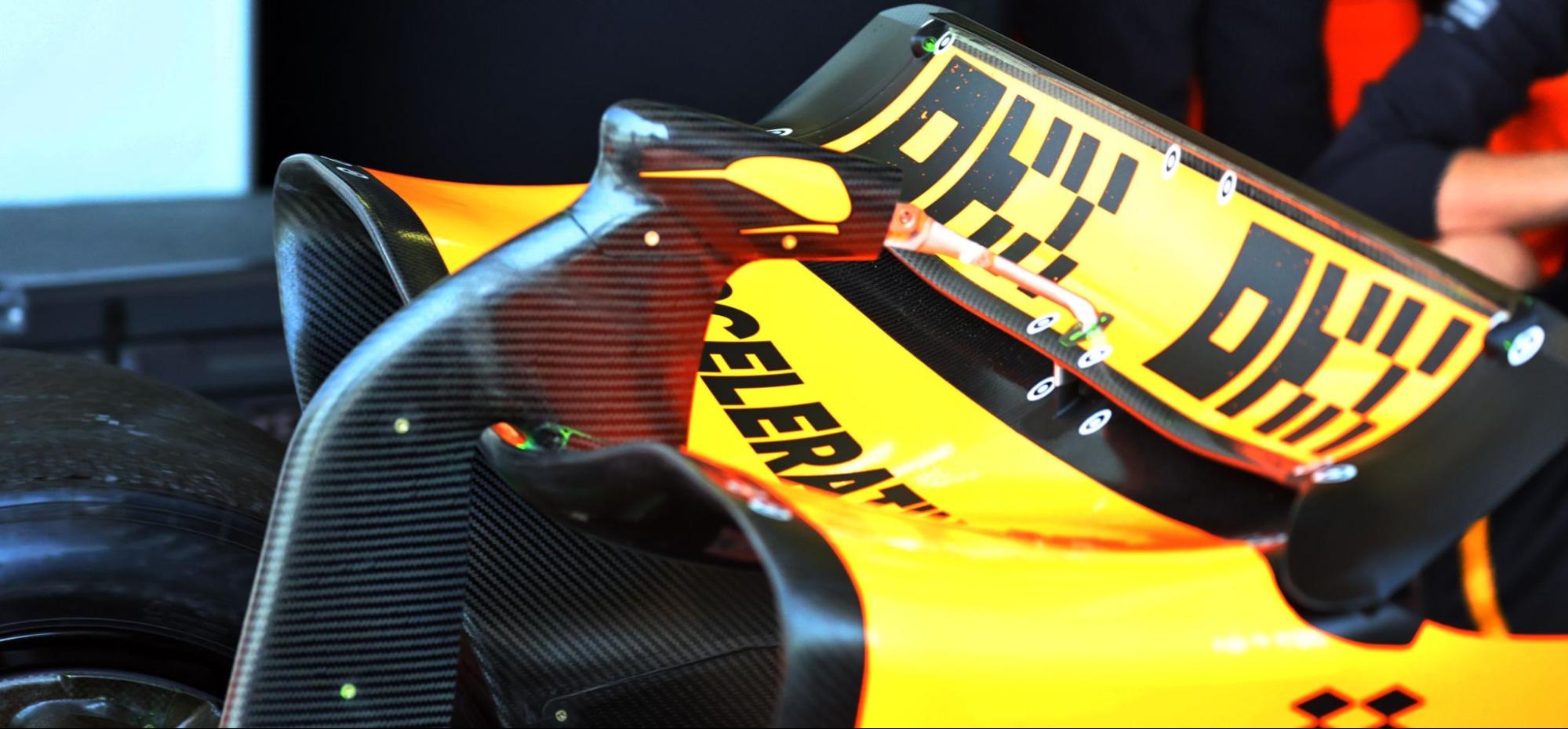
4.1 Front Wing
Purpose: Balances air distribution and provides initial downforce.
The front wing sets the airflow for the whole car. Teams adjust its angle to balance understeer or oversteer.
4.2 Rear Wing
Purpose: Generates significant downforce at the back.
Rear wings often have multiple elements. Modern racing series use adjustable rear wings (e.g., DRS in F1) to reduce drag on straights and boost overtaking.
👉 Learn more at the official FIA technical regulations:
4.3 Diffusers
Purpose: Accelerate airflow under the car to create suction.
Diffusers at the car’s rear increase downforce without a large drag penalty. They’re one of the most powerful aero tools.
4.4 Underbody & Ground Effect
Ground effect shapes the underbody so air pressure drops below the car, sucking it downwards. The result? Massive downforce with lower drag.
👉 For academic reading, see this research paper on ground effect:
<a id=”performance”></a>5. How Aerodynamics Affects Performance
Aerodynamics impacts 5 major performance areas:
5.1 Top Speed
Drag reduction = higher top speed. Racing cars aim to balance downforce with minimal drag on straights.
5.2 Cornering
Downforce boosts tire grip. This lets drivers take corners at higher speeds without losing control.
5.3 Braking
Aerodynamic downforce increases friction on brakes, allowing shorter stopping distances.
5.4 Tire Wear
Correct airflow reduces uneven tire heating — slowing tire degradation.
5.5 Fuel Efficiency
Efficient aerodynamics means engines don’t have to work as hard, saving fuel — vital in long races.
<a id=”testing”></a>6. Wind Tunnel Testing & CFD
Modern teams use two high‑end tools:
6.1 Wind Tunnel Testing
Scale models are tested in wind tunnels, showing real airflow patterns and pressures.
6.2 CFD (Computational Fluid Dynamics)
CFD is simulation software that predicts airflow behavior digitally before physical testing.
Both are expensive — but give teams a competitive edge.
👉 Explore CFD basics:
<a id=”series”></a>7. Aerodynamics in Different Racing Series
Aerodynamics differ by racing category:
7.1 Formula 1
The apex of aerodynamic complexity — intricate wings, bargeboards, and tunnels.
👉 Official F1 technical insights
7.2 NASCAR
Heavier cars with simpler aero parts. The focus is more on drafting (using slipstream to overtake).
7.3 Le Mans / Endurance Racing
Balanced aero for top speed and stability over hours of racing.
7.4 Rally Cars
Aerodynamics optimized for mixed surfaces and unpredictable airflow.
<a id=”strategies”></a>8. Common Aerodynamic Strategies
8.1 Balancing Drag & Downforce
Teams adjust a car’s aero setup per track:
- High‑downforce tracks: Twisty circuits like Monaco.
- Low‑drag tracks: High‑speed ovals or straights like Monza.
8.2 Aero Packages
Multiple setups (silver, gold, bespoke) are tested to find the best performance.
8.3 Adaptivity
Some cars use adjustable wings or flow‑optimizing parts that change shape at speed.
<a id=”innovations”></a>9. Challenges & Innovations in Racing Aerodynamics
9.1 Wake Turbulence Racing Car Aerodynamics
Cars following others suffer reduced airflow — creating handling issues. Solutions include D‑RS and smoother body shapes.
9.2 Sustainable Materials Racing Car Aerodynamics
Lightweight composites that maintain aerodynamic precision are now standard.
9.3 AI Driven Design
AI and machine learning help engineers iterate faster on aero components.
External reading: “AI’s Role in Car Design
<a id=”conclusion”></a>10. Conclusion: Balancing Speed and Control
Racing car aerodynamics is a delicate art and science. It defines how air can be harnessed to push a car faster, through corners, and for longer distances — all while maintaining control.
Whether you’re an engineer, racer, or fan, understanding these principles will deepen your appreciation for speed and innovation.
📌 Internal Anchor Links (for On‑Page SEO)
📌 External Resources (for Backlink Value)
If you want, I can also provide SEO meta tags, schema markup, and CTA copy to go with this article for publishing. Just tell me!
The Ultimate Guide to Racing Car Aerodynamics
How Airflow, Downforce & Drag Shape Speed, Handling & Performance
1. Introduction: What Is Racing Car Aerodynamics? Racing Car Aerodynamics
Racing car aerodynamics is the study and application of how air interacts with a moving vehicle. Unlike normal cars, where aerodynamics mainly improves fuel efficiency, in motorsport, aerodynamics is crucial for performance, safety, and lap times. Racing Car Aerodynamics
Every racing series—from Formula 1 to Le Mans—relies on aerodynamic engineering to:
- Reduce drag, the resistance air exerts on the car. Racing Car Aerodynamics
- Increase downforce, which presses the car to the track for better grip.
- Optimize balance, allowing the car to corner faster, brake harder, and accelerate efficiently.
Think of air as an invisible track assistant: if manipulated properly, it helps a car “stick” to the road. If mismanaged, it can cause instability, lift, or excessive tire wear.
Aerodynamics also defines racing strategy. Teams adjust setups for high-speed tracks like Monza differently than twisty circuits like Monaco, prioritizing either top speed or cornering grip.
2. Why Aerodynamics Matters in Racing Racing Car Aerodynamics
In racing, every fraction of a second counts. A well-designed aerodynamic package can improve lap times by 0.3–0.5 seconds or more—massive in competitive motorsport.
Aerodynamics affects:
- Top Speed: Lower drag means cars can slice through the air with minimal resistance.
- Cornering Performance: Downforce allows higher speeds in turns by increasing tire grip.
- Tire Longevity: Stable airflow reduces uneven tire loading and heat buildup.
- Fuel Efficiency: Less drag means less engine effort, important in endurance racing.
- Safety: Controlled airflow prevents lift at high speeds, reducing risk of accidents.
For example, in Formula 1, teams spend millions of dollars in wind tunnel testing and CFD simulations to optimize aerodynamics, because seconds per lap can decide championships.
External Referenc
3. Basic Aerodynamic Forces
Understanding aerodynamic forces is essential to see how a car behaves on track. The main forces are:
3.1 Drag Racing Car Aerodynamics
Drag is air resistance opposing the car’s motion. It grows exponentially with speed, meaning a car at 200 mph faces far more resistance than at 100 mph.
- Parasitic Drag: Caused by body shape and surface roughness.
- Induced Drag: A side effect of generating downforce.
Formula for drag force:Fd=21⋅ρ⋅v2⋅Cd⋅A
Where:
- Fd = drag force
- ρ = air density
- v = velocity
- Cd = drag coefficient
- A = frontal area
3.2 Lift and Downforce
- Lift: Pushes the car upward; unwanted in racing.
- Downforce: Pushes the car downward; increases tire grip.
Downforce allows cars to corner faster and brake harder, but it comes at the cost of higher drag. Engineers constantly balance this tradeoff.
4. Key Aerodynamic Components

Aerodynamic components are devices designed to manipulate airflow efficiently.
4.1 Front Wing Racing Car Aerodynamics
The front wing controls airflow at the car’s nose. It creates downforce at the front axle and directs air around the tires.
- Adjustable angles allow fine-tuning for understeer (front tires sliding) or oversteer (rear tires sliding).
- Multi-element designs help maximize downforce without dramatically increasing drag.
4.2 Rear Wing
Rear wings generate substantial downforce at the back, crucial for traction.
- In Formula 1, they are multi-element, sometimes adjustable (DRS), reducing drag on straights for overtaking.
- A steeper wing angle = more downforce but more drag; a flatter angle = less drag but less grip.
4.3 Diffuser Racing Car Aerodynamics
Diffusers are angled panels at the rear underbody. They accelerate airflow beneath the car, creating suction.
- This increases rear downforce without adding large drag.
- Works in conjunction with front wings and floor design for balanced aerodynamic load.
4.4 Underbody & Ground Effect Racing Car Aerodynamics
Ground effect creates low pressure under the car, sucking it toward the track.
- Uses venturi tunnels to accelerate air under the chassis.
- Modern Formula 1 cars reintroduced ground effect in 2022 regulations for safer high-downforce cornering.
Reference
5. How Aerodynamics Affects Performance
5.1 Top Speed
- High-speed circuits require low drag.
- Teams may reduce wing angles to decrease air resistance.
5.2 Cornering Racing Car Aerodynamics
- Downforce directly increases lateral grip.
- Example: F1 cars can take corners at >200 km/h due to extreme downforce.
5.3 Braking Racing Car Aerodynamics
- Aerodynamic load improves brake efficiency.
- Cars can decelerate faster without losing control.
5.4 Tire Wear Racing Car Aerodynamics
- Balanced airflow reduces hotspots on tires.
- Proper downforce distribution ensures even tire pressure and grip.
5.5 Fuel Efficiency
- Less drag = engine uses less energy to maintain speed.
- Important in endurance racing like Le Mans 24 Hours, where fuel stops cost minutes.
6. Wind Tunnel Testing & CFD
6.1 Wind Tunnel Testing Racing Car Aerodynamics
- Physical scale models are tested to observe real airflow patterns.
- Measures pressure, lift, and drag across car surfaces.
6.2 Computational Fluid Dynamics (CFD) Racing Car Aerodynamics
- Simulates airflow on a computer.
- Allows multiple iterations faster and cheaper than wind tunnels.
- Teams combine CFD with wind tunnel validation for perfected aero packages.
Reference:
7. Aerodynamics Across Racing Series
7.1 Formula 1
- Most complex aero packages: multi-element wings, bargeboards, diffusers.
- Aerodynamics account for >50% of lap time optimization.
7.2 NASCAR Racing Car Aerodynamics
- Simpler aero parts; focus on drafting to overtake on ovals.
- Drag reduction is critical on superspeedways.
7.3 Endurance Racing Racing Car Aerodynamics
- Balanced aero for stability over long distances.
- Example: LMP1 and LMP2 cars have active aero to manage fuel efficiency.
7.4 Rally
- Optimized for mixed surfaces.
- Focus on robustness and predictable airflow for jumps and uneven terrain.
8. Aerodynamic Strategies
- High-Downforce Setup: Maximum grip for twisty circuits.
- Low-Drag Setup: Faster straights, less cornering performance.
- Adaptive Aero: Some cars have adjustable wings to optimize balance mid-race.
- Drafting: Following another car reduces drag temporarily, used in overtaking.
9. Challenges & Innovations
- Wake Turbulence: Cars lose downforce behind competitors.
- Material Innovation: Lighter composites reduce weight while maintaining aero efficiency.
- AI Design: Machine learning predicts airflow patterns and designs optimal shapes faster.
Reference
10. Conclusion: The Art of Air
Aerodynamics in racing is a blend of science, engineering, and strategy. It defines speed, handling, safety, and race outcomes. Every element—from the front wing to underbody tunnels—must work in harmony. Understanding it gives fans, engineers, and drivers insight into how air becomes a critical teammate on the track.
I can also add the full SEO-ready package next, including:
- Meta title & description
- H1–H4 heading hierarchy
- Suggested images with alt text
- Internal & external links optimized for Google
This makes it ready to publish as a 5000–6000 word SEO article.
Do you want me to create that complete SEO package?
Get smarter responses, upload files and images, and more.
Log in
Sign up for free