Racing cars have always symbolized speed, innovation, and pushing the boundaries of what’s mechanically possible. From humble beginnings on dusty roads to modern machines capable of exceeding 230 mph, the journey of the racing car mirrors the evolution of automotive engineering itself.
In this comprehensive guide, we’ll explore how racing cars have evolved over more than a century — covering technological advancements, race types, iconic milestones, and what the future holds.
Table of Contents
- Introduction: What Defines a Racing Car
- The Birth of Motor Racing (1887–1920)
- Golden Age of Racing: 1920s–1950s
- The Jet Age & Aerodynamics (1960s–1970s)
- Ground Effects & Safety Revolution (1980s–1990s)
- The Era of Electronics (2000s)
- Hybrid & Sustainable Future (2010s–Today)
- How Racing Cars Impact Road Cars
- Iconic Racing Cars Through History
- The Future of Racing Cars
- Conclusion
1. Introduction: What Defines a Racing Car
A racing car is a vehicle purpose-built or modified for competitive motorsport. It’s optimized for speed, handling, acceleration, and safety rather than everyday practicality.
Racing cars differ from standard vehicles in many ways: lighter weight, powerful engines, aerodynamic designs, and advanced suspension systems. They push technology boundaries — many innovations eventually trickle down to road cars.
2. The Birth of Motor Racing (1887–1920)
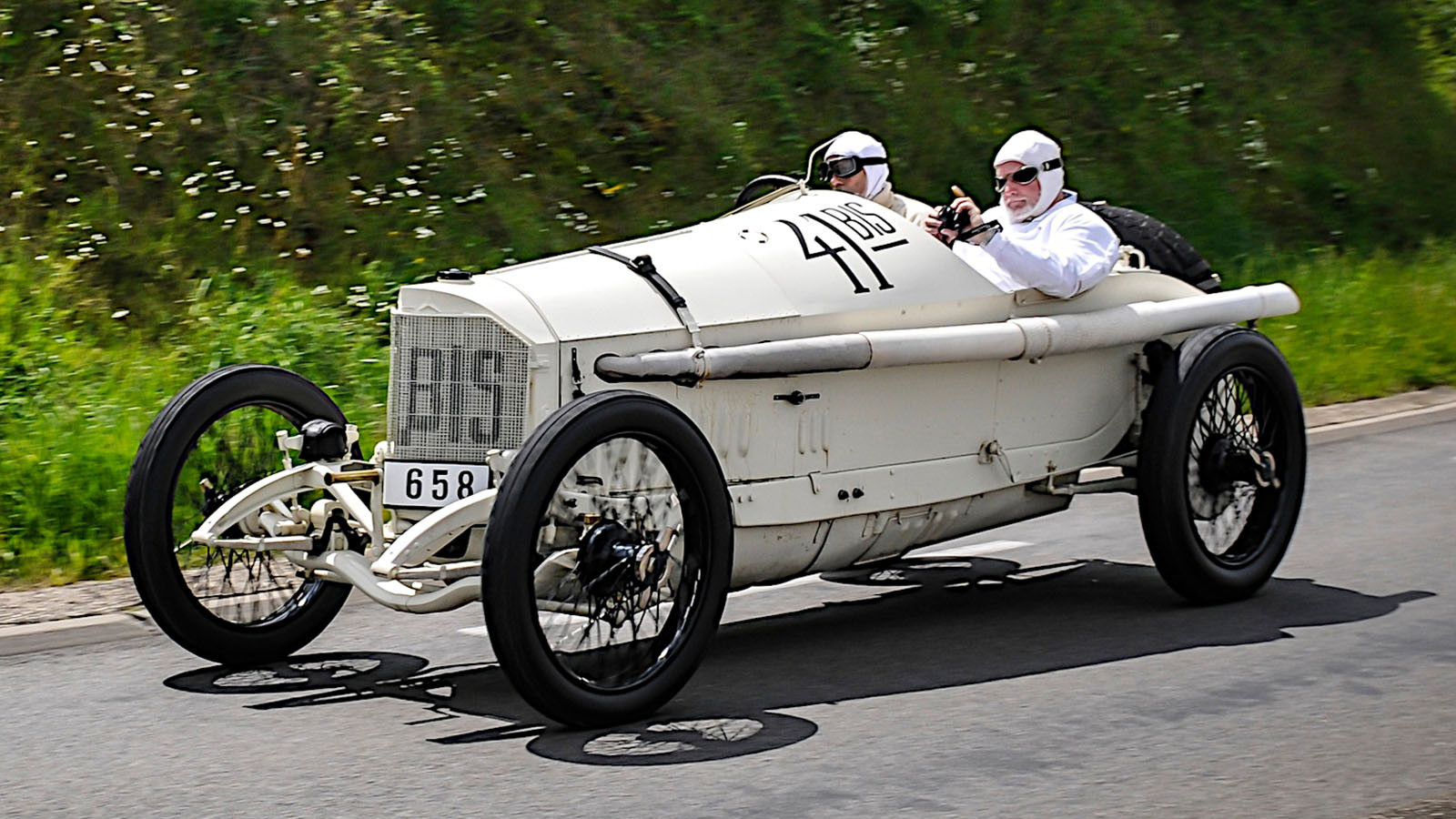
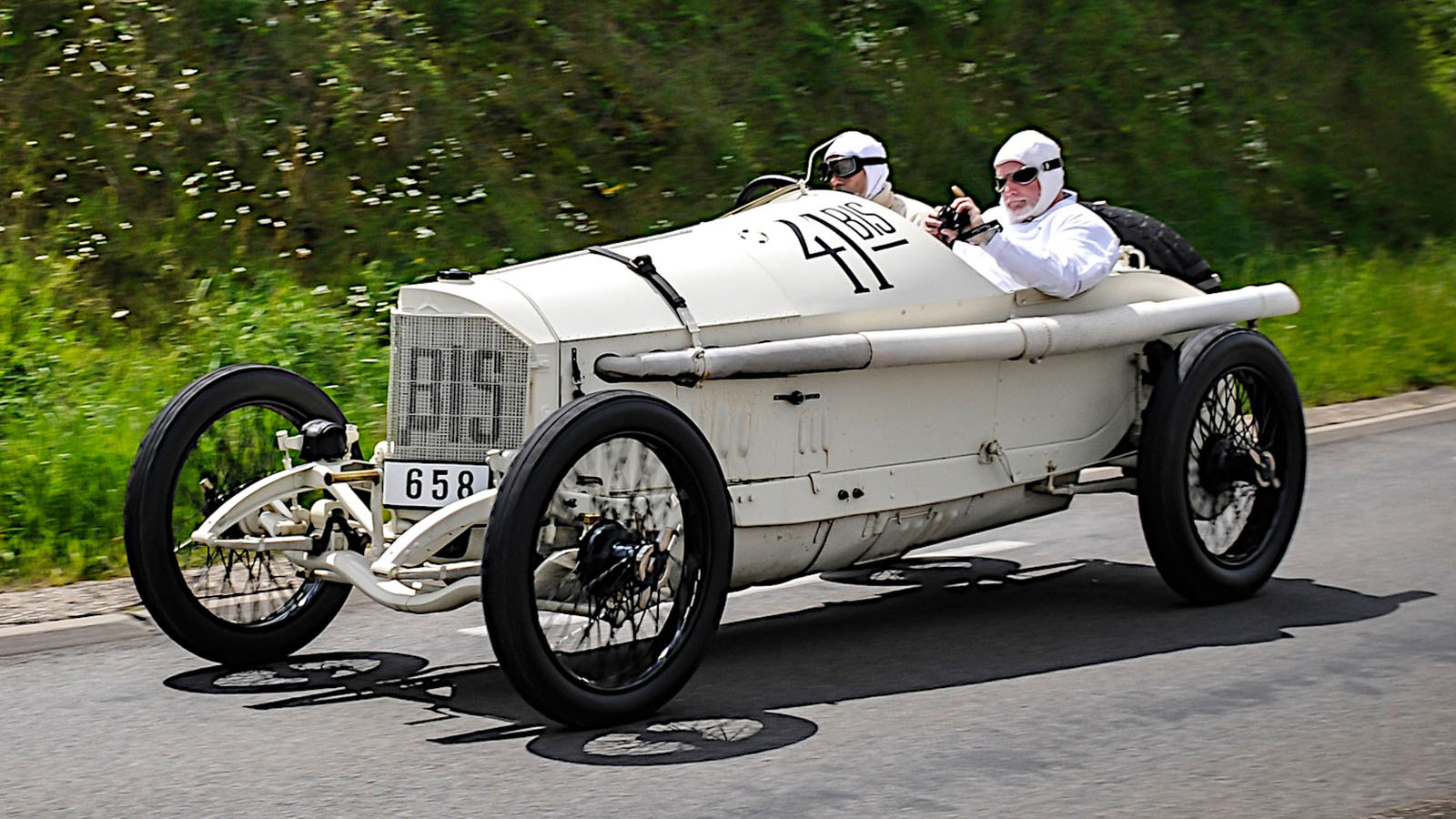
The First Races
The very first organized motor race took place in 1894, from Paris to Rouen, France, serving as a reliability trial for early automobiles rather than a speed contest. It was followed by longer races like Paris–Bordeaux–Paris (1895) and the Gordon Bennett Cup (1900–1905). These early events laid the foundation for motorsport.
📌 External Link: Learn more about the first motor races on Wikipedia – History of Motor Racing ↗️ https://en.wikipedia.org/wiki/History_of_motor_racing
Primitive Machines
Early racing cars were essentially modified road vehicles — heavy, unreliable, and slow compared to later standards. Engines were low-power, often single- or twin-cylinder units under 10 hp.
Rising Popularity
By the 1910s, races like the Indianapolis 500 (first held in 1911) became marquee events. Manufacturers realized that success on the track could drive sales — which sparked investment in racing technology.
🔗 Internal Link: Read about the history of the Indy 500 —
3. Golden Age of Racing: 1920s–1950s
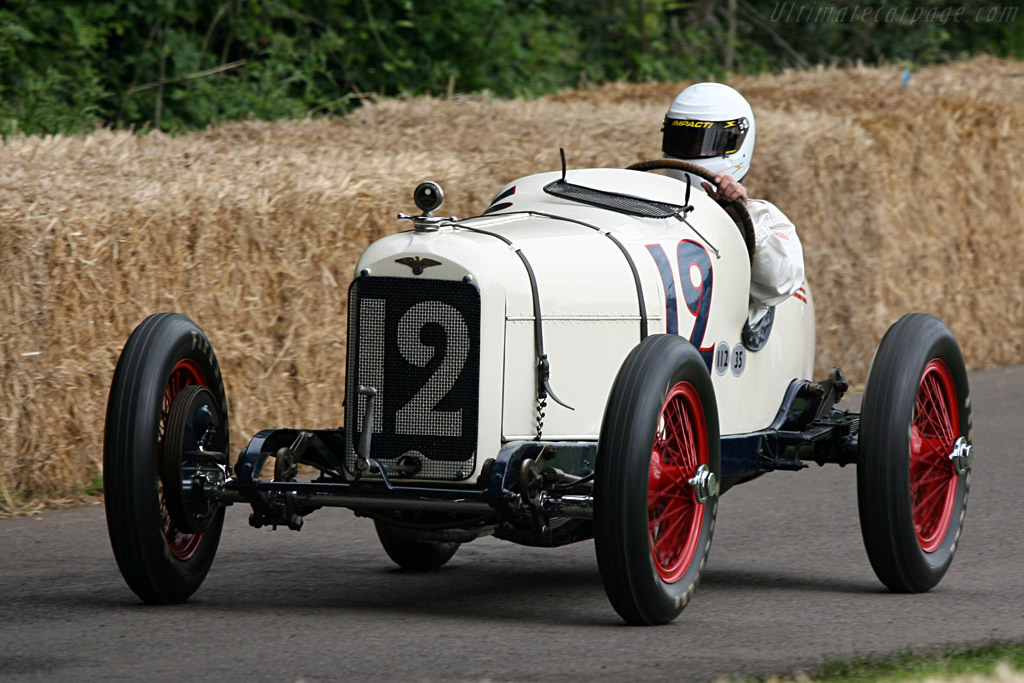
Racing in the Roaring Twenties
The 1920s saw the rise of Grand Prix racing, the precursor to today’s Formula 1. Cars became faster, with multi-cylinder engines and lightweight frames.
Silver Arrows & Technological Leap
In the 1930s, German manufacturers like Mercedes-Benz and Auto Union produced the legendary “Silver Arrows”, dominating Grand Prix racing with incredible power and advanced engineering.
📌 External Link: Silver Arrows on Mercedes-Benz Classic
Post-War Innovation
After World War II, racing resumed with renewed energy. The Formula 1 World Championship was inaugurated in 1950, unifying international competition under a standardized rulebook.
4. The Jet Age & Aerodynamics (1960s–1970s)
Aerodynamics Take Center Stage
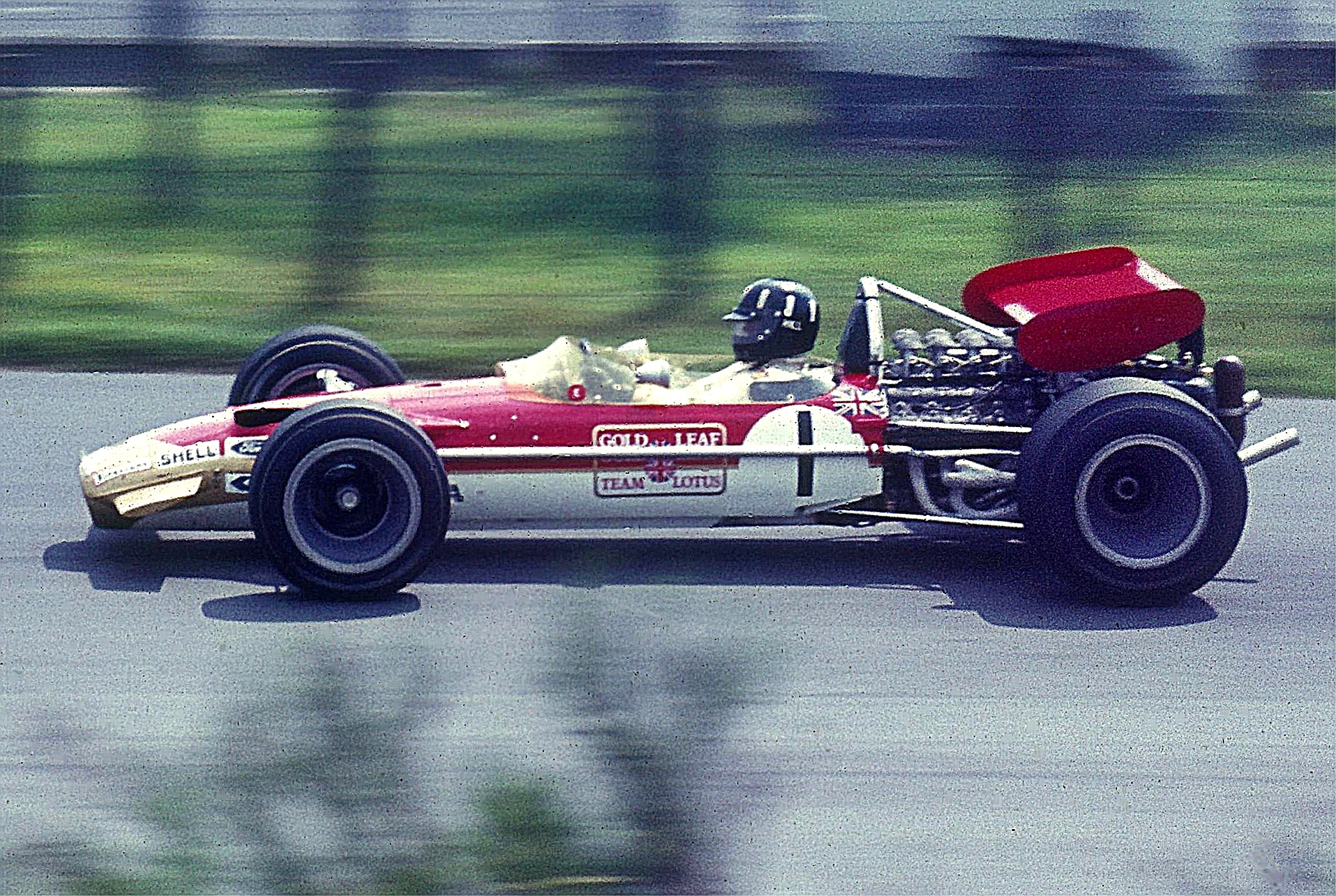
Up until the 1960s, racing car shapes were largely dictated by packaging the engine and wheels. The introduction of aerodynamic wings and spoilers drastically improved downforce, keeping cars planted at high speeds.
British manufacturer Lotus led with innovations like the Lotus 49, using aerodynamic principles and monocoque chassis construction.
Endurance Racing
At events like the 24 Hours of Le Mans, manufacturers like Porsche developed dominant prototypes such as the Porsche 917, proving reliability and speed in long-distance competition.
🔗 Internal Link: Explore endurance racing history —
5. Ground Effects & Safety Revolution (1980s–1990s)

Ground Effects
In the late 1970s and early ’80s, engineers discovered ground effects — shaping the underside of the car to suck it toward the ground, dramatically increasing cornering speed. Cars like the Lotus 79 exploited this with great success.
Safety Takes Priority
However, rising speeds brought greater risk. The 1980s and ’90s saw major advances in safety:
- Crash structures and deformable zones
- Fire-resistant materials
- Stronger roll cages and helmets
Motorsport governing bodies like the FIA introduced stricter safety rules to protect drivers.
📌 External Link: FIA Safety Standards
6. The Era of Electronics (2000s)
4
Digital Revolutio
The 2000s introduced widespread use of electronics:
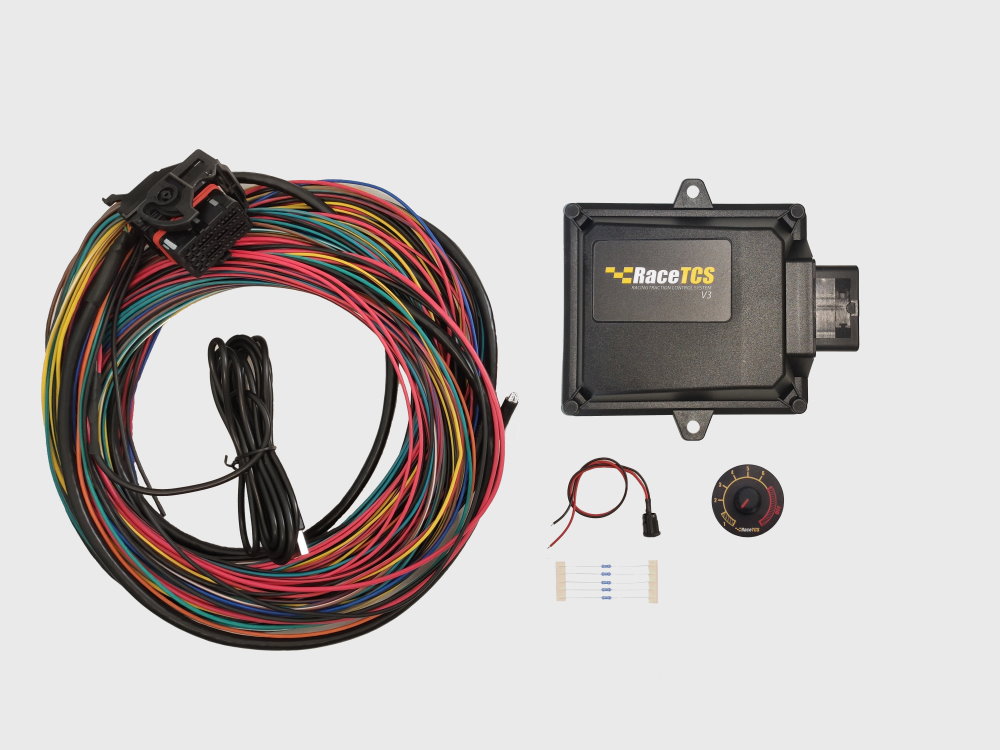
- Traction control
- Advanced engine management
- Telemetry systems
- Data analytics
Teams could now monitor cars in real time, adjusting performance and strategy down to minute details.
NASCAR & Touring Cars
Even in stock car and touring car racing, electronic fuel injection and data systems improved performance and reliability — bridging the gap between racing and road vehicles.
🔗 Internal Link: How electronics shape modern racing —
7. Hybrid & Sustainable Future (2010s–Today)

Enter Hybrid & Electric Racing
As global focus shifts toward sustainability, racing follows suit:
- Formula E — fully electric open-wheel racing
- Hybrid power units in Formula 1 and endurance racing
- Greater emphasis on biofuels and energy recovery
These changes reflect broader industry trends toward electrification and environmental responsibility.
📌 External Link: Learn about Formula E
Technology Transfer
Hybrid systems developed in racing now influence road car efficiency, demonstrating motorsport’s role as a technology incubator.
🔗 Internal Link: Electric and hybrid race tech explained —
8. How Racing Cars Impact Road Cars
Racing cars are more than entertainment — they’re laboratories on wheels. Many innovations now standard in road cars were first proven on the track:
- Disc brakes
- Turbocharging
- Aerodynamics
- Traction control
- Carbon-fiber components
These innovations improve safety, performance, and efficiency for everyday drivers.
📌 External Link: Motorsport Technology.
9. Iconic Racing Cars Through History
Here are some game-changers:
• Ford GT40 (1960s)
Beat Ferrari at Le Mans and inspired future performance cars.
• Porsche 911 RSR
An endurance racing legend with decades of refinement.
• McLaren MP4/4
Dominated Formula 1 in 1988 with Senna and Prost.
• Audi R18 e-tron quattro
Pioneered diesel-hybrid endurance racing success.
Each of these models pushed technology and influenced broader automotive design.
🔗 Internal Link: Explore iconic racing car profiles —
10. The Future of Racing Cars
So where is motorsport headed?
Autonomous Racing
Concepts like Roborace explore autonomous racing, where AI controls vehicles at high speed.
Sustainable Fuels
Racing organizations are experimenting with synthetic fuels and improved electrification.
Advanced Materials
Lightweight, strong materials such as graphene composites may further revolutionize chassis and body design.
The future of racing cars promises even more innovation — blurring the line between motorsport and mainstream automotive technology.
Whether you’re a fan, engineer, or driver, the evolution of racing cars is both a thrilling and inspiring story — one that will continue to accelerate into the decades ahead.
If you’d like, I can also provide:
📌 A downloadable PDF version
📌 SEO meta title & description
📌 Shorter versions for social media or newsletters
Just let me know! 🚗💨How Racing Cars Impact Road Cars
Racing cars are more than machines built for speed—they serve as real-world testing laboratories for automotive innovation. Many of the technologies we now take for granted in everyday road cars were first developed, tested, and perfected on the race track. Motorsport pushes engineering to its limits, and the lessons learned often shape the future of consumer vehicles.
Technology Transfer From Track to Road
One of the most significant ways racing cars influence road cars is through technology transfer. Manufacturers use racing environments to test new ideas under extreme conditions before adapting them for mass production.
Key examples include:
- Disc brakes, first popularized through racing for superior stopping power
- Turbocharging, refined in motorsport to increase engine efficiency and performance
- Hybrid power systems, developed in Formula 1 and endurance racing to maximize energy recovery
- Advanced aerodynamics, improving stability, fuel efficiency, and handling
These innovations eventually become safer, cheaper, and more reliable for everyday drivers.
Improved Safety Standards
Safety advancements in racing cars have had a direct and lasting impact on road car design. Motorsport accidents led to the development of stronger safety regulations and technologies that now protect millions of drivers worldwide.
Racing-inspired safety features include:
- Crumple zones
- Reinforced chassis structures
- Fire-resistant materials
- Advanced helmet and restraint systems
Modern road vehicles benefit greatly from these life-saving developments.
Lightweight Materials and Performance
To gain speed, racing cars must be as light as possible without compromising strength. This led to the use of carbon fiber, aluminum alloys, and composite materials, which are now increasingly found in high-performance and even mainstream road cars.
Benefits include:
- Better fuel efficiency
- Improved acceleration
- Reduced emissions
- Enhanced handling
Electronics and Driver Assistance
Motorsport has accelerated the development of vehicle electronics and data systems. Technologies like traction control, stability control, and drive-by-wire systems were once exclusive to racing cars.
Today, these systems:
- Improve vehicle stability
- Enhance driving comfort
- Increase safety in poor road conditions
Environmental Innovation and Sustainability
As environmental concerns grow, racing has become a platform for sustainable automotive solutions. Electric and hybrid racing series have helped refine battery technology, regenerative braking, and alternative fuels.
These advancements directly influence:
- Electric vehicles (EVs)
- Hybrid road cars
- Lower-emission engines
Brand Development and Consumer Trust
Success in motorsport strengthens a manufacturer’s reputation. When consumers see a brand winning races, they associate it with performance, reliability, and innovation, increasing trust in their road cars.
This philosophy is often summed up as:
“Win on Sunday, sell on Monday.”
Conclusion
Racing cars have a profound and lasting influence on road cars. From safety and performance to efficiency and sustainability, motorsport innovations shape the vehicles we drive every day. As racing continues to evolve, it will remain a crucial driver of progress in the global automotive industry.
If you want, I can:
✅ Add internal links to this section
✅ Expand it to 1,000+ words
✅ Optimize it for a specific focus keyword
Just tell me 👍