Introduction — Why Aerodynamics Matters in Racing
In high-speed motorsport, aerodynamics is far more than just sleek bodywork. It’s a carefully balanced science that allows race cars to slice through air, stay glued to the track, and extract every millisecond of performance. From the front wing to the rear diffuser, every surface interacts with air to influence speed, traction, stability, and fuel efficiency. In modern championships such as Formula 1, aerodynamic design often defines the competitive edge between winning and watching from the pit lane. Race Car Aerodynamics
What Is Aerodynamics? The Basics Explained
At its core, aerodynamics studies how air flows around objects — in this case, a vehicle moving forward at high speed. Two primary forces come into play:
- Drag: The resistance air exerts against a moving car. Too much drag slows the car down, especially on straights.
- Downforce: A force generated by manipulating airflow that pushes the car down onto the track, increasing grip and enabling harder cornering without losing traction.
F1 aerodynamicists often describe downforce as “inverted lift” — it’s created like an airplane wing but flipped, so instead of lifting the car up, it pushes it into the tarmac.
The Balance Between Drag and Downforce Race Car Aerodynamics
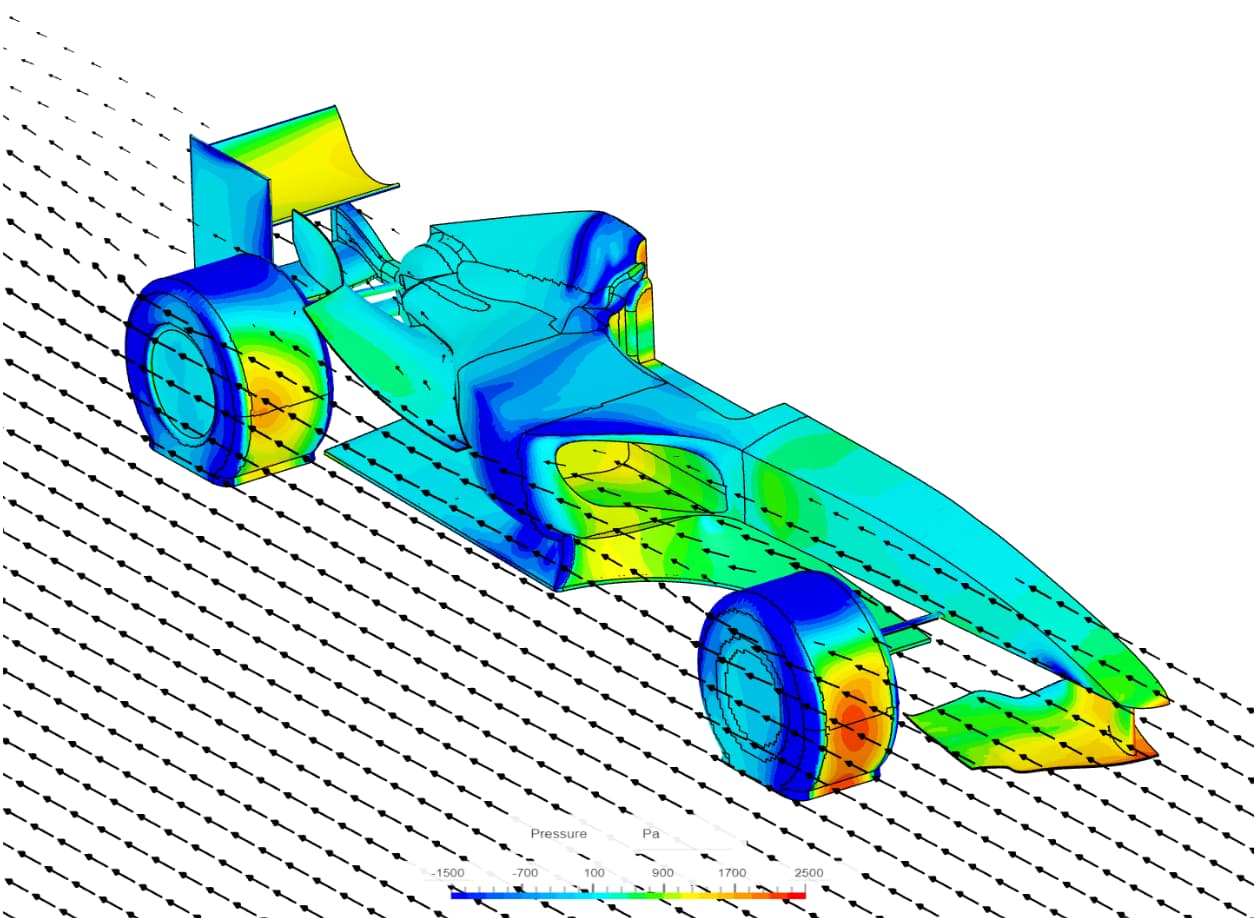
While downforce improves cornering and stability, it also usually increases drag. The design goal is to optimize this trade-off — maximize downforce where grip matters most, and minimize drag where straight-line speed is crucial.
A Brief History of Aerodynamics in Racing
Aerodynamic thinking in racing took off in the 1960s, when wings first appeared on Formula cars to increase grip. Over subsequent decades, innovations such as ground-effect bodies, multi-element wings, and advanced diffusers pushed aerodynamic engineering to the forefront of competitive design.
Landmark Aerodynamic Innovations Race Car Aerodynamics
Ground Effect — pioneered by the Lotus 79 changed how air under the car was harnessed for massive downforce without massive drag.
- Venturi-tunnel underbody — modern cars use venturi principles to accelerate under-car airflow, creating low-pressure zones for suction-like downforce.
Core Components of Race Car Aerodynamics
Race cars use a variety of aerodynamic devices — each with a specialized role:
Front Wing — First Line of Airflow Management Race Car Aerodynamics
The front wing shapes incoming air, directing it around the car and controlling pressure gradients. Its design influences grip at the front axle and feeds clean airflow to downstream components.
- Adjustable for different track demands
- Multi-element configurations for tailored pressure surfaces
Rear Wing — Stability and Downforce Control
The rear wing provides the largest downforce contribution at the rear of the car, balancing the front wing’s action and enhancing stability through high-load corners.
Diffuser — Hidden Power Producer
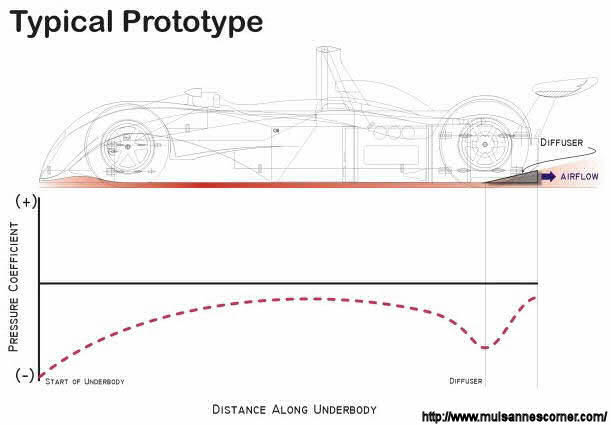
The diffuser at the back of the underbody accelerates exiting air, lowering pressure beneath the car. This ground-effect is one of the most efficient ways to generate downforce with relatively low drag.
Bodywork, Sidepods & Aero Devices Race Car Aerodynamics
Modern designs use sidepods, bargeboards, and turning vanes to condition airflow, reducing turbulence and improving efficiency — particularly on circuits with variable speeds and complex corners.
Tools of the Trade: Wind Tunnels, CFD & Track Testing
Wind Tunnels
Wind tunnels remain essential for real-world aerodynamichttps://speedsrun.online/wp-admin/post.php?post=965&action=editntrolled streams of air over scale car models to measure drag, downforce, and flow behavior.
Computational Fluid Dynamics (CFD)
CFD uses powerful simulations to model airflow in a virtual environment — identifying potential gains before hardware is built. It allows designers to test countless configurations rapidly.
On-Track Data and Validation
Sensors, pressure taps, and flow-vis paint on actual race cars help engineers verify how race conditions compare with models and simulations — crucial for fine-tuning setups.
Aerodynamics at Work: Case Studies & Real Performance
Formula 1’s Downforce Extremes Race Car Aerodynamics
Modern F1 cars can generate downforce exceeding four times their weight at top speeds, turning what would be airborne cars into glued-to-track missiles through corners. Race Car Aerodynamics
Strategy: Track-Specific Aero Setups
Different circuits demand different aerodynamic balances:
- High-downforce tracks (e.g., Monaco, Hungaroring) — maximum aero grip
- Low-drag tracks (e.g., Monza) — high straight-line speeds
Teams adjust wing angles, floor configurations, and suspension to tailor airflow to these demands.
External Resources & Further Reading
For deeper dives into aero tech: Race Car Aerodynamics
- 📘 Watch “Aerodynamics in F1 | F1 Explained” on YouTube for expert visuals and explanations
- 📚 Scientific principles of the venturi effect and fluid dynamics in race cars
- 📄 Advanced CFD research on airfoil optimization in racing applications
Conclusion — Aerodynamics: The Invisible Engine of Speed
Race car aerodynamics transforms air — an invisible opponent — into one of the most powerful performance levers in motorsport. From reducing drag to generating enormous downforce, the art and science of aerodynamic design continue to define champions on track. As technology evolves with greener fuels and active aero systems looming on the horizon, the dance between flow and friction will remain at the heart of racing excellence. Race Car Aerodynamics
If you want, I can also generate an SEO-ready HTML version with clickable internal and external links styled for your CMS, or tailor this for a specific racing series like F1, IndyCar, or Le Mans! 🏁
Introduction: Why Aerodynamics Is the Invisible Engine of Racing
When most fans think about race cars, they imagine roaring engines, cutting-edge tires, and fearless drivers. But in modern motorsport, air is just as important as horsepower. Aerodynamics determines how efficiently a car moves through the atmosphere, how well it grips the track at 200+ mph, and how stable it remains under braking and cornering.
In elite championships such as Formula 1, NASCAR Cup Series, and IndyCar Series, aerodynamic performance often separates champions from midfield competitors. Two cars may have similar engines and tires, but the one that manages airflow better will carry more speed through corners, brake later, and accelerate sooner.
Aerodynamics is often called the “invisible horsepower” of racing — because it doesn’t increase engine power, but it dramatically improves how effectively that power is used.
1. The Physics of Race Car Aerodynamics
Understanding race car aerodynamics starts with fundamental physics. Race Car Aerodynamics
1.1 The Four Main Aerodynamic Forces
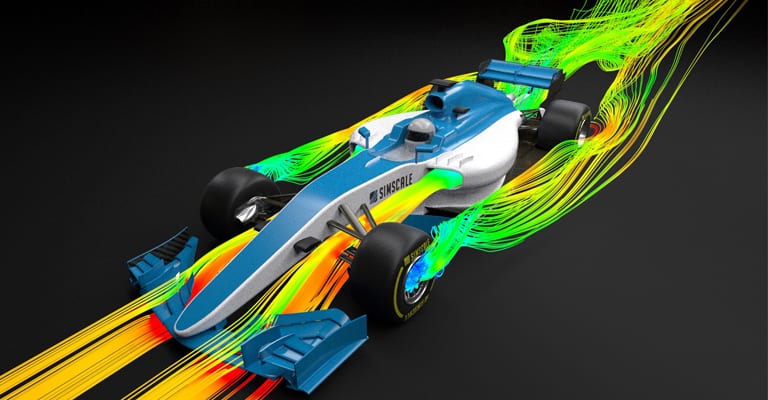
When a race car moves forward, it interacts with air in four primary ways:
1. Drag Race Car Aerodynamics
Drag is the resistance force that opposes motion. It increases exponentially with speed. At 200 mph, drag becomes one of the largest forces acting on the car.
There are two major types:
- Form drag (shape-related resistance)
- Skin friction drag (surface friction with airflow)
Reducing drag improves:
- Top speed
- Fuel efficiency
- Straight-line acceleration
2. Downforce Race Car Aerodynamics
Downforce is the most important aerodynamic goal in racing. It pushes the car downward into the track, increasing tire grip without increasing vehicle weight.
More downforce means:
- Faster cornering
- Better braking stability
- Improved traction
Unlike mechanical grip (which depends on tires and suspension), aerodynamic grip increases with speed.
3. Lift Race Car Aerodynamics
Lift is the opposite of downforce. If unmanaged, it can reduce stability and cause dangerous conditions at high speed.
In sports car racing, excessive lift once caused airborne incidents — such as during the 24 Hours of Le Mans — leading to major safety-focused aerodynamic regulations.
4. Side Force Race Car Aerodynamics
When cars turn or encounter crosswinds, air generates lateral forces. Proper aero design ensures the car remains stable under these loads.
2. The Balance Between Downforce and Drag
Aerodynamics is not about maximizing downforce at all costs. It’s about efficiency.
Engineers evaluate something called the Lift-to-Drag Ratio (L/D Ratio).
- High downforce + high drag = strong corners, weak straights
- Low downforce + low drag = fast straights, weak corners
Tracks like:
- Circuit de Monaco require maximum downforce.
- Autodromo Nazionale s.
This balance changes from race to race.
3. Major Aerodynamic Components of a Race Car
Every surface of a race car interacts with air. Let’s examine each key component in detail.
3.1 Front Wing — The Airflow Architect
The front wing is the first structure that contacts airflow.
Functions: Race Car Aerodynamics
- Generates front-end downforce
- Directs air around the tires
- Feeds clean airflow to the rest of the car
Modern F1 front wings can have multiple elements, each shaped like inverted airplane wings.
Even small adjustments (millimeters of angle) can dramatically change car balance.
3.2 Rear Wing — Stability and High-Speed Grip
The rear wing provides rear axle downforce and overall stability.
Features: Race Car Aerodynamics
- Adjustable flap angles
- Drag Reduction System (DRS) in F1
- Multi-element airfoil designs
DRS reduces drag temporarily to allow overtaking in Formula 1.
3.3 Diffuser — The Hidden Downforce Generator Race Car Aerodynamics
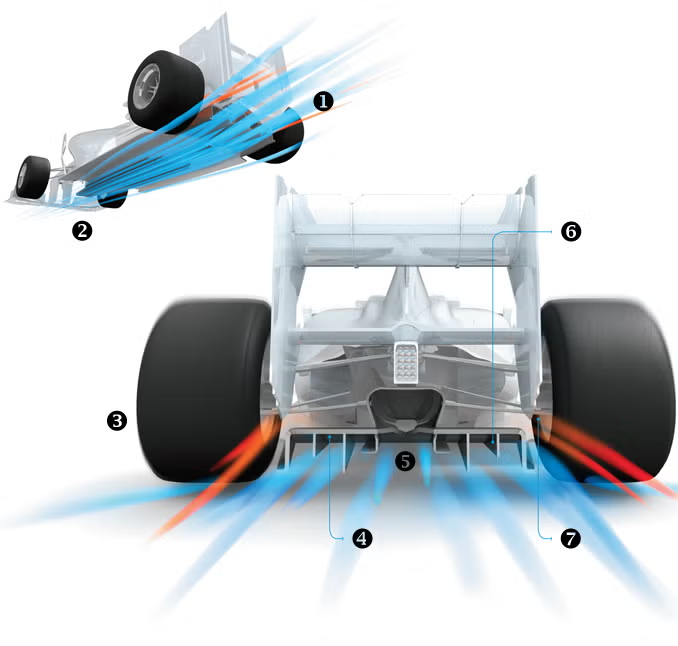
Located under the rear of the car, the diffuser is one of the most powerful aero devices.
It works using the Venturi effect:
- Air speeds up under the car
- Pressure drops
- The car gets “sucked” toward the track
Ground-effect regulations introduced in 2022 revolutionized diffuser performance.
3.4 Underbody & Ground Effect
Ground effect uses the car’s floor to create low pressure beneath it.
This concept was famously pioneered by:
- Team Lotus
- The iconic Lotus 79
Ground effect allows:
- Massive downforce
- Reduced drag compared to large wings
Modern F1 cars rely heavily on underfloor aerodynamics.
3.5 Sidepods and Cooling Aerodynamics
Sidepods:
- Channel airflow
- Cool engines and hybrid systems
- Manage turbulent wake
The design philosophy differs between teams like:
- Mercedes-AMG Petronas F1 Team
- Red Bull Racing
Each team optimizes airflow structures differently.
4. Aerodynamics in Different Racing Categories
Aerodynamic philosophy changes depending on the series.
4.1 Formula 1 — Maximum Aerodynamic Complexity
F1 represents the pinnacle of aero development:
- Extensive wind tunnel testing
- Strict CFD limits
- Highly sensitive flow structures
Cars can generate more than 4,000 lbs of downforce at speed.
4.2 NASCAR — Drafting and Drag Efficiency
In NASCAR Cup Series:
- Cars prioritize drag reduction
- Drafting is critical
- Aerodynamic parity is regulated heavily
Stock cars produce less downforce than F1 but rely on pack racing and airflow positioning.
4.3 Endurance Racing — Stability Over Hours
At events like:
- 24 Hours of Le Mans
Aerodynamics must balance:
- High-speed stability
- Fuel efficiency
- Tire longevity
Cars cannot be too aero-sensitive over long race distances.
5. Wind Tunnel Testing and CFD
Modern race teams use two primary development tools:
5.1 Wind Tunnels
Scaled models are placed in controlled air streams.
Measurements include:
- Pressure distribution
- Flow separation
- Wake turbulence
5.2 Computational Fluid Dynamics (CFD)
CFD simulations:
- Model airflow digitally
- Test thousands of iterations
- Save development time
However, regulations limit CFD use in F1 to reduce spending advantages.
6. Aerodynamic Sensitivity and Dirty Air
One major issue in racing is “dirty air.”
When a car follows closely:
- Turbulent wake reduces front downforce
- Cornering ability drops
- Tire wear increases
This was a major overtaking problem before 2022 F1 regulation changes.
7. Active Aerodynamics — The Future
Future racing may include:
- Adjustable wings
- Automated drag reduction
- Adaptive ride height systems
Electric racing like Formula E explores efficiency-focused aero rather than maximum downforce.
8. Safety and Aerodynamics
Aerodynamics is also a safety system.
Examples:
- Halo structure integration
- Floor edge regulations
- Anti-lift bodywork rules
After high-profile airborne accidents in endurance racing, body shapes were redesigned to prevent lift generation.
9. How Aerodynamics Impacts Lap Time
Studies show that:
- 60–70% of lap time advantage in F1 comes from aerodynamic performance.
- Corner speed improvement saves more time than straight-line speed.
Even 1% efficiency gains can equal tenths of a second per lap.
In elite racing, tenths decide championships.
10. Why Aerodynamics Will Always Dominate Motorsport
As engine regulations become standardized and power units converge in performance, aerodynamic innovation remains one of the few major competitive differentiators.
It influences:
- Overtaking
- Tire degradation
- Fuel strategy
- Setup flexibility
- Driver confidence
In the modern era, race engineers are just as important as drivers.
The next time you watch a race, remember:
The fastest car isn’t just powerful — it’s the one that masters the air.
If you’d like, I can now:
- Expand this into a 6,000+ word SEO master article
- Add HTML format with embedded image placement
- Create internal linking structure for your website
- Turn it into a downloadable PDF guide
- Add technical diagrams explanations section
- Or optimize it specifically for Google ranking**
Just tell me your website niche and target audience.