High-speed running has become one of the most critical components of performance across modern sports—from football and rugby to track and field. As athletes train to become faster, coaches and sports scientists are shifting their focus toward more accurate ways to evaluate speed and predict future performance potential. Traditional metrics such as split times and maximal sprint velocity remain important, but advances in technology and data interpretation are giving rise to more sophisticated assessment tools.
This article explores a new, holistic approach to assessing and predicting high-speed running performance, providing coaches, trainers, and athletes with actionable insights to improve training outcomes.
Understanding High-Speed Running in Modern Sport
High-speed running refers to movement performed at or near an athlete’s maximal velocity. While it is often associated with sprinting events, it plays an equally critical role in field sports—determining breakaways, recovery runs, and decisive moments in competition.
In many sports, the fastest athletes are not only quicker over short distances but also better equipped to accelerate repeatedly and maintain high velocities under fatigue. Understanding these factors requires a comprehensive look at speed performance rather than relying solely on traditional sprint times.
Why Traditional Speed Assessments Are No Longer Enough
For decades, coaches used a small set of metrics to evaluate speed:
- 40-yard dash times
- 100m sprint times
- Maximal velocity readings
- Acceleration over first 10–20 meters
Although these metrics are useful, they fail to capture deeper physiological and biomechanical factors that influence speed. Modern performance analysis reveals several limitations:
1. Speed is highly context-dependent
A fast 100m sprinter may not be the fastest athlete in a sport requiring multi-directional movements, rapid decision-making, and repeated accelerations.
2. Peak velocity alone cannot predict real-world performance
A player who reaches 35 km/h once in a test may struggle to reach that speed consistently in competitive settings.
3. Traditional timing methods lack precision
Hand timing and basic radar readings miss micro-variations in stride pattern, force production, and fatigue development.
Because of these limitations, a new approach is emerging—one that uses modern technology, multifactor analysis, and predictive modeling to measure what truly drives high-speed running.
A New Approach to Assessing High-Speed Running Performance
Today’s advanced assessment models combine biomechanics, neuromuscular profiling, GPS data, and predictive analytics to give coaches a complete picture of an athlete’s speed capacity.
Below are key elements of this modern approach.
1. Mechanical Profiling: Understanding How Athletes Produce Force
High-speed running is fundamentally about how effectively an athlete produces horizontal force. Mechanical profiling—particularly the force–velocity (F–V) profile—reveals the balance between force and stride frequency.
A complete mechanical profile measures:
- Horizontal force output
- Vertical stiffness
- Stride length and stride rate
- Ground contact times
- Leg stiffness and elastic return
Athletes with exceptional high-speed performance typically possess:
- High horizontal force at maximal velocities
- Efficient stiffness in the ankle–knee–hip chain
- Short ground contact times without compromising stride length
Mechanical profiling gives coaches the information needed to tailor speed training to each athlete’s strengths and weaknesses.
2. Neuromuscular Assessment: Evaluating Power and Activation
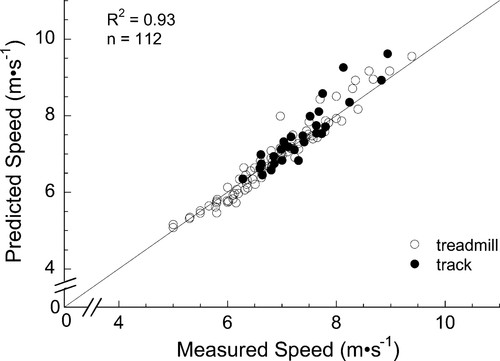
High-speed running requires rapid neuromuscular activation. Two athletes may run the same 30-meter time but have very different neuromuscular qualities.
Modern assessments include:
- Countermovement jump (CMJ) analysis
- Reactive strength index (RSI)
- Electromyography (EMG)
- Rate of force development (RFD)
These tools help identify whether an athlete’s speed is limited by power output, muscle activation efficiency, or elastic rebound. Once identified, performance programs can be individualized—something traditional sprint times cannot reveal.
3. Biomechanics and Technique Evaluation
A new approach to high-speed running performance places significant emphasis on technique. Motion capture systems, high-speed cameras, and wearable sensors allow coaches to analyze:
- Hip extension velocity
- Knee lift and recovery mechanics
- Arm swing contribution
- Torso stability
- Foot strike pattern
Technical flaws, even subtle ones, often determine whether an athlete can reach and maintain maximum speed. Improved real-time biomechanical feedback is helping athletes make immediate adjustments to stride efficiency.
4. Load Monitoring Through GPS and Wearable Tech
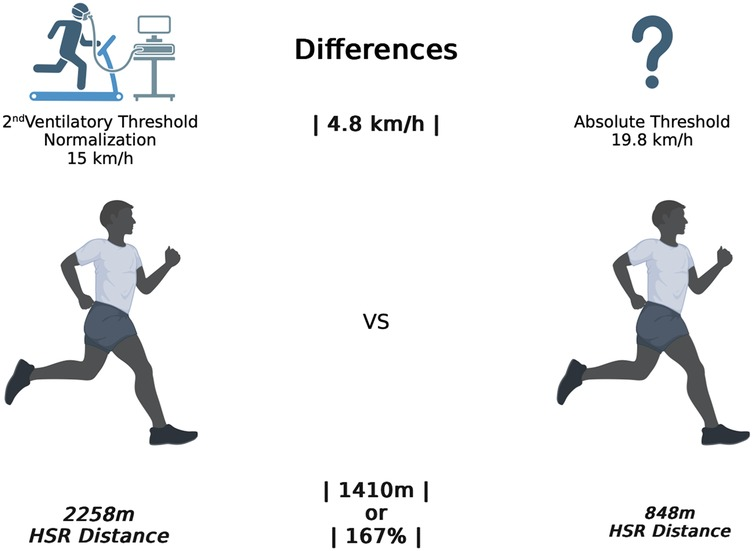
Modern teams rely heavily on GPS technology to track high-speed running during training and competition. Unlike isolated sprint testing, GPS data shows how often and how well athletes perform at top speeds under real-world conditions.
Key metrics include:
- High-speed distance (HSD)
- Number of high-speed efforts
- Maximal speed reached in competition
- Acceleration and deceleration loads
This enables coaches to evaluate:
- Whether athletes express maximal speed in competition
- How fatigue affects high-speed performance
- How training loads influence peak speed development
GPS-driven insights have fundamentally changed how speed is monitored and managed.
Predicting High-Speed Running Performance: The Future of Speed Science
Beyond assessment, modern sports science is turning toward prediction—using machine learning and data analytics to anticipate athlete speed potential.
1. Predictive Models Based on F–V Profiling
Force–velocity profiles predict how an athlete will respond to specific training interventions. For example:
- An athlete with strong force but weak velocity components may improve with speed drills and plyometrics.
- An athlete with high velocity but low force may benefit from strength emphasis.
Predictive algorithms can estimate future sprint improvements based on changes in force or power production.
2. AI and Machine Learning in Speed Prediction
Using large datasets from GPS, biomechanics, and neuromuscular testing, AI systems can:
- Predict injury risk related to high-speed load
- Identify optimal training volumes
- Forecast future maximal speed
- Detect declines in performance before they appear externally
These systems are becoming increasingly common in elite sports performance centers.
3. Genetic and Physiological Markers
Although still emerging, research suggests that certain genetic markers and muscle fiber compositions may help predict long-term speed potential. Fast-twitch muscle dominance, aerobic capacity, tendon properties, and hormone profiles all contribute to high-speed ability.
When integrated with mechanical and neuromuscular data, physiological markers give a more complete prediction model than ever before.
How Coaches Can Apply This New Approach in Training
To benefit from advanced high-speed assessment and prediction, coaches should adopt a more integrated training strategy.
1. Test dynamically, not just periodically
Regular monitoring through GPS, jump tests, and motion tracking provides far more useful data than occasional sprint tests.
2. Individualize training based on F–V profiles
No two athletes have the same mechanical characteristics—training must reflect this.
3. Combine strength, speed, and technique work
High-speed running improves fastest when all three areas are developed together.
4. Track fatigue and recovery aggressively
High-speed efforts are taxing. Adequate recovery dramatically improves adaptation.
5. Use data but coach the athlete first
Technology should guide decisions, not dominate them. The human element still matters most.
A Smarter, More Comprehensive View of Speed
High-speed running performance is no longer simply about sprint times. A new era of assessment—built on biomechanics, neuromuscular profiling, GPS load monitoring, and predictive analytics—is transforming how athletes train for speed.
This modern, multifactor approach allows coaches to tailor programs with unprecedented accuracy, helping athletes unlock their true speed potential while minimizing injury risk. As technology continues to evolve, the ability to assess and predict high-speed running performance will only become more precise, making speed science an essential component of elite-level training in every sport.
Fans can follow updates, live streams, and track maps on SpeedsRun Online and affiliated social media channels.