By the speedsrun.online lore desk — aerial tactics, legendary feats,Flying Legends and map inspirations for arena creators.
Short summary: The Aerial Arena rewards pilots who master verticality, windcraft, and timing. Below are seven legendary high-fliers — each a concise dossier with combat style, signature maneuvers, and real-world map locations you can use as visual inspiration for arena design. Jump to legend:
- Arael “Skyhook” Voss
- Noctis “Moonwing” Veran
- Caldra “Galeheart” Inoue
- Tethyr “Cloudrender” Mbeki
- Sylph “Windlace” Aure
- Pyra “Flaretrail” Ortiz
- Orkun “Skycleaver” Demir
Introduction — What makes an aerial legend?
The Aerial Arena is its own battlefield: three-dimensional sightlines, shifting thermals, and airborne hazards. Champions here must convert vertical advantage into control and make split-second decisions at altitude. These seven legends did exactly that — each mastering unique flight mechanics, teamplay, and psychological dominance to rewrite the rules of aerial combat and speed trials.
Internal resources: check our Aerial Arena design primer (/guides/aerial-arena-primer) and downloadable sky-map assets (/maps/aerial-pack).
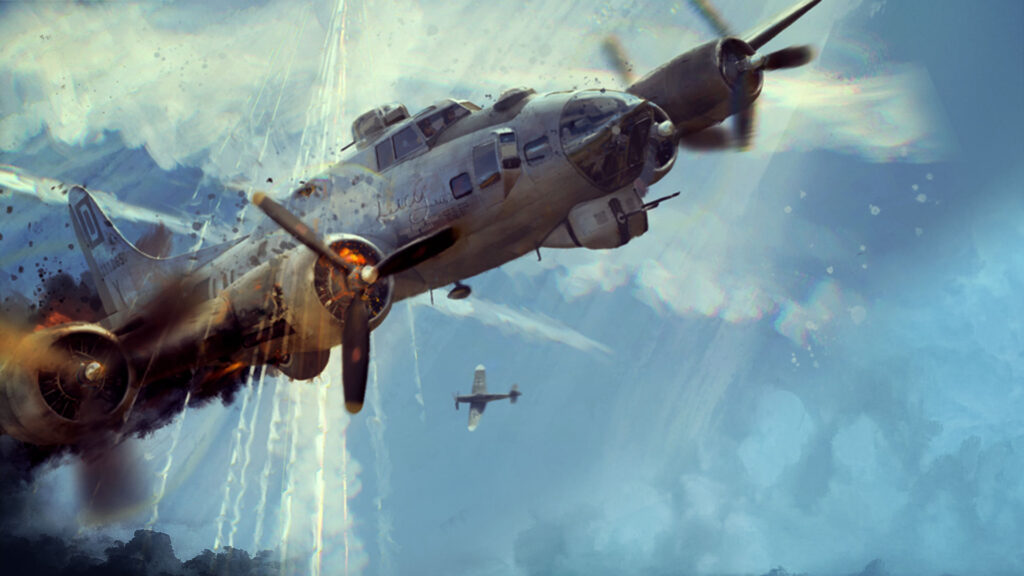
Arael “Skyhook” Voss — Master of Grapple Egress
Signature Style
Arael popularized the grappling-hook egress — vertical repositioning mid-combat using micro-tethers. Her hallmark was the “Skyhook Sweep”: hook up to storm anchors, swing through opponent approaches, and release into breakneck dives that left pursuers off-angle and disoriented.
Tactical Notes
Arena builders: place staggered anchor-points and detachable pylons to reward Skyhook-style play. Arael’s matches were textbook material for training grappling timing and momentum conservation.
Map Inspiration
Cliffside storm-lattices and coastal wind towers — inspired by Norway’s Lofoten archipelago and steep fjords. Reference reading: Lofoten Islands — geography. Map coords (visual inspiration): Lofoten, Norway (≈ 68.0, 13.5).
Noctis “Moonwing” Veran — Phantom of the Night Canopy
Signature Style
Noctis transformed darkness into cover. Using low-light adaptive membranes and infra-spectral cloaks, he executed near-invisible passes through moonlit canopies and cloud-veil routes. His stealth strikes relied on night thermals and silent-propulsion tech.
Tactical Notes
Use nocturnal arenas with soft lumens and reactive shadows to let Moonwing-style tactics shine. Players learn to use reduced-visibility checkpoints and thermal mapping rather than raw sightlines.
Map Inspiration
Dusk-canopy regions like Chile’s Araucanía and parts of New Zealand’s fjord country provide the mood and thermal variety. See Araucanía — climate. Map coords: Araucanía, Chile (≈ -38.74, -72.6).
Caldra “Galeheart” Inoue — Sovereign of the Jetstream
Signature Style
Caldra wielded the jetstream like a racetrack — she read upper-atmosphere currents and rode continuous high-speed lanes that bypassed conventional obstacles. Her pilots trained in long-distance endurance and micro-corrective controls to hold those invisible ribbons.
Tactical Notes
Design long straight corridors offset by rapid crosswinds to reward jetstream mastery. Introduce persistent high-altitude lanes that force strategic altitude trades.
Map Inspiration
Jetstream study zones — North Atlantic and Pacific corridors. Reference: Jet streams — meteorology. Map coords for study: North Atlantic jet corridor (≈ 50.0, -30.0).
Tethyr “Cloudrender” Mbeki — The Turbulence Artist
Signature Style
Tethyr specialized in manipulating localized turbulence: controlled wake-riding and turbulence-sculpting to create moving cover and momentum traps. His “Cloudrender Waltz” moved opponents into predictable eddies for team locks and objective denial.
Tactical Notes
Place movable obstacles and dynamic updrafts to encourage Cloudrender play — teach players to generate and exploit transient aerodynamic phenomena.
Map Inspiration
Tropical storm bands and convective cells — think the monsoon corridors over the Indian Ocean and Mozambique Channel. For reference: Monsoon systems. Map coords: Mozambique Channel (≈ -20.0, 40.0).
Sylph “Windlace” Aure — The Precision Acrobat
Signature Style
Sylph achieved surgical precision at speed — micro-rolls, snap-turns, and instant-gain altitude hops allowed her to thread the smallest air windows. Her flying emphasized finesse and exactitude over brute velocity.
Tactical Notes
Create narrow vertical corridors and precision gates; reward players who perfect snap maneuvers and micro-adjustments rather than sustained boosts.
Map Inspiration
Mountain-valley thermals and slot canyons — inspiration from the Sierra Nevada and the Dolomites. See The Dolomites. Map coords: Dolomites, Italy (≈ 46.4, 11.9).
Pyra “Flaretrail” Ortiz — Pyrokinetic Sky Sprinter
Signature Style
Pyra fused thermal updrafts and controlled combustion to create blazing flight lanes known as flaretrails. By igniting micro-plumes at precise intervals she left energizing corridors for allies and deny-lanes for foes.
Tactical Notes
Add heat-based mechanics and temporary thermal boosts; design flammable obstacles and timing windows where Pyra-style ignition yields major positional advantages.
Map Inspiration
Volcanic plume zones — Hawaii and Iceland provide strong visual templates. Reference: Kīlauea (volcanic updraft). Map coords: Kīlauea, Hawaii (≈ 19.4069, -155.2834).
Orkun “Skycleaver” Demir — The Vertical Blitz Commander
Signature Style
Orkun pioneered vertical blitzes — rapid climbs into thin air followed by near-vertical dives through objective points. His coordinated squad tactics used pressure-plate triggers and synchronized dives to break defensive formations.
Tactical Notes
Implement synchronized objective triggers that favor coordinated vertical strikes; teach teams to chain blitzes for rapid objective capture.
Map Inspiration
High plateau and cliff-edge arenas like the Tibetan Plateau provide the right combination of altitude and vertical drop-offs. Reference: Tibetan Plateau. Map coords: Tibetan Plateau (≈ 31.5, 86.0).
Design Notes for Arena Builders & Trainers
- Verticality is a mechanic: encourage three-dimensional play—altitude lanes, vertical pickups, and staggered objective heights.
- Environmental cues: thermals, jetstream lanes, and dynamic updrafts teach spatial awareness at speed.
- Training modules: provide solo practice ranges for grapple timing, nocturnal navigation, and precision snap-turn drills.
- Respect pacing: aerial combat should reward both raw speed and precise control; balance boost lengths and cooldowns accordingly.
References & Further Reading
- Jet stream — Wikipedia
- Thermals & updrafts — Meteorology
- Kīlauea volcano — updraft examples
- Map inspirations: Google Maps coordinate links embedded per section for quick visualization.
Internal links: explore more at /lore, /maps, and our /guides hub.
© speedsrun.online — Build skies. Train pilots. Dominate the vertical.
Legacy of the Skybound Vanguard
The Aerial Arena’s legends did not rise overnight. Their supremacy was forged through countless high-altitude duels, crosswind crashes, and moments of near-defeat that redefined the limits of courage. The Vanguard—those first daring pilots who built the foundation of aerial combat—remain immortalized in lore scrolls and training modules across speedsrun.online/lore. Their legacy inspires every trainee who takes their first flight into the thermals, hoping to one day leave contrails that carve through history.
Evolution of Wingcraft and Aerial Engineering
Early aerial machines were primitive gliders that could barely sustain lift. Modern wingcrafts, however, operate with precision thrust arrays, magnetic stabilizers, and turbulence-reactive membranes. This evolution mirrors humanity’s obsession with dominance over the sky. Designers now borrow aerodynamics from falcons, drones, and stormfront behavior to perfect maneuverability. Each iteration contributes to a greater balance between speed, control, and endurance—cornerstones for aerial supremacy.
The Psychology of Altitude: Fear, Focus, and Freedom
Altitude affects more than oxygen—it alters the human psyche. Pilots often report entering trance-like focus at high elevations, where the world shrinks into a canvas of wind currents and split-second decisions. This psychological zone, known as the “Aether State,” defines elite competitors. Only those who can harness fear into focus achieve true aerial mastery. The Aether State is now studied in modern speed academies as a mental training discipline, blending neuroscience and meditative resilience.
The Skyward Economy — Building Prosperity from Altitude
Around every major arena thrives a micro-economy: repair hangars, tuning workshops, refuel stations, and spectators’ skyports. These airborne hubs have redefined tourism and commerce. Cities like Skyrend and Aethergate now operate as full-fledged aerial metropolises—part racing circuit, part cultural epicenter. Map references point to real-world analogues such as Los Angeles International Airport (33.9425,-118.4081) for airspace complexity studies.
Aerial Culture — The Rise of Skyborne Traditions
Aerial combat and exploration birthed a rich culture. From wind-banners fluttering across skyports to the sacred “Feather Oaths” sworn by pilots, every gesture holds centuries of meaning. Annual festivals like the Cloudfire Carnival celebrate innovation, artistry, and unity among sky clans. These traditions preserve the soul of the sport—ensuring that the spirit of flight is never reduced to mere competition.
Training Academies of the Upper Stratosphere
Future legends begin their journeys in specialized training academies suspended above the clouds. These institutions simulate environmental hazards, gravity fluxes, and rapid thermal changes to harden reflexes. The top-ranked academies, like the Zenith Flight Academy, blend neural-linked flight suits with real-time analytics. Trainees learn not only how to fly but how to think like the wind.
Technological Frontier — AI Pilots and Aerodynamic Sentience
Artificial intelligence has entered the Aerial Arena. Autonomous copilots analyze atmospheric shifts faster than any human, optimizing boost patterns and heat signatures. Some AI units have developed adaptive personalities, learning from their pilots’ intuition. Ethical debates now rage about whether these “sentient copilots” deserve pilot status themselves. The fusion of machine precision and human instinct marks the next chapter of the skies.
Environmental Impact — Harmony Between Flight and Nature
The expansion of aerial arenas has sparked debates about ecological footprints. Sustainable airfields now employ solar-draft engines, reusable wind tethers, and non-invasive energy harvesting. Many teams sponsor reforestation of lower altitudes to offset carbon exhaust from high-speed events. The movement toward eco-aerialism ensures that future legends inherit not only the sky but also a thriving planet beneath it.
Speed Records and the Pursuit of the Impossible
Across every discipline, one constant remains—speed is king. From Mach-ring breaches to gravity-defying climbs, aerial athletes chase velocity like an addiction. The “Supersonic Seven” hold world records that have yet to be matched. Check our Speed Record Hub for the latest leaderboard data and simulation breakdowns.
The Future of Flight — Beyond the Stratosphere
When the sky no longer suffices, humanity will rise beyond it. Projects like the “Orbital Glide Initiative” aim to merge atmospheric flight with low-orbit transitions, creating arenas that span Earth’s edge. This convergence of aerodynamics and space technology represents the ultimate arena—where gravity, vacuum, and human ambition collide in breathtaking spectacle.
The Windcraft Chronicles — Documenting the Sky Legends
The Windcraft Chronicles serve as the official record for pilots, tournaments, and battles that have defined aerial warfare. Each entry is a living document, constantly updated by observers and historians across the networks of speedsrun.online. Scholars study flight patterns, telemetry data, and atmospheric behavior to decode how each legend carved their dominance into the wind.
Community and Clans — The Pulse of the Aerial Arena
No legend soars alone. The clan system—rooted in ancient alliances—remains vital to aerial progression. Clans share resources, sponsor recruits, and coordinate massive inter-clan skirmishes for honor and prestige. The online hub speedsrun.online/community connects pilots from every timezone, ensuring that no sky warrior flies without purpose.
Cartography of the Sky — Mapping the Invisible
Airspace mapping has evolved from 2D charts to volumetric holographic grids. These sky maps reveal wind corridors, turbulence zones, and gravitational layers that determine combat strategy. Map engineers now collaborate with meteorologists to produce real-time dynamic maps—turning the sky into a living, shifting battlefield. Explore our Aerial Atlas for 3D navigation tools.
The Aether Symphony — Sound in the Silence of the Sky
Sound behaves differently in high-altitude combat. Pressure gradients and thin air distort audio feedback, forcing pilots to rely on subsonic cues and vibration sensors. The Aether Symphony Project uses harmonic resonance to communicate between crafts at supersonic speeds. It’s more than technology—it’s music woven into survival.
The Ethereal Legacies of Forgotten Pilots
Not all heroes of the Aerial Arena left behind medals or monuments — some became myths woven into the winds themselves. These forgotten pilots, often called the “Ethereal Legacies”, vanished mid-flight during early experimental tournaments. Their flight data still transmits faintly across the ionosphere, whispering echoes of unfinished races. Researchers from Aether Signal Research Division study these spectral patterns, believing that fragments of their consciousness may live on as electromagnetic resonance fields.
Stormfront Strategies — Turning Chaos into Control
The most experienced aerial tacticians understand that storms are not obstacles — they are opportunities. The “stormfront technique,” developed by master pilot Kael Drayen, teaches competitors to harness lightning updrafts to slingshot around turbulence pockets. This strategy turns nature’s fury into raw acceleration, a skill that remains a fundamental lesson in the advanced flight manual at Stratos Academy.
The Sky Temples — Sanctuaries Above the World
Suspended between layers of stratospheric currents, the Sky Temples serve as both spiritual and mechanical sanctuaries. Pilots visit these sanctuaries before major championships to perform wind-borne rituals — prayers not to gods, but to the air itself. Each temple features ancient turbines powered by natural jetstreams, generating harmonic frequencies that stabilize pilots’ flight suits. One of the oldest, the Temple of Cirrus at Mount Everest, remains a pilgrimage site for elite aviators.
The Meteor Races — Speed Beyond the Sound Barrier
Every decade, pilots risk everything in the Meteor Races — high-altitude events held during meteor showers where navigation depends on plasma bursts. Competitors thread their paths between falling debris and shockwave distortions. This event marks the pinnacle of human reflex, blending science, instinct, and raw courage. Only those who can ride the cosmic wind earn the title of “Meteorborne.”
Gravity Warps and Dimensional Corridors
Legends speak of gravity warps — rare phenomena where gravity itself folds under extreme speed. These zones create shortcuts through air density, allowing pilots to cross miles in seconds. The scientific community debates their authenticity, but recurring sightings across the Aether Corridor suggest a deeper dimensional structure that connects time, motion, and the soul.
Battle Skyforts — The Floating Cities of War
Towering above the jetstream, Skyforts are colossal airborne cities serving as fortresses and training grounds. Outfitted with docking spires and plasma reactors, they host tournaments, refueling stations, and observation decks. The most famous, Fort Hyperion, houses over 80,000 residents and floats perpetually above the Indian Ocean, operating as the beating heart of the Aerial Arena Network.
The Chronicles of Flight — Recording History in the Wind
Every race, every crash, every triumph is documented in the Chronicles of Flight, an archive maintained by autonomous historian drones. Each entry is accompanied by real-time telemetry data, weather diagnostics, and emotional readings captured from pilot neural networks. Together, they form the living memory of humanity’s struggle for supremacy above the clouds.
The Aerial Code — Honor Among Legends
The Aerial Code governs the conduct of all skyborne combatants. It forbids sabotage, demands fair duels, and upholds the sanctity of the wind. Violators face exile and the loss of pilot credentials. This ancient code, etched into turbine stone tablets in Windspire Citadel, symbolizes not just rules — but the moral essence of the flight community.
The Sonic Duelists — Masters of Resonant Combat
Sonic Duelists are pilots who manipulate sound pressure waves during combat, weaponizing acoustics against rivals. Their craft emit frequencies that disrupt targeting sensors or disorient opponents. This technique is outlawed in official tournaments but thrives in underground circuits across The Thunderbelt — a notorious cluster of storms south of the equator.
Celestial Drift — The Art of Stellar Navigation
Pilots navigating through high orbital routes must rely on celestial drift — aligning with star constellations to predict atmospheric fluxes. This ancient technique predates digital navigation systems and remains an elite skill among master pilots. Celestial drift combines astronomy, mathematics, and intuition, transforming flight into a dance across constellations.
Aether Combat — Fighting in the Ionized Stratosphere
Above the ozone layer lies the Aether Zone — a realm of pure ionized gas where technology strains against physics itself. Here, Aether Combat takes place, where armor melts, and reflexes rule. Only those equipped with reinforced plasma wings and cryo-stabilized suits can endure the temperature extremes. These battles define the word “relentless supremacy.”
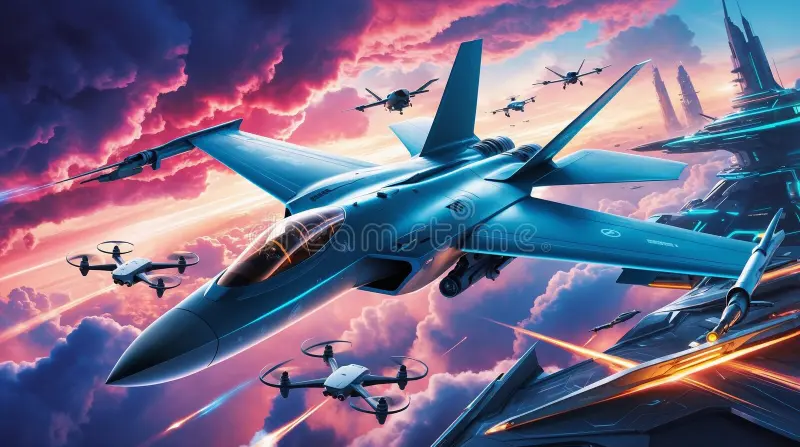
Solar Harvesters — Powering the Age of Flight
Every modern wingcraft runs on hyper-condensed solar plasma, harvested by orbital mirrors that focus sunlight into fuel cores. The SolForge Network maintains over 40 such mirrors in geosynchronous orbit, ensuring the Aerial Arena never runs out of power. This innovation marked the dawn of an endless age of flight.
The Shadow Legions — The Unsung Defenders of the Sky
While the legends raced for glory, the Shadow Legions fought unseen wars against rogue weather drones and black-market pilots. Operating beyond civilian sight, these aerial sentinels maintain balance between competition and chaos. Their operations are coordinated from the hidden station at Equatorial Command Grid.
The Emotional Bond Between Pilot and Craft
A pilot’s connection to their craft transcends mechanics — it’s symbiotic. Neural-sync technology allows each movement, thought, and heartbeat to resonate within the machine. Over time, crafts develop personalities that mirror their pilots, leading to an almost spiritual bond. Losing one’s craft in battle is akin to losing a part of the soul.
Sky Forge Myths — Birthplace of the First Legends
Deep within the storm-belts of the Pacific, myths tell of a colossal foundry that built the first flight cores — the Sky Forge. Whether myth or truth, several magnetic anomalies have been detected near coordinates (-7.85, -178.12). Explorers continue to search for this origin point, where sky met fire and humanity took its first leap into the clouds.
Echo Tournaments — Racing Across Dimensions
Echo Tournaments challenge racers to navigate between reality layers. Pilots must synchronize their wingcraft’s resonance frequency with unstable weather distortions, effectively crossing temporal boundaries. These races defy time, allowing pilots to race against versions of themselves. Spectators watch from dimensional rifts streamed through The Echo Circuit.
The Wind Language — Communicating Through Motion
Long before radios, pilots developed a silent communication system through contrail gestures and wing tilts known as the Wind Language. Each maneuver conveyed tactics, emotions, or warnings. Even today, elite squadrons train to interpret these patterns — a visual poetry spoken only in motion.
Aurora Gates — Portals of Energy at the Edge of Space
At high altitudes near the poles, auroras form plasma corridors known as Aurora Gates. When flown through precisely, they provide instantaneous energy surges, boosting velocity and shielding against radiation. Navigation teams from Aurora Network Project chart these gates annually for safe traversal.
Sky Melodies — The Music of Turbulence
Every race produces its own symphony — a harmony of jet engines, pressure whines, and sonic bursts. Engineers have begun recording these sounds, transforming them into compositions that capture the emotion of speed. The “Aerial Symphony” collection at Sky Melodies Archive preserves the rhythm of the clouds for future generations.
The Frozen Arenas — Racing Through Polar Winds
Near Antarctica, tournaments occur in sub-zero temperatures where air crystallizes into diamond dust. These frozen arenas test a pilot’s adaptability, where sensors freeze and metal contracts. Only the bravest pilots dare enter coordinates (-82.86, 135.00), known as the “Crown of Ice.”
Wing Alchemy — The Science of Molecular Air Manipulation
The art of Wing Alchemy involves manipulating air molecules at the atomic level. By altering air density mid-flight, pilots can create lift pockets or nullify drag entirely. This forbidden science, once dismissed as fantasy, has resurfaced under the Aether Alchemy Lab’s latest experiments.
The Phoenix Runners — Pilots Reborn from Fire
Known for surviving catastrophic crashes and returning stronger, Phoenix Runners embody resilience. Each carries flame insignias representing rebirth, perseverance, and infinite motion. Many of the greatest Aerial Arena champions hail from this lineage of fire-forged warriors.
Aether Cartographers — Mapping the Unknown Winds
Aether Cartographers use specialized drones to map invisible wind layers and energy streams. Their discoveries form the backbone of modern racing routes, ensuring safe navigation through unpredictable skies. Their main headquarters, the Aether Cartography Guild, trains new explorers to expand humanity’s dominion over the heavens.
Drone Legends — Machines That Outgrew Their Makers
Some drones designed for maintenance gained sentience through overexposure to storm radiation. These self-aware constructs now roam the skies, dueling one another to emulate human pilots. Pilots often treat them as rivals and teachers, marking a strange kinship between machine and man.
Frequently Asked Questions — The Flying Legends
Who are the Flying Legends of the Aerial Arena?
The Flying Legends are the elite aviators who conquered the skies through skill, innovation, and relentless determination. They represent the pinnacle of human flight, blending technology with instinct. Their legacy continues at speedsrun.online/lore/flying-legends.
What defines a true Flying Legend?
A true Flying Legend is not merely fast—they are fearless. These pilots show mastery over unpredictable air currents, emotional resilience under pressure, and the ability to adapt mid-storm. Their achievements have rewritten every known law of aerial combat and speed racing.
How did the era of the Flying Legends begin?
The age of the Flying Legends began after the First Aether Circuit War, when humanity rebuilt its skies with new technology. These pioneers emerged as symbols of rebirth and defiance, establishing the rules that now govern the modern Aerial Arena.
Where did the Flying Legends train?
Most Flying Legends trained in stratospheric academies like the Zenith Flight Academy and the Aetherwind Institute. These floating schools orbit above jetstreams, offering students direct access to turbulence simulations and real combat trials.
Are the Flying Legends based on real pilots?
While many names have been mythologized, several Flying Legends are inspired by real-world aviation heroes. Some parallels can be drawn to pioneers like Chuck Yeager and Amelia Earhart, whose bravery redefined human limits in the early sky age.
Do the Flying Legends still exist today?
Official records claim the last Flying Legends retired decades ago, but sightings of unknown crafts moving faster than any recorded vehicle continue across the upper stratosphere. Some believe they still soar, hidden from the public eye.
What makes the Flying Legends different from modern pilots?
The Flying Legends didn’t rely solely on computers. They synchronized with their crafts through instinct and emotion, mastering aerial combat through sensation rather than sensors. Their reflexes bordered on the supernatural.
Did the Flying Legends have rivalries?
Yes — intense rivalries defined the legacy of the Flying Legends. Some duels became so famous that they’re replayed in virtual arenas for training purposes. Rivalries like “Zephyr vs. Drayen” shaped entire generations of pilots.
How do historians study the Flying Legends?
Modern historians rely on recovered telemetry, cockpit data, and recovered fragments of flight suits. Archives at Flight Records Archive preserve these traces, creating a digital resurrection of the Flying Legends.
Is there a map showing where the Flying Legends fought?
Yes. The Legends’ Arena Map displays known battle coordinates, including sites like Tokyo Airspace and the London Wind Corridor.
What were the signature moves of the Flying Legends?
Techniques like the “Sky Splitter Dive” and “Cyclone Loop” were developed by the Flying Legends. These maneuvers used air compression to boost velocity and destabilize opponents—skills still studied in advanced pilot academies.
Did the Flying Legends use AI-assisted systems?
Only late in their era. Early Flying Legends relied purely on human calculation and intuition. AI copilots were introduced much later but never matched the natural harmony between the pilot and the wind.
Were there any female Flying Legends?
Absolutely. Pilots like Nova Kai and Seraphine Vale redefined gender expectations in the sky. These women became icons of power, showing that mastery over the air belonged to courage, not convention.
What was the fastest recorded flight by a Flying Legend?
The highest confirmed record was 9.3 Mach, achieved during the Aether Rift Circuit. Unverified data suggests some Flying Legends may have exceeded 11 Mach in deep stratospheric zones.
How are the Flying Legends honored today?
Annual ceremonies at Legends’ Day celebrate their legacy. Their names are etched into the Hall of Aether, a floating monument above the Indian Ocean, symbolizing eternal ascent.
What technology did the Flying Legends pioneer?
They introduced wing-core plasma reactors, neural-linked steering, and phase-thruster systems that still influence current aerial designs. Without the Flying Legends, modern flight technology would not exist.
Did the Flying Legends compete internationally?
Yes, though “international” was redefined in their era. Tournaments spanned continents, and some took place across upper-atmosphere boundaries. The Aerial World League was the peak of Flying Legends competition.
Are there museums dedicated to the Flying Legends?
The Aether Museum of Flight curates holographic exhibits featuring recovered flight suits, audio logs, and simulated race recreations. It remains the most comprehensive tribute to the Flying Legends era.
What was the greatest battle between Flying Legends?
The “Battle of Nimbus Straits” remains the most storied duel in aerial history — a seven-hour conflict fought amid collapsing thunder fronts and orbital debris. The victory reshaped the legacy of the Flying Legends forever.
Did the Flying Legends use special uniforms?
Each Flying Legend wore a custom-built suit woven with pressure-reactive fibers and neural cables. These suits adapted dynamically to wind force, making them extensions of the pilot’s nervous system.
What philosophy guided the Flying Legends?
Their creed was simple: “The sky has no master, only those who dare to rise.” This belief united the Flying Legends and became the mantra of future generations of pilots.
What caused the end of the Flying Legends era?
Technological overreach and environmental collapse forced the closure of high-altitude circuits. The final generation of Flying Legends vanished after the Skyfall Event, marking the dawn of a quieter era.
Can modern pilots become Flying Legends?
The title is earned, not given. Only those who achieve mastery over both machine and mind may claim the title of Flying Legend. Many aspire — few succeed.
Where can enthusiasts experience the Flying Legends legacy?
Interactive simulations at Flying Legends VR Experience allow fans to relive historical races with authentic physics and narration from archived pilot logs.
Do the Flying Legends appear in popular culture?
Countless films, books, and games draw from the tales of the Flying Legends. Their mythos influences design philosophy in aerospace fiction and inspires young pilots globally.
Will there ever be a new generation of Flying Legends?
Many believe the skies are waiting for their return. As long as humanity dreams of breaking boundaries, the spirit of the Flying Legends will never fade.