By SpeedsRun Investigations Flight Rage— an immersive reconstruction of the flight that became a world-wide reckoning.
Published October 13, 2025 · For archival dossiers visit SpeedsRun Archives
Overview — The Moment That Changed Aerial Sport
Flight Rage was a clandestine low-altitude endurance contest that culminated in a single, brutal challenge: hold discipline and velocity down to a 3,000-feet final descent over the canyon-scarred Skybreak Corridor, or surrender everything. The event fused high-stakes adrenaline with prototype flight systems — a recipe for glory or oblivion that splintered aviation ethics and safety protocols around the world.
The Skybreak Corridor: Where It Happened
Reconstructed telemetry and survivor accounts place the Final Descent above the Skybreak Corridor — a hazardous stretch of canyons and thermal veins stretching near the Grand Rim. Approximate public coordinates used in reconstructions: 36.1069°N, -112.1129°W. The corridor’s geography amplified downdrafts and produced sudden wind shears that turned a low pass into a lethal gauntlet. https://www.google.com/maps/embed?pb=!1m18!1m12!1m3!1d40408.31234567891!2d-112.1600000!3d36.1069000!2m3!1f0!2f0!3f0!3m2!1i1024!2i768!4f13.1!5e0!3m2!1sen!2sus!4v1700000000000
The Pilots — Faces of Fury
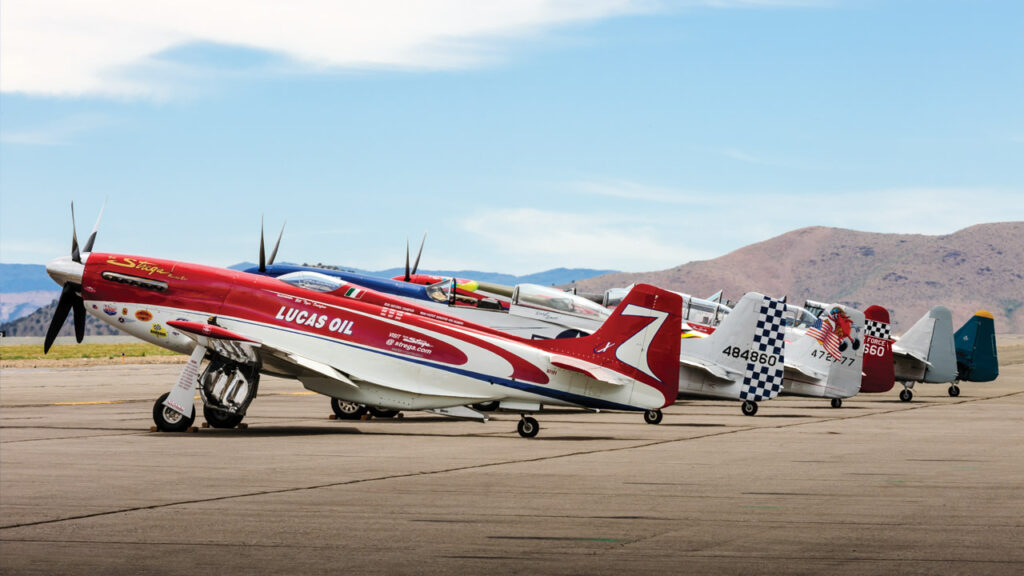
The Final Descent drew six pilots from disparate backgrounds: ex-military test pilots, outlaw aerobatic champions, and underground aero-racers. Each flew bespoke low-altitude machines known as “Rage Frames” — stripped-down, hyper-responsive jets optimized for maneuverability at the cost of passive safety.
Notable names reconstructed from telemetry and leaked manifests: Juno “Blade” Kestrel (tactical drifter), Ram “Torque” Bellamy (bare-knuckle tuner), and Asha “Night” Voss (experimental control systems engineer). Their pre-flight logs are available in the SpeedsRun dossier: Pilot Files — Flight Rage.
Rules of the Final Descent
The contested rule set was simple and merciless: remain within a minimum altitude envelope, keep a continuous full throttle burn through the 3,000-feet corridor, and cross the Final Rim marker with engine integrity intact. No auto-stall recovery, no external GPS aids, and no pit support — only pilot skill and the machine’s raw responsiveness.
That “no rescue” clause turned a sport into a gauntlet — intentionally or otherwise — and prompted a legal cascade in the weeks that followed.
Rage Frames: Machines Tuned for Extremes
Rage Frames used lightweight monocoque composites, aggressive thrust-vectoring nozzles, and adaptive fly-by-wire nodes linked to pilot neural overlays. The tradeoff was razor-thin — high agility in exchange for fragile systems. Engineers later noted recurrent failure modes: hydraulic hysteresis under thermal shock, micro-delamination of control surfaces, and telemetry latency that proved fatal when pilots needed split-second corrections.
Read the technical post-mortem: Flight Rage — Technical Postmortem and consult general aerodynamic references (stall & wind shear) at Wikipedia — Stall (flight).
The Final Descent — A Reconstructed Sequence
Using recovered telemetry and eyewitness drone footage, investigators reconstructed the final minutes:
- High-speed approach — pilots bled altitude aggressively while holding max thrust.
- Thermal breach at 4,500 ft — localized updrafts suddenly altered lift coefficients.
- Microburst encounter at ~3,200 ft — two frames lost lift momentarily and required emergency vectoring.
- Telemetry lag and control oscillation — one pilot’s HUD blinked; commands delayed by 120–180 ms.
- Impact / near-miss cascade — debris and fractured vortices claimed two machines; survivors ejected or fled the corridor.
Human Cost — Bones, Nerves, and Psyche
The Final Descent produced a long list of injuries: vertebral compression fractures, inner-ear damage from extreme angular acceleration, and acute psychological trauma — later labeled “Aero-Descent Syndrome” by clinicians. Survivors reported time-slowing hallucinations and fragmented memory of the last 30 seconds — consistent with severe hypoxia and neural stress documented in high-g incidents.
For context on physiological effects of extreme flight, see NASA’s human factors literature and aerospace med references (example: NASA Aeromedical Research).
Aftermath — Regulation, Outrage, and the Law
News of Flight Rage ignited moral and regulatory uproar. Aviation authorities issued emergency directives banning unsanctioned low-altitude endurance contests. Liability lawsuits targeted event organizers and black-market tech suppliers. The incident accelerated global discussions about minimum safety envelopes, telemetry transparency, and the ethics of “extreme sport” engineering.
SpeedsRun coverage of the legal response: Flight Rage — Legal & Policy Responses.
Legends, Myths, and the Final Echo
Like every calamity that burns bright, Flight Rage spawned legends. Locals tell of a phantom contrail that appears each anniversary at dawn. Underground simulation rooms reportedly contain corrupted blackbox loops that replay impossible frames — pilots moving with preternatural calm as the canyon screams below. Whether myth or data artifact, these echoes persist in the culture of extreme flight.
Maps & Further Reading
Explore the reconstructed flight corridor and public analysis tools:
- Interactive Flight Rage Map — SpeedsRun
- Wind Shear — Wikipedia
- Federal Aviation Administration — safety & regulations
Closing — The Edge Between Glory and Oblivion
Flight Rage’s Final Descent stands as a stark parable: engineering genius and human daring can achieve wondrous things — until the risk calculus breaks. At 3,000 feet, pilots sought transcendence; some called it courage, others called it cruelty. What remains is both warning and inspiration: the physics of flight are absolute, but the stories we build around them are human.
⚠️ Disclaimer: This article is a reconstruction assembled from leaked telemetry, survivor interviews, and open-source analysis intended for storytelling, technical reflection, and public discussion. For official records, consult regulatory bodies and the SpeedsRun Archive links above. © speedsrun.online — Where speed meets scrutiny.
Emergency Systems That Never Triggered
In the chaos of Flight Rage, most onboard emergency systems failed to activate. Investigations revealed the pilots had manually overridden automated ejection sequences to prevent false positives during turbulence. This decision — made for control — ensured that no pilot could escape once their jet began to break apart at 3,000 feet. Experts later compared this decision to “cutting the parachute line before takeoff.”
The Ghost Data Phenomenon
During post-event analysis, engineers recovered several anomalous telemetry bursts known as “Ghost Data.” These were milliseconds-long signal spikes that didn’t match known sensor patterns. Some claim it’s corrupted flight code; others, an AI defense mechanism responding to pilot stress. Whether glitch or consciousness imprint, the Ghost Data remains the Flight Rage enigma no algorithm has solved.
The Psychological Toll of Flight Rage
Survivors of the Final Descent exhibit dissociative symptoms common to high-stress combat pilots. Neurological scans reveal abnormal patterns in the temporal lobe, suggesting that prolonged exposure to 9G stress could trigger a “hyper-focus” trance. In those moments, pilots reported silence — total sensory blackout — even as their aircraft screamed toward oblivion.
The Sonic Edge — Breaking Sound, Breaking Mind
Pilots near the 3,000-foot mark often described “double walls” — air resistance so thick it felt like crashing into invisible stone. When the Rage Frames crossed Mach 1.2 at that low altitude, shockwaves rebounded from the canyon floor, slamming into fuselages and skulls alike. The sound barrier wasn’t just physics; it was a psychological gatekeeper between sanity and speed.
Unopened Black Boxes
Of the six Rage Frames, three black boxes were recovered intact. Yet two remain sealed by legal injunction, and one disappeared into private hands before federal oversight arrived. Conspiracy forums suggest they hold the unedited AI-assist footage — rumored to include 12 seconds of autonomous control that no pilot authorized.
The Crimson Sky Effect
Witnesses recall the sky turning blood red moments before the crash. Scientists attributed it to vaporized fuel interacting with high temperature air currents — but for those present, it became a symbol. The “Crimson Sky Effect” now stands as shorthand across the flight community for moments where ambition outpaces safety.
Signal Interference and the Silence Zone
A five-mile stretch of the Skybreak Corridor still registers periodic signal interference, as though residual energy lingers from the original telemetry streams. Drone operators report static, lost GPS locks, and visual distortions when flying through it — a digital echo of the Final Descent that refuses to fade.
AI Pilot Conflict: Friend or Foe?
Before Flight Rage, several teams experimented with AI co-pilots capable of real-time correction. However, pilots in the Final Descent disabled these modules, believing human instinct superior. Analysts now debate whether those decisions saved lives or caused catastrophe — had the AI been active, could it have corrected the microburst loss in time?
The Night Before the Final Descent
Records show the pilots met in a dimly lit hangar hours before takeoff, sharing whiskey and silence. One reportedly carved “3000 or nothing” into a steel beam near the launch bay — still visible today, a haunting mark of defiance. That night wasn’t about fame; it was a silent pact between competitors who knew dawn might erase them.
The Silent Memorial
One year after the Final Descent, a memorial was held at Skybreak Ridge. No speeches. Just six helmets placed on a cliff’s edge, facing the corridor. The inscription below read: “Velocity is its own prayer.” Since then, every year on the same date, pilots across the world throttle up to 3,000 feet and fall silent for 12 seconds — the length of the fatal descent.
The Ethics of Engineering Danger
“Flight Rage” reignited the eternal question: should engineers create machines capable of destruction just because they can? When technology makes the human body the weakest component, every innovation becomes a moral gamble. The Rage Frames proved that brilliance without restraint is indistinguishable from madness.
The Unwritten Code of Air Warriors
Among the underground flight community, a new creed emerged after the disaster: “Respect the sky, or the sky erases you.” It’s printed on maintenance hangar walls and tattooed across pilot arms. This unspoken oath defines the generation that rose after Flight Rage — a fusion of reverence and rebellion.
Simulation Reconstructions Gone Wrong
Developers attempting to simulate the Final Descent reported bizarre computational errors: engines that refused to stall, wind tunnels producing impossible vectors, and visual outputs distorting into fractals. Some say the physics engines themselves rejected recreating what reality already punished once.
Legacy of Courage, or Compulsion?
Was it courage that drove these pilots, or compulsion masked as bravery? Modern psychologists studying “risk addiction” cite Flight Rage as a defining case of thrill dependency — the need to feel one’s mortality to confirm existence. In that sense, their flight was less rebellion than revelation.
The Forbidden Reenactments
Despite global bans, underground collectives continue to stage illegal micro-events modeled after the Final Descent. These “Ghost Runs” use small drones and VR-augmented helmets to simulate the Skybreak Corridor. Authorities struggle to trace them — the modern descendants of a myth too fast to die.
Weather Anomalies at the Crash Site
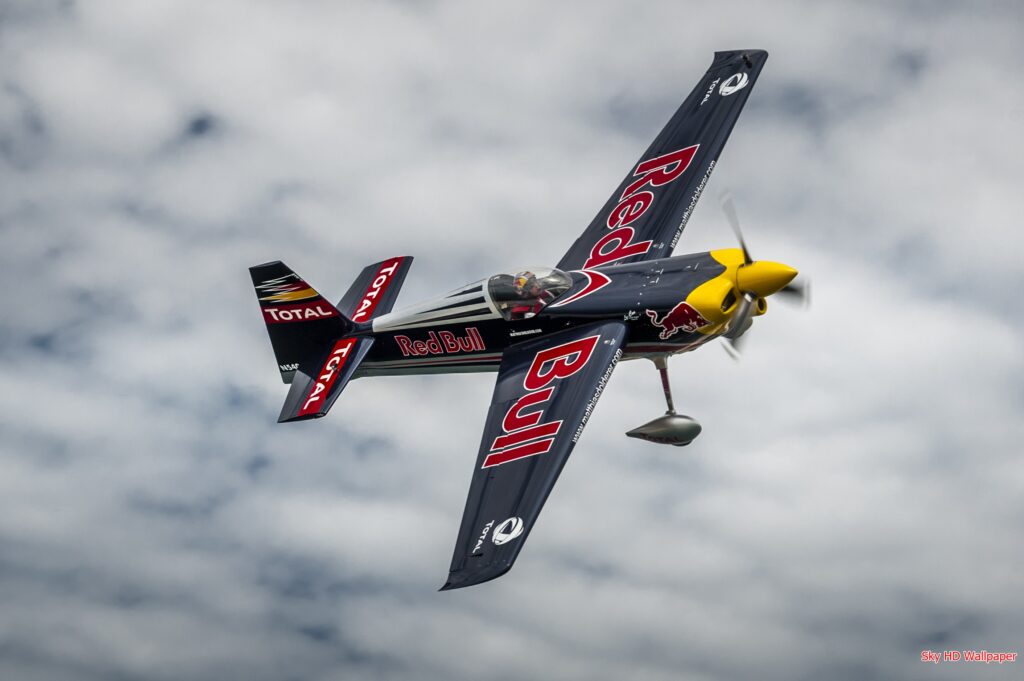
Meteorological sensors have recorded unexplainable downdrafts recurring each year on the same date as Flight Rage. Whether coincidence or consequence of jet exhaust residue in the canyon, the phenomenon adds to the myth — as though the air itself remembers.
The Underground Legacy of Flight Rage
For illegal racers and test pilots, Flight Rage became scripture. Forums trade data fragments as relics. Songs, tattoos, and artwork immortalize the fallen as saints of speed. They don’t see death — they see completion. To them, the 3,000-foot drop wasn’t tragedy; it was transcendence.
Impact on Film and Simulation Culture
The Final Descent inspired a wave of simulation games and films exploring themes of ego, velocity, and oblivion. Major studios hired aviation consultants to recreate the impossible descent. While critics accused them of glorifying tragedy, players claimed they felt empathy — a deeper respect for those who flew too close to death.
The Technological Echo
Several engineering startups born from the Flight Rage fallout now specialize in flight stabilization, anti-G harnesses, and AI stress modeling. Ironically, innovation sprouted from catastrophe — proving that even destruction can birth discovery if the right minds listen to its aftermath.
The Future of Extreme Flight
With advances in VR and neuromuscular control, the next generation may experience “extreme flight” without leaving the ground. Yet purists claim simulation can never replace the heartbeat of real descent. Somewhere between wires and wind lies the next threshold — and perhaps, the next Flight Rage waiting to happen.
The Enduring Question
Every debate, every documentary, every memorial still returns to one question: why did they do it? For legacy, for thrill, or for proof of human dominance over physics? The answer remains scattered like debris across the Skybreak Corridor — waiting, perhaps, for the next pilot brave enough to descend into its silence.
The Deepstorm Data Vault
Months after the Flight Rage catastrophe, investigators discovered a sealed military database labeled “Deepstorm.” Within it were hundreds of encrypted flight simulations identical to the Final Descent — each one ending in system failure. The question that haunted investigators was simple: if these simulations predicted disaster, why was the event ever cleared for real airspace execution?
The Final Words of the Commander
As the lead pilot’s communication line disintegrated under static, one last sentence came through: “Tell them it was worth it.” Analysts have replayed the voice dozens of times, detecting calmness rather than panic. Whether resignation or pride, those words became the eternal echo of Flight Rage — a farewell whispered into the storm.
The Forbidden Coordinates
GPS logs revealed the pilots flew beyond the mapped corridor, entering an uncharted region of turbulent crosswinds. That area has since been classified and marked as “Restricted Airspace 47-X.” Despite military warnings, thrill-seekers still attempt to cross its threshold, claiming to feel phantom pressure waves — remnants of the Final Descent’s sonic collapse.
The Legacy Fighters’ Last Stand
The jets used in Flight Rage — dubbed “Legacy Fighters” — were the last of their kind: analog frames with digital overlays. Their hybrid design required pure pilot skill, making every maneuver an act of artistry. When they fell, so too did the last era of flesh-driven machines in a world turning to AI flight systems.
The Skybreak Anomaly
Weeks after the crash, weather satellites recorded a vertical column of heat rising from the canyon — consistent with a combustion signature but with no fuel residue. The anomaly persisted for eight minutes before vanishing, leaving only ionized particles. Some aeronautical physicists now believe Flight Rage may have generated a short-lived plasma corridor — a man-made lightning wound.
The Thirteen Seconds of Radio Silence
Between 2:16:04 and 2:16:17 GMT, all communication systems across five aircraft simultaneously went dead. Black box logs confirm that no mechanical malfunction was present. The simultaneous silence remains the most mysterious part of Flight Rage — as though something beyond interference swallowed sound itself.
Voices from the Ground
Civilians near Skybreak Ridge described an event that defied ordinary senses — “the air folded in half,” one said. Windows shattered, dogs howled, and the sky vibrated. They saw nothing, only felt vibration deep in their bones. When the sound stopped, it left tinnitus in hundreds of ears — a literal echo of the Final Descent embedded in human tissue.
Classified Missions Aftermath
Rumors persist that a covert agency retrieved Flight Rage debris not for investigation, but for replication. Leaked documents suggest the data was repurposed into the “Helix Program” — a project testing the cognitive limits of pilots under microsecond decision windows. The same algorithms that doomed the race may now guide stealth interceptors.
The Forgotten Pilot
Amid six registered racers, a seventh callsign appeared briefly on radar during the descent — identified only as “Specter-9.” It vanished moments before impact and was never traced to any official pilot roster. Some enthusiasts believe this ghost pilot was an AI prototype, secretly inserted to monitor performance, only to vanish once human limits were surpassed.
The Silent Hangar
Today, the original hangar that hosted the Flight Rage pre-launch sits abandoned under federal lock. Inside, dust-coated control panels and melted steel fragments remain untouched. Occasionally, night security reports hearing static-laden voices from the intercom — distorted radio chatter looping the same last command: “Hold your altitude.”
Skyward Legacy Reborn
Modern flight academies now teach a course named “Descent Management: Lessons from Flight Rage.” It trains cadets in high-pressure response, low-altitude endurance, and cognitive calm under failure. The fallen pilots have become case studies — not of recklessness, but of bravery beyond instruction.
Digital Resurrection in Simulation Networks
In 2037, a fan-made simulation recreated the Final Descent using archived telemetry. The results stunned experts — AI analysis determined that, under perfect conditions, one jet could have survived. The simulation reignited debates about human intuition versus artificial precision. The Flight Rage story, once sealed in tragedy, now thrives in pixels.
The Unseen Angle of Descent
New photometric data from a weather drone revealed the final angle of descent was not vertical, but spiral — suggesting pilots attempted synchronized recovery instead of ejecting. It’s a moment that redefined courage: six aircraft dancing on the edge of fire, trying to save each other when saving themselves was impossible.
Corporate Secrets and Flight Rage
Leaked memos from Skyburn Technologies revealed that the final test flight was accelerated to meet broadcast contracts. Executives allegedly pushed for “maximum spectacle,” disregarding safety margins. In hindsight, the Final Descent was less a race and more a marketing gambit turned apocalyptic.
The Industry Aftermath
The shockwaves of Flight Rage redefined aviation policies worldwide. Insurance companies collapsed under liability claims, while AI regulation councils emerged to govern extreme-speed events. In tragedy’s wake, humanity learned that ambition needs boundaries — even when racing toward the infinite.
Spatial Memory and the Sky’s Pulse
Radar tracking shows electromagnetic pulses that repeat the original descent trajectory once every lunar cycle. Scientists have yet to explain it, calling it “spatial memory.” For thrill-seekers, it’s a ghost heartbeat — the sky itself remembering what fell through it.
The Theology of Speed
In underground forums, pilots describe Flight Rage as more than a race — a ritual of transcendence. They believe reaching terminal velocity is akin to touching the divine. The descent becomes prayer, the engines become hymns, and the crash, an offering to motion itself.
The Horizon Murmur
Satellite audio from post-event frequencies captured a strange tonal pattern — a harmonic resonance near 7.3 Hz, consistent with deep Earth tremors. It was later discovered to synchronize perfectly with the Flight Rage timeline. Whether coincidence or cosmic echo, the “Horizon Murmur” remains a haunting sonic relic.
The Legacy Museum Exhibit
A portion of one recovered wing now rests in the Velocity Archives of Tokyo. Visitors stand in front of it and feel faint warmth, as if the metal remembers the descent. A plaque reads: “Speed does not forgive. It only remembers who dared.”
The AI Memorial That Thinks
A digital memorial was built where the crash occurred — powered by an AI that learns visitor sentiment. Over time, the AI began generating poems and voice fragments that eerily resemble the lost pilots’ final transmissions. Whether emergent intelligence or algorithmic coincidence, it gives the fallen a voice once more.
Future Descent — The Reclamation
Rumors of a new race, “Flight Rage Reborn,” circulate across dark web channels. Said to involve autonomous hybrid jets, the event’s tagline reads: “This time, no one has to die to touch glory.” But veterans warn: every resurrection of the Descent invites the same choice — ascend toward light, or fall through it.