Off-road racing pushes vehicles to their limits over rough terrain, demanding exceptional durability, handling, and performance. At the heart of every competitive off-road machine lies the chassis—a structural backbone that defines the vehicle’s capability, safety, and responsiveness. Whether crawling over rocks, sprinting across deserts, or navigating forest trails, a well-designed chassis makes the difference between winning and breaking down.
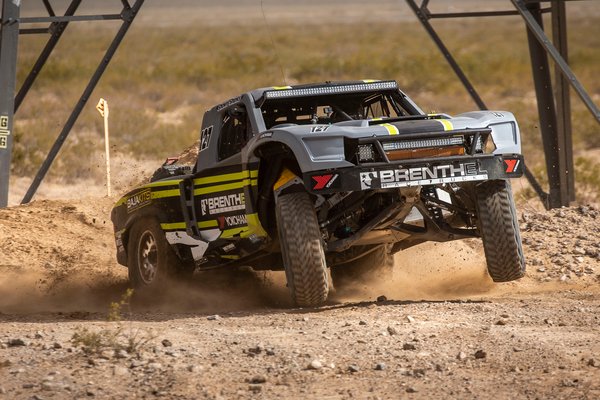
In this comprehensive guide, we’ll explore everything you need to know about off-road racing chassis:
- What a chassis is and why it matters
- Key components and materials used
- Types of off-road chassis designs
- Suspension integration and travel
- Safety considerations and regulations
- Building, modifying, and maintaining a chassis
- Real-world examples and case studies
By the end, you’ll have a complete understanding of how racing chassis are engineered for performance and toughness.
🔎 What Is a Racing Chassis? Off-Road Racing Chassis
Definition and Purpose
A chassis is the vehicle’s structural frame that supports the engine, transmission, suspension, body, and occupants. In off-road racing, it must be:
- Strong enough to withstand impacts and jolts
- Lightweight to maintain speed and agility
- Flexible to work with suspension without failing
- Safe to protect the driver and co-driver in crashes
The chassis is the literal backbone of a race vehicle. It determines how forces travel through the vehicle and how the vehicle responds to terrain and driver inputs.
A good analogy: think of the chassis as the skeletal structure of a human body—everything relies on it.
Chassis vs. Frame vs. Monocoque Off-Road Racing Chassis
In modern automotive use, “chassis” can refer to: Off-Road Racing Chassis
| Term | Meaning |
|---|---|
| Frame | Traditional ladder or tubular structure that supports everything |
| Monocoque | Unified structure where body and chassis are one piece (common in modern cars) |
| Spaceframe | Tubular network used in racing for strength and light weight |
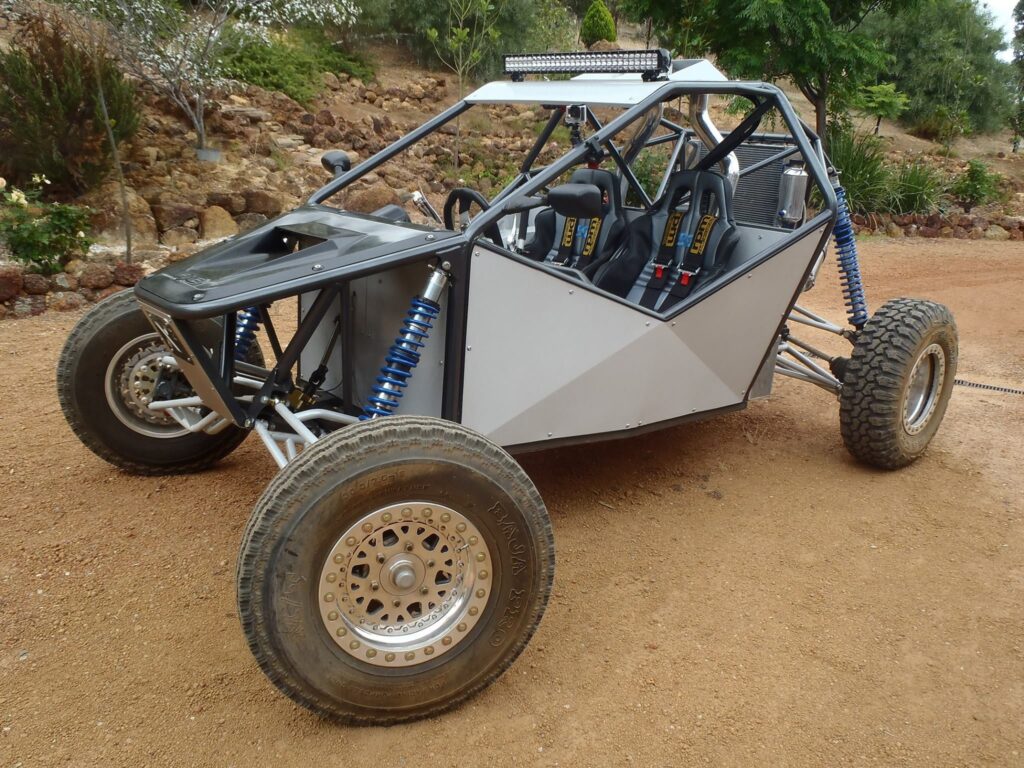
In off-road racing, spaceframe chassis are most common due to their perfect balance of strength and weight.
👉 For more on automotive chassis basics, see this overview on Wikipedia: Chassis (automobile) —
🧱 Key Chassis Components Off-Road Racing Chassis
A racing chassis isn’t just metal welded together. It’s a system of engineered components:
1. Main Frame Rails Off-Road Racing Chassis
These are the longest structural members, running along the length of the vehicle. They support major loads from the engine, suspension, and collision impacts.
2. Cross Members Off-Road Racing Chassis
Cross members connect the side rails and help resist twisting forces.
3. Suspension Mounts
Attachment points for shocks, control arms, and linkages. These must be reinforced to absorb stress.
4. Engine and Transmission Mounts
These isolates vibration and keep the drivetrain solidly in place.
5. Roll Cage Off-Road Racing Chassis
A network of tubes around the cabin designed to protect occupants in a crash.
🛠️ Materials Used in Off-Road Chassis
The choice of material affects strength, weight, cost, and performance.
Steel Alloys
Common choice for racing chassis because of:
- Good strength Off-Road Racing Chassis
- Excellent toughness Off-Road Racing Chassis
- Ability to absorb impactOff-Road Racing Chassis
- Relatively low cost Off-Road Racing Chassis
Popular options include:
- DOM (Drawn Over Mandrel) tubing
- Chromoly (e.g., 4130 steel alloy)
Steel is heavier than other materials, but its resilience makes it ideal for desert trucks and rock crawlers.
Aluminum Off-Road Racing Chassis
Used in some race chassis parts due to:
- Lower weight
- Corrosion resistance
However, aluminum is less tough than steel and can crack under extreme stress, so it’s mostly used in non-critical areas, brackets, or panels.
Composite Materials Off-Road Racing Chassis
Carbon fiber and fiberglass are used in body panels and certain components, but full composite chassis are rare in extreme off-road due to brittleness.
🚗 Chassis Design Types Off-Road Racing Chassis
Different racing formats demand different chassis designs. The most common include:
1. Tube Frame / Spaceframe Off-Road Racing Chassis
A network of tubes welded into a rigid structure. Advantages:
✔ Extremely strong
✔ Can be custom-built
✔ Repairs are possible in the field
This is the dominant design for off-road racing.
2. Ladder Frame
Simpler design with two side rails and cross members. It’s cheaper but heavier and less rigid.
3. Backbone Chassis
Central “spine” running down the middle of the vehicle; uncommon in off-road racing.
4. Monocoque / Semi-Monocoque
The body and chassis are integrated. High performance but expensive and hard to repair after heavy impacts.
🏁 Integration With Suspension Off-Road Racing Chassis
The chassis doesn’t work alone — it must work with the suspension to handle bumps, jumps, and scrubby terrain.
Suspension Components
Most off-road racers use:
- Long-travel shocks
- Coilovers or bypass shocks
- Multi-link arms
- Anti-roll bars
Each of these must attach to reinforced points on the chassis.
Travel and Articulation Off-Road Racing Chassis
One hallmark of off-road racing is suspension travel — how far wheels can move up and down without hitting limits.
Greater travel equals:
- Better bump absorption Off-Road Racing Chassis
- Better traction
- Higher cornering capability over uneven ground
…but also adds complexity and weight.
🛡️ Safety and Roll Cage Standards
Safety is critical. A racing chassis must integrate a roll cage that meets regulatory standards.
Common standards come from:
- SFI Foundation (SFI Spec 43.1)
- FIA / FIM Regulations
- SAE J2194
The roll cage must protect occupants during a rollover and high-impact collisions.
Best practice: follow off-road racing association rules before building — not after.
🔄 Building a Chassis: Step by Step
Building a race-ready chassis is a blend of engineering, fabrication skill, and testing. Here’s a simplified workflow:
1. Design and CAD
Start by creating a detailed CAD model using software like:
- SolidWorks
- Fusion 360
This helps visualize loads, tube placements, and brackets.
2. Material Selection
Choose tube sizes and materials. Common choices:
- 1.75″ x .120″ DOM for main rails
- 1.50″ x .095″ DOM for secondary members
3. Jig Setup
Build a jig to hold pieces in place as you weld them — accuracy here ensures final fitment.
4. Welding
Most chassis builders use MIG or TIG welding. TIG gives cleaner and stronger welds but is slower.
5. Heat Treat and Inspection
After welding, some builders choose to heat-treat critical areas to relieve stress. Inspect welds with dye penetrant or X-ray for faults.
6. Test Fitting Suspension, Engine, and Body
These must all fit perfectly before paint or powder coating.
⚙️ Common Chassis Modifications in Racing
Even experienced racers modify chassis to optimize performance:
Lowering Center of Gravity
By relocating heavy components lower in the vehicle:
- Improves handling
- Reduces roll
Reinforcing High-Stress Areas
Particularly around:
- Suspension mounts
- Engine mounts
- Roll cage junctions
Weight Reduction
Removing unnecessary steel and replacing panels with lightweight materials.
Adjustable Geometry
Adding adjustable tabs and mounts allows tuning of suspension setup for different terrain.
🏆 Chassis Choices for Different Off-Road Disciplines
Different off-road racing formats use different chassis philosophies:
| Racing Type | Typical Chassis |
|---|---|
| Desert Racing (Baja) | Long-travel tube frame |
| Rock Crawling | Heavy duty tube frame with articulation |
| Dunes & Sand | Lightweight, flexible frame |
| Short Course | Reinforced ladder or spaceframe |
Each has unique priorities:
- Desert racing values speed and durability
- Rock crawling values low speed torque and articulation
- Sand racing values light weight and engine cooling
Pictures: Chassis in Action

📌 Maintenance and Inspection Checklist
Owning a race chassis means regular checks:
- Weld cracks
- Tube alignment
- Suspension mounting bolt torque
- Rust or corrosion
- Roll cage integrity
- Shock absorber mounts
If you find frame cracks, repair immediately — continued use can cause catastrophic failure.
🧠 Engineering Challenges and Innovations
Heat Dissipation
Off-road engines produce massive heat. The chassis must allow airflow instead of trapping heat.
Vibration Stress
Repeated shock loads can cause metal fatigue. High-quality welding and material choice help.
Rapid Prototyping
Teams now use 3D printing for:
- Suspension brackets
- Mock-ups
- Custom parts
📚 Further Reading and Resources
External Links
- How Race Cars Are Built (Hooniverse) –
- Desert Racing Explained (Off-Road.com) –
Internal Sections (On Your Site)
- Understanding Off-Road Tires | /tires-guide
- Shock Absorbers Explained | /suspension-basics
- Vehicle Weight Distribution | /weight-balance
⭐ Case Studies: Successful Chassis Builds
Baja 1000 Winning Truck
A deep dive into a championship truck’s chassis design showed:
✔ Reinforced main rail structure
✔ High-travel coilover system
✔ Adjustable suspension geometry
This truck finished the grueling race with minimal chassis damage.
Rock Crawler Chassis
A custom crawler built with:
- 4130 chromoly tubing
- Full roll cage
- Modular suspension mounts
This vehicle excels at low speeds and can handle severe articulation without frame twist.
If you’d like this formatted in HTML, with custom images and SEO optimization for your website, let me know!

Off-Road Racing Chassis: Complete Engineering Guide
Advanced Design, Fabrication, Performance Tuning & Race-Level Engineering
Off-road racing chassis design is not just about welding tubes together. It is a discipline that blends mechanical engineering, materials science, structural dynamics, vehicle physics, and race strategy into a single structural system. In competitive environments like the Baja 1000, where vehicles endure hundreds of miles of brutal terrain, the chassis becomes the difference between finishing and failing.
This expanded guide dives deeper into advanced structural theory, geometry optimization, fabrication standards, stress management, suspension harmonics, weight distribution strategy, and performance tuning used by professional race teams.
1️⃣ Structural Engineering Principles Behind Off-Road Chassis
Load Paths and Force Distribution
Every bump, landing, or corner generates force. That force must travel safely through the chassis without causing failure.
There are four primary forces acting on an off-road racing chassis:
- Vertical impact loads (from jumps and bumps)
- Torsional loads (frame twisting during articulation)
- Longitudinal loads (acceleration and braking)
- Lateral loads (cornering forces)
A properly engineered chassis creates clear load paths, meaning forces travel through designed structural members instead of random weak points.
Why Torsional Rigidity Matters
Torsional rigidity determines how much the chassis twists under stress.
- Too much flex → unpredictable handling
- Too stiff → reduced suspension effectiveness
Professional race teams measure torsional stiffness in Nm/degree. A desert truck may target high rigidity, while a rock crawler may allow controlled flex.
2️⃣ Advanced Chassis Geometry
Geometry is one of the most overlooked aspects in amateur builds.
Triangulation
The triangle is the strongest geometric shape in structural design. High-performance tube chassis rely heavily on:
- Diagonal bracing
- Cross-bracing
- X-patterns
Triangulation prevents parallelogram deformation under load.
Node-Based Design
All tubes should meet at nodes (intersection points). Good design ensures:
- Load transfers directly from one tube into another
- Minimal bending stress at mid-tube
Poor node placement is a major cause of frame cracks.
3️⃣ Material Science in Off-Road Racing Chassis
DOM vs Chromoly (4130 Steel)
DOM (Drawn Over Mandrel)
- Affordable
- Durable
- Good fatigue resistance
- Slightly heavier
4130 Chromoly
- Higher tensile strength
- Thinner wall possible (weight savings)
- Requires precise TIG welding
- More expensive
Chromoly is common in competitive desert trucks and race buggies.
Fatigue and Metal Failure
Off-road chassis rarely fail due to single impacts. They fail due to metal fatigue.
Repeated stress cycles create microscopic cracks that expand over time.
Critical areas prone to fatigue:
- Shock mounts
- Control arm brackets
- Engine mounting points
- Roll cage junctions
Race teams inspect these areas after every major event.
4️⃣ Suspension Integration: The Heart of Performance
In off-road racing, suspension and chassis are inseparable systems.
Long Travel Suspension
Desert race trucks can have 20–30+ inches of travel. This requires:
- Reinforced upper and lower shock mounts
- Proper motion ratio design
- Optimized shock angle
Poor geometry can cause:
- Bump steer
- Excessive camber change
- Frame cracking
Shock Mount Engineering
Shock mounts are among the most stressed components.
Engineering considerations:
- Double shear mounting (stronger than single shear)
- Reinforced gussets
- Load spread plates
Professional builds often use boxed shock towers integrated into the roll cage.
5️⃣ Chassis Types by Racing Discipline
🏜 Desert Racing Chassis
Used in events like the King of the Hammers and Baja events.
Characteristics:
- High-speed stability
- Massive suspension travel
- Strong torsional rigidity
- Reinforced skid plates
These trucks often reach 120+ mph across open desert.
🧗 Rock Crawling Chassis
- Lower center of gravity
- Greater articulation
- More flexible frame sections
- Compact wheelbase
Precision at low speed is key.
🏁 Short Course Racing Chassis
- High cornering stiffness
- Reinforced door bars
- Optimized for jumps
- Controlled suspension compression
6️⃣ Weight Distribution and Center of Gravity
Professional chassis builders spend weeks optimizing weight placement.
Ideal Weight Balance
- 50/50 (neutral handling)
- 55/45 rear bias (desert acceleration advantage)
Battery, fuel cell, spare tires, and radiator placement all impact balance.
Lowering the center of gravity improves:
- Cornering stability
- Rollover resistance
- Driver confidence
7️⃣ Safety Engineering and Compliance
Professional racing requires compliance with strict standards such as:
- SCORE International
- FIA
- SFI Foundation
Roll Cage Design Requirements
- Minimum tubing diameter
- Minimum wall thickness
- Specific bar placements (A-pillar, B-pillar, roof cross bars)
- Helmet clearance rules
A poorly designed cage can collapse during rollover.
8️⃣ Welding Techniques and Fabrication Standards
MIG vs TIG Welding
| MIG | TIG |
|---|---|
| Faster | More precise |
| Easier | Cleaner weld |
| Slightly heavier weld bead | Preferred for chromoly |
For chromoly chassis, TIG welding is strongly recommended.
Proper Welding Practice
- Clean metal before welding
- Avoid overheating chromoly
- Use fishmouth joints for tube intersections
- Perform penetration checks
Improper welding is one of the biggest causes of race failures.
9️⃣ Reinforcement Techniques
Professional builders use:
Gussets
Small triangular plates reinforcing joints.
Boxing
Enclosing open frame areas with plates to increase rigidity.
Skid Plates
Protect underbody from rocks and debris.
🔟 Real-World Race Engineering
Baja Race Truck Example
A professional desert truck competing in Baja events features:
- Fully triangulated spaceframe
- Integrated roll cage
- Rear trailing arm suspension
- Dual bypass shocks per wheel
- Reinforced engine cradle
After 800+ miles, chassis inspection often reveals stress in:
- Rear suspension pivot points
- Shock towers
- Frame rails near drivetrain
1️⃣1️⃣ Maintenance Strategy for Competitive Teams
Race teams use structured inspection protocols:
Pre-Race
- Dye penetrant crack testing
- Torque verification
- Alignment check
Post-Race
- Remove suspension
- Inspect weld seams
- Measure frame alignment
- Replace stressed brackets
Preventive maintenance is cheaper than catastrophic failure mid-race.
1️⃣2️⃣ Modern Innovations in Chassis Design
CAD & Finite Element Analysis (FEA)
Advanced teams use software like:
- SolidWorks
- Autodesk Fusion 360
FEA simulates:
- Impact loads
- Frame twist
- Stress concentrations
This allows engineers to optimize strength while reducing weight.
Hybrid Structures
Some modern race builds integrate:
- Steel tube core
- Aluminum panels for shear strength
- Composite body integration
This reduces weight without sacrificing safety.
1️⃣3️⃣ Common Mistakes in Amateur Builds
- Poor triangulation
- Single shear shock mounts
- Incorrect welding technique
- Too much frame flex
- Ignoring weight balance
- Underestimating fatigue
Many DIY builds look strong but fail under sustained race stress.
1️⃣4️⃣ Cost Breakdown of Building a Racing Chassis
| Item | Estimated Cost (USD) |
|---|---|
| Tubing material | $2,000 – $6,000 |
| Welding supplies | $500 – $1,500 |
| Suspension mounts | $1,000+ |
| CAD software | $0 – $2,000 |
| Labor (if outsourced) | $10,000+ |
Professional race chassis builds can exceed $100,000 including suspension and integration.
1️⃣5️⃣ Future of Off-Road Racing Chassis
Emerging trends:
- Lighter hybrid materials
- Improved fatigue-resistant alloys
- Data-driven chassis tuning
- Integrated telemetry mounts
- Electric off-road racing chassis platforms
As electric powertrains grow, chassis must adapt to battery weight and cooling requirements.
🏆 Final Thoughts
The off-road racing chassis is not simply a frame — it is a precision-engineered survival system built to endure extreme mechanical stress, violent terrain, and race-level speeds.
A properly designed chassis:
- Distributes loads efficiently
- Supports long-travel suspension
- Protects occupants
- Maintains alignment under stress
- Balances rigidity and flex
Just tell me what format you want.





One Comment