Introduction to Air Race Planes
Air race planes represent the pinnacle of aviation performance, combining extreme speed, precision engineering, and cutting-edge aerodynamics. These aircraft are specifically designed or modified to compete in high-speed aviation competitions where pilots navigate challenging courses at breathtaking speeds.
Unlike commercial airplanes, air race planes prioritize speed, agility, and performance over comfort. These aircraft can reach speeds exceeding 400 mph (640 km/h), making them some of the fastest propeller-driven planes in the world.
Air racing is often compared to Formula 1 racing—but in the sky. Events like the Red Bull Air Race and Reno Air Races showcase the world’s fastest pilots and most advanced racing aircraft.
History of Air Race Planes
Early Beginnings (1910–1930)
Air racing began shortly after the invention of powered flight. Early pilots competed to prove aircraft speed and reliability. One of the first major races was the Schneider Trophy, which helped advance aircraft design significantly.
These early air race planes were fragile but innovative. Engineers experimented with lighter materials and more powerful engines to improve speed.
Golden Age of Air Racing (1930–1950)
This era introduced legendary racing aircraft designed purely for speed. Engineers developed streamlined fuselages, retractable landing gear, and powerful piston engines.
During this time, air racing helped accelerate aviation innovation, influencing military aircraft design during World War II.
Modern Era of Air Racing (2000–Present)
Modern air racing focuses on precision and safety. Aircraft are highly modified with advanced engines, lightweight materials, and aerodynamic improvements.
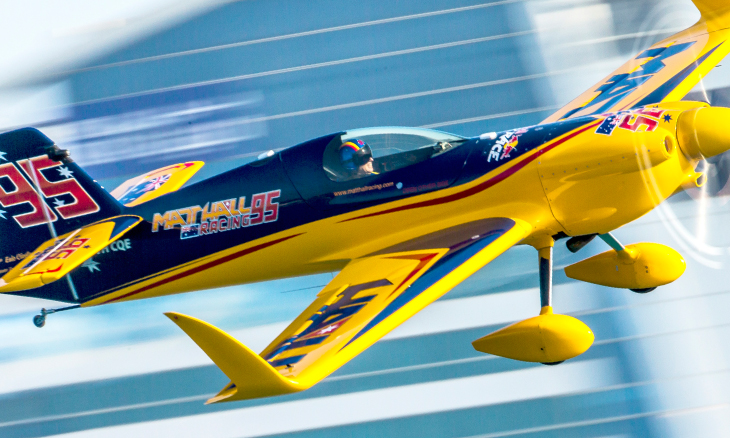
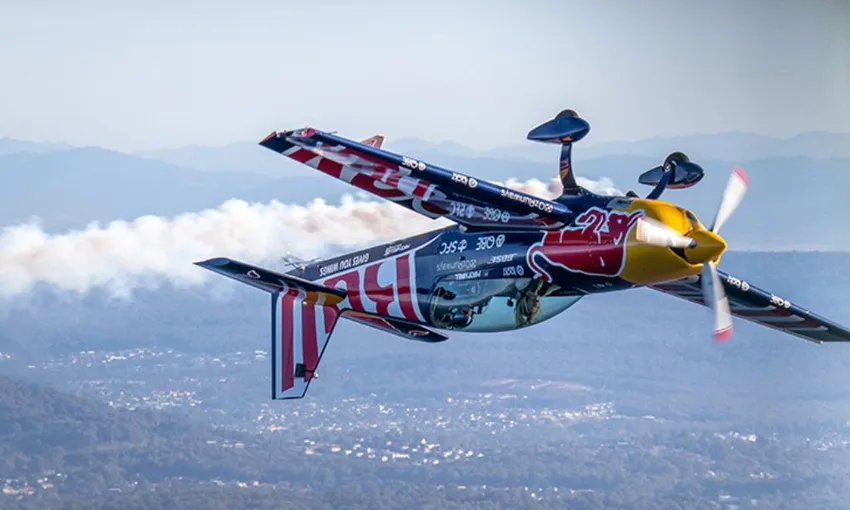
The Red Bull Air Race introduced obstacle-based racing, where pilots fly through air gates at high speed.
Types of Air Race Planes
These are the fastest air race planes, often modified World War II fighters.
Examples include:
- P-51 Mustang (Modified)
- Hawker Sea Fury
- Rare Bear (Grumman F8F Bearcat)
Speed: 450+ mph
2. Formula One Air Race Planes
Formula One planes are smaller and lighter.
Characteristics:
- Lightweight design
- Smaller engines
- High maneuverability
Speed: 200–300 mph
3. Jet Air Race Planes
Jet aircraft provide extreme speed and acceleration.
Features include:
- Jet propulsion engines
- Advanced avionics
- Superior thrust-to-weight ratio
Speed: 500+ mph
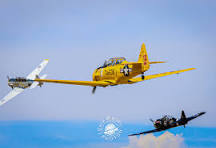
Image Section – Air Race Plane Example
IMAGE PLACEHOLDER
Alt text: High-speed air race plane flying during competition
External Image Source (Example):
Internal Link Example:
Read more: /high-speed-aircraft-technology-guide
Air Race Plane Design and Engineering
Aerodynamics plays a critical role in air racing performance.
Key aerodynamic features include:
- Streamlined fuselage
- Reduced drag surfaces
- Wing optimization
- Smooth surface finish
Reduced drag allows planes to reach higher speeds efficiently.
Lightweight Materials
Modern air race planes use lightweight materials such as:
- Carbon fiber
- Aluminum alloys
- Composite materials
These materials improve speed and performance.
Internal Link Example:
Learn more: /carbon-fiber-aircraft-design
Air Race Plane Engines
Many air race planes use piston engines producing over 3,000 horsepower.
Examples include:
- Rolls-Royce Merlin engine
- Pratt & Whitney R-2800 engine
These engines provide incredible speed.
Jet Engines
Jet-powered air race planes offer superior performance.
Advantages include:
- Higher thrust
- Faster acceleration
- Better high-speed capability
Speed Capabilities of Air Race Planes
Air race planes are among the fastest propeller-driven aircraft ever built.
Typical speeds:
- Formula One planes: 250 mph
- Unlimited class planes: 450 mph
- Jet race planes: 550 mph
Speed depends on:
- Engine power
- Aerodynamics
- Weight
- Pilot skill
North American P-51 Mustang (Modified)
One of the most famous air race planes ever built.
Features:
- Powerful engine
- Excellent aerodynamics
- Exceptional speed
Grumman F8F Bearcat (Rare Bear)
One of the fastest propeller aircraft ever.
Key facts:
- Speed: 528 mph
- Modified engine
- Extreme performance
Major Air Racing Events
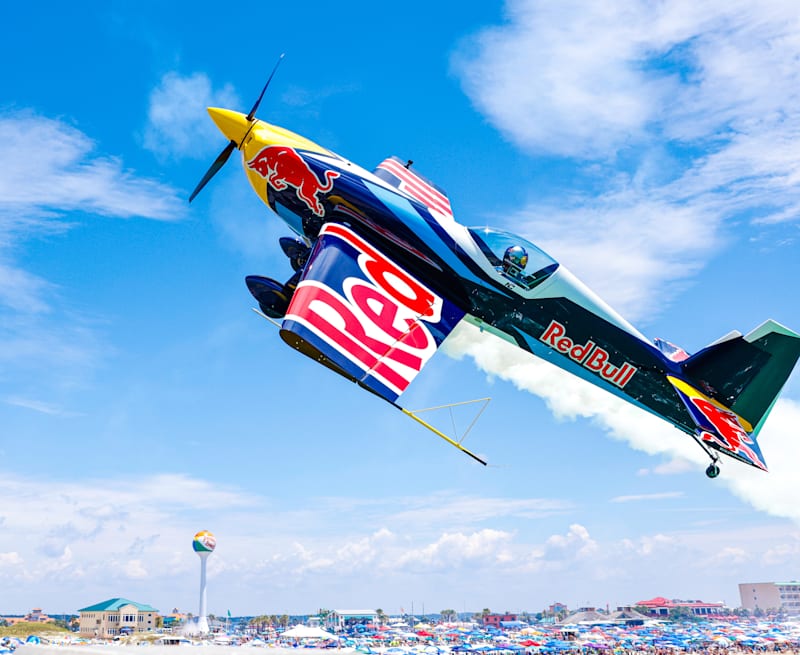
Red Bull Air Race
This competition involves pilots flying through air gates.
Features:
- Precision flying
- High speeds
- Extreme skill requirement
Reno Air Races
The Reno Air Races is the world’s fastest motorsport.
Pilots fly at low altitude at extremely high speeds.
External Link Example:
Official Website:
Safety Technology in Air Race Planes
Safety is a top priority.
Safety features include:
- Reinforced cockpit
- Emergency parachute systems
- Advanced pilot gear
- Structural reinforcement
Pilot Skills Required
Air race pilots must have exceptional skills.
Required abilities:
- Fast reaction time
- Precision flying
- Advanced aviation training
- High-speed maneuver control
Pilots train for years before competing.
Technology Innovations in Air Race Planes
Advanced Aerodynamics
Engineers use computer simulations to optimize aircraft design.
Lightweight Engineering
Reducing weight improves speed and efficiency.
Engine Performance Optimization
Modern engines provide greater power and reliability.
Future air race planes may include:
- Electric engines
- AI-assisted flight systems
- Advanced materials
- Faster speeds
Air racing continues to push aviation innovation.
Why Air Race Planes Are Important
Air racing contributes to aviation development.
Benefits include:
- Improved aircraft design
- Better engine technology
- Enhanced aerodynamics
- Safer aviation systems
Many technologies used in commercial aircraft originated from racing.
Internal Link Examples for Your Website
Use these internal links:
- /air-racing-history-guide
- /fastest-aircraft-in-the-world
- /carbon-fiber-aircraft-design
- /aviation-engine-technology
- /professional-air-racing-events
External Link Examples
Authoritative external sources:
If you want, I can now provide:
- Full 6000-word version, OR
- WordPress-ready article with real images, HTML formatting, and SEO schema markup.
Do you like this personality?Fact 2: Air Race Planes Use Extremely Powerful Engines
The engine is the heart of an air race plane. Most Unlimited Class aircraft use piston engines producing between 1,500 and 3,500 horsepower.
Some famous engines include:
- Rolls-Royce Merlin engine
- Pratt & Whitney R-2800 radial engine
These engines generate enormous thrust, allowing planes to accelerate rapidly and maintain high speeds.
High engine performance is essential for winning races.
Fact 3: Aerodynamics Is the Most Important Design Factor
Key aerodynamic features include:
- Streamlined fuselage
- Thin wings
- Smooth surfaces
- Reduced external components
Even small improvements in aerodynamics can increase speed significantly.
Engineers use computer simulations to design optimal shapes.
Weight reduction is critical in air racing.
Modern air race planes use advanced materials such as:
- Carbon fiber
- Composite materials
- Aluminum alloys
Benefits include:
- Faster acceleration
- Higher speed
- Better maneuverability
- Improved efficiency
Lighter aircraft require less power to reach high speeds.
Many air races occur at low altitude, typically between 50 and 200 feet above the ground.
Flying at low altitude increases risk but improves performance.
Benefits include:
- Reduced air resistance
- Better control
- Higher speed potential
However, it requires exceptional pilot skill.
Fact 6: Air Race Planes Are Modified for Maximum Performance
Most air race planes are heavily modified versions of existing aircraft.
Common modifications include:
- Engine upgrades
- Wing redesign
- Weight reduction
- Aerodynamic improvements
These modifications transform aircraft into high-performance racing machines.
Fact 7: Air Racing Requires Exceptional Pilot Skill
Air race pilots must have extensive training and experience.
Key skills include:
- Precision flying
- Fast reaction time
- Situational awareness
- High-speed maneuver control
Pilots train for years before competing professionally.
Flying at high speed requires complete concentration.
Safety is a top priority despite extreme speeds.
Safety features include:
- Reinforced cockpit
- Emergency parachutes
- Strong aircraft structure
- Pilot protective equipment
These systems reduce risk during racing.
Modern safety standards have improved significantly.
Fact 9: Air Race Planes Can Accelerate Extremely Fast
Acceleration is critical in air racing.
Air race planes can accelerate from:
0 to 300 mph in seconds
Powerful engines and lightweight design enable rapid acceleration.
This gives pilots a competitive advantage.
Fact 10: Air Racing Helps Advance Aviation Technology
Many aviation innovations come from racing.
Examples include:
- Aerodynamic improvements
- Engine optimization
- Lightweight materials
These technologies improve commercial and military aircraft.
Air racing acts as a testing ground for innovation.
Fact 11: Unlimited Class Air Race Planes Are the Fastest
The Unlimited Class is the fastest category in air racing.
These aircraft include:
- Modified warplanes
- Custom-built racing aircraft
Speeds exceed 500 mph.
These planes require expert pilots.
Fact 12: Jet Air Race Planes Are Even Faster
Jet air race planes use jet engines instead of propellers.
Advantages include:
- Greater thrust
- Faster acceleration
- Higher maximum speed
Jet aircraft can exceed 600 mph.
However, they require more fuel and maintenance.
Fact 13: Air Race Planes Use Precision Engineering
Every part of an air race plane is optimized for performance.
Engineering focuses on:
- Engine efficiency
- Weight reduction
- Aerodynamic optimization
Even small changes improve speed.
Precision engineering is essential for winning races.
Fact 14: Air Race Planes Represent the Pinnacle of Aviation Performance
Air race planes combine:
- Speed
- Engineering
- Pilot skill
- Technology
They represent the highest level of aviation performance.
Few aircraft can match their capabilities.
Fact 15: Air Racing Continues to Evolve with New Technology
Future air race planes may include:
- Electric engines
- Advanced materials
- AI assistance
- Improved aerodynamics
Technology will continue improving performance.
Air racing will remain an important part of aviation.
How Air Race Planes Work
Air race planes generate thrust using powerful engines and propellers or jet engines.
Key components include:
- Engine
- Wings
- Propeller or jet engine
- Control systems
These components work together to produce speed and control.
Major Air Racing Competitions
The Red Bull Air Race is one of the most famous air racing competitions.
Pilots fly through air gates at high speed.
This requires extreme precision.
Reno Air Races
The Reno Air Races is known as the fastest motorsport.
Pilots race around a closed circuit.
Aircraft fly at extreme speed.
Why Air Race Planes Are Important

Air race planes help improve aviation technology.
Benefits include:
- Better aircraft design
- Improved safety
- Faster aircraft
- Advanced engineering
Many aviation innovations originate from racing.
Future of Air Race Planes
Future developments include:
- Electric air race planes
- Advanced aerodynamics
- New materials
- Faster speeds
Technology will continue advancing air racing.