High-speed aircraft—whether fighter jets, supersonic transports, or advanced unmanned aerial vehicles—operate in some of the most demanding aerodynamic environments. As speeds increase toward transonic and supersonic regimes, even small disturbances can lead to major stability challenges. This is where stability and control metrics become essential for ensuring safety, performance, maneuverability, and mission success.
This article explains the key metrics that define high-speed aircraft stability and control, why these metrics matter, and how modern aerospace engineering uses them to design high-performance airframes capable of handling extreme aerodynamic loads.
Understanding High-Speed Flight Dynamics
When an aircraft approaches high-speed regimes—typically beyond Mach 0.8—the airflow begins to behave very differently:
Shock waves form around wings and control surfaces
Drag rises dramatically due to wave drag
Changes in center of pressure alter pitching moments
Control surfaces may become less effective
Stability margins decrease due to compressibility effects
As a result, the aircraft’s static stability, dynamic stability, and control responsiveness must be measured carefully to prevent loss of control during flight.
Key Stability Metrics for High-Speed Aircraft
Static Stability Coefficients
Static stability refers to the aircraft’s initial tendency to return to equilibrium after a small disturbance. Engineers measure stability using specific aerodynamic derivatives:
► Longitudinal Static Stability (Cmα)
Indicates how nose-up or nose-down pitching changes with angle of attack.
A negative Cmα means stable nose behavior—this is desirable.
At high speeds, the center of pressure moves backward, often improving longitudinal stability, but may cause trim issues.
► Lateral Static Stability (Clβ)
Measures rolling stability.
A positive Clβ means the aircraft naturally levels itself after rolling.
Swept wings commonly improve this metric at high speeds.
► Directional Static Stability (Cnβ)
Indicates yaw stability.
A positive Cnβ is required to counteract crosswinds and sideslip at high speeds.
Vertical stabilizer size and shape heavily influence this metric.
Static stability metrics ensure that the aircraft behaves predictably under minor disturbances—especially important during high-speed maneuvers.
Dynamic Stability Metrics
Dynamic stability evaluates how the aircraft oscillates over time after a disturbance.
► Short-Period Mode
Fast oscillation in pitch.
Important for precise control during high-speed flight.
High-speed aircraft require high damping ratios to prevent excessive pitch oscillation.
► Phugoid Mode
Slow oscillation involving altitude and speed changes.
Though usually stable, phugoid modes can be more pronounced at high speeds.
► Roll Subsidence and Dutch Roll
High-speed aircraft often experience Dutch roll (a coupled yaw-roll oscillation).
Engineers ensure adequate yaw damping to prevent pilot workload from increasing.
Dynamic stability metrics ensure that oscillations diminish instead of growing—critical for supersonic aircraft that experience stronger aerodynamic coupling.
Critical Control Metrics for High-Speed Aircraft
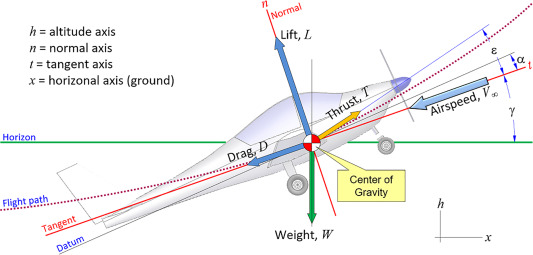
At high speeds, control surfaces must remain effective despite compressibility, shock waves, and aerodynamic stiffening.
Control Surface Effectiveness (dα/dδ or Control Derivatives)
Control derivatives measure how aircraft pitch, roll, or yaw changes with control input:
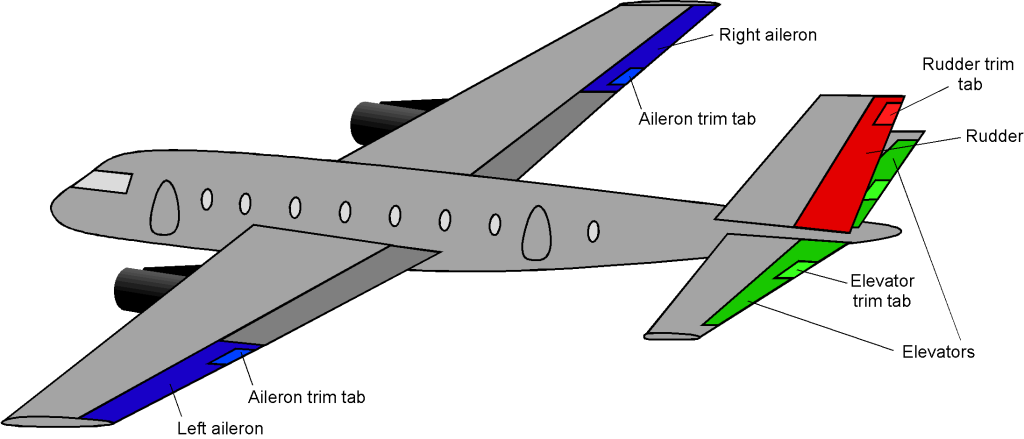
► Elevator Effectiveness (Cmδe)
Key for pitch control in high-speed flight.
Shock waves may reduce elevator authority, so all-moving tails are often used.
► Aileron Effectiveness (Clδa)
Determines roll control.
Swept-wing aircraft rely heavily on spoilers and differential control to maintain roll authority.
► Rudder Effectiveness (Cnδr)
Crucial at high angles of sideslip.
Supersonic aircraft often require oversized fins to maintain yaw control.
Reduced control effectiveness at high speeds can lead to dangerous loss-of-control events—so ensuring these metrics remain strong is essential.
Trim Requirements and Control Harmony
High-speed aircraft must be capable of maintaining straight, level flight with minimal control input.
► Pitch Trim and Stability Margin
As aircraft accelerate, the aerodynamic center shifts. Designers use metrics like:
Neutral Point
Static Margin
Trim Drag
A proper static margin ensures stable high-speed flight without excessive trim forces.
► Roll and Yaw Trim
High-speed aircraft must counter:
Asymmetric lift
Fuel imbalance
Weapon or payload drag
Engineering teams use advanced control laws to maintain trim without overworking the pilot.
High-Speed Stability and Digital Flight Control Systems
Modern high-speed aircraft rely heavily on fly-by-wire systems, which constantly adjust control surfaces for optimal stability.
Stability Augmentation Systems (SAS)
These systems help correct oscillations in pitch, roll, and yaw. They use feedback loops to maintain:
Damping ratios
Angle-of-attack limits
Yaw stability during high-speed turns
Control Laws and Gain Scheduling
Because aerodynamics change with speed and altitude, control gains are adjusted in real time. Gain scheduling ensures:
Smooth pitch response at low speeds
Strong control authority at high speeds
Stable transitions through transonic regions
Without digital augmentation, many modern jets would be nearly impossible to fly safely.
Testing and Validation of Stability Metrics
Evaluating high-speed stability and control metrics requires a combination of advanced engineering tools.
- Wind Tunnel Testing
Supersonic and hypersonic tunnels help measure:
Pressure distribution
Shockwave positions
Stability derivatives
Lift and drag characteristics
Computational Fluid Dynamics (CFD)
High-fidelity simulations model airflow at various Mach numbers, predicting:
Unsteady shock behavior
Transonic drag rise
Aeroelastic deformation
Flight Testing
Test pilots validate real-world handling qualities by measuring:
Control forces
Oscillation damping
High-speed maneuvering
Buffet onset and stability margins
Flight test data is essential to confirm that models match actual aircraft behavior.
Why Stability and Control Metrics Matter in High-Speed Aviation
Understanding and optimizing these metrics directly impacts:
✔ Safety
Stability ensures the aircraft can recover from disturbances without entering dangerous flight conditions.
✔ Maneuverability
High-speed combat jets rely on precise control to perform rapid maneuvers.
✔ Efficiency
Proper trim reduces drag, improving range and fuel economy.
✔ Pilot Workload Reduction
Stable aircraft require fewer corrections, allowing pilots to focus on mission tasks.
✔ Structural Integrity
Good stability reduces unwanted loads, preventing aeroelastic issues and structural fatigue.
Future Trends in High-Speed Stability and Control
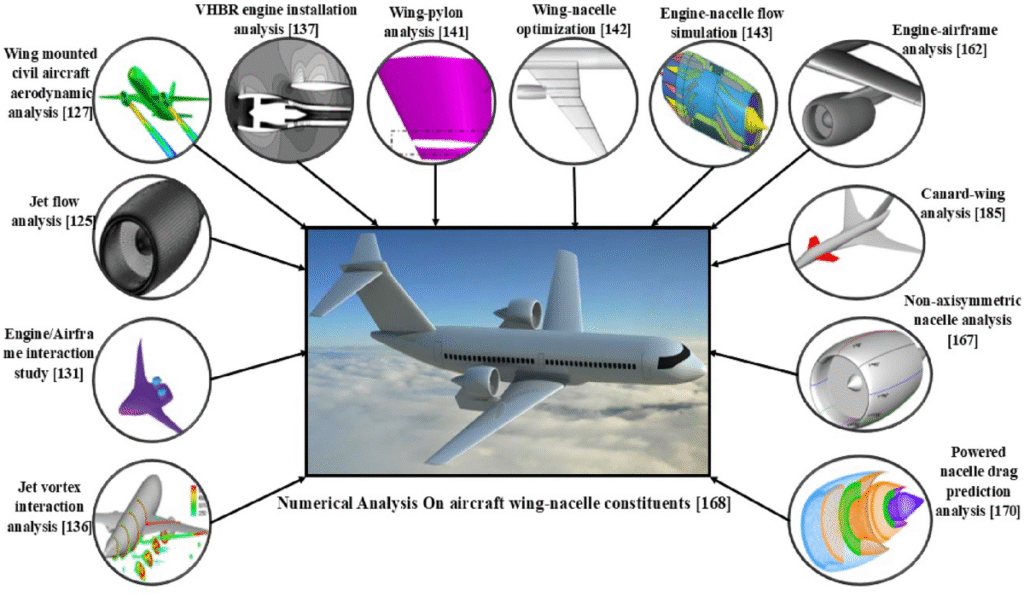
The next generation of high-speed aircraft—supersonic airliners, hypersonic vehicles, and advanced UAVs—will rely on even more sophisticated stability metrics.
► AI-Enhanced Flight Control
Artificial intelligence may help adjust control laws on the fly.
► Morphing Wings
Flexible wings that adapt to aerodynamic needs could improve stability across the speed envelope.
► Advanced Materials
New composites reduce thermal deformation that affects stability at high Mach numbers.
► Integrated Propulsion–Airframe Control
Future aircraft will use engines and control surfaces together to maintain stability at extreme speeds.
High-speed aircraft stability and control metrics form the backbone of modern aerospace engineering. They ensure that aircraft remain safe, controllable, and efficient even under extreme aerodynamic conditions. From static stability coefficients to digital flight control systems, each metric plays a vital role in shaping the performance of today’s and tomorrow’s high-speed aviation platforms.
Fans can follow updates, live streams, and track maps on SpeedsRun Online and affiliated social media channels.