Few motorsport events carry the same mystique, danger, and raw pursuit of velocity as the 24 Hours of Le Mans. Since 1923, the legendary endurance race has been the ultimate test of man, machine, and mechanical bravery—pushing teams to engineer cars that can run at full throttle for an entire day. While endurance is the defining trait of Le Mans, the battle for top speed has shaped much of its legacy. Some records stand unbroken, some were made impossible by rule changes, and others continue to inspire the next generation of speed record-obsessed engineers.
In this article, we dive deep into the most iconic speed records in Le Mans history, exploring the machines, drivers, and moments that forever altered what we believed was possible on the Mulsanne Straight.
🏁 The Obsession With Speed at Le Mans
Unlike many circuit racing events where lap time is everything in speed record, Le Mans features the famed Mulsanne Straight, a stretch of road that once spanned nearly 6 km with no chicanes. Before the 1990s, cars would spend nearly a full minute at maximum throttle, hitting speeds unmatched anywhere else in endurance racing.
This design naturally turned Le Mans into a battleground for top-speed supremacy. Teams seeking victory knew that raw velocity on the Mulsanne could make or break a race. The result? Some of the fastest, most extreme race cars ever built.
🚀 1. The Untouchable: 407 km/h by the WM Peugeot P88 (1988)
When discussing Le Mans speed records, one name stands unquestioned: the WM Peugeot P88, which achieved an astonishing 407 km/h (253 mph) during the 1988 race. This remains the fastest speed ever recorded at Le Mans.
Why This Record Is Iconic
- Speed Record was set on the old Mulsanne Straight before chicanes were added.
- The WM team specifically engineered the car for speed, sacrificing overall race performance.
- The extreme velocity highlighted the safety risks that would soon lead to rule changes.
How WM Achieved It
WM (Wendlinger-Meunier) targeted the record deliberately. They optimized:
- Aerodynamics with ultra-low drag bodywork
- A heavily boosted Peugeot V6 turbo engine
- Experimental cooling systems
The team famously admitted that winning the race was not the objective—the record itself was the victory.
Because Le Mans introduced chicanes in 1990, this 407 km/h record is now unbreakable under current track layout, cementing it as one of motorsport’s greatest achievements.
🏎️ 2. The Porsche 917 LH: The First to Break 380 km/h (1971)
Long before WM’s record, the legend of speed recoed at Le Mans was already being written. The Porsche 917 LH (Langheck) achieved top speeds of around 380 km/h (236 mph) during the 1971 race, an extraordinary accomplishment for its era.
What Made the 917 LH Revolutionary
- A long-tail design engineered specifically for Mulsanne Straight aerodynamic efficiency
- A monstrous flat-12 engine producing over 600 horsepower
- Groundbreaking stability at extreme velocity
The 917 LH was so fast that drivers often reported the car feeling “airborne,” especially at dusk when visibility was low. This record demonstrated Porsche’s engineering dominance and pushed the boundaries of what racing cars could safely achieve at the time.
⚡ 3. The Sauber-Mercedes C9: 400 km/h in Testing (1989)
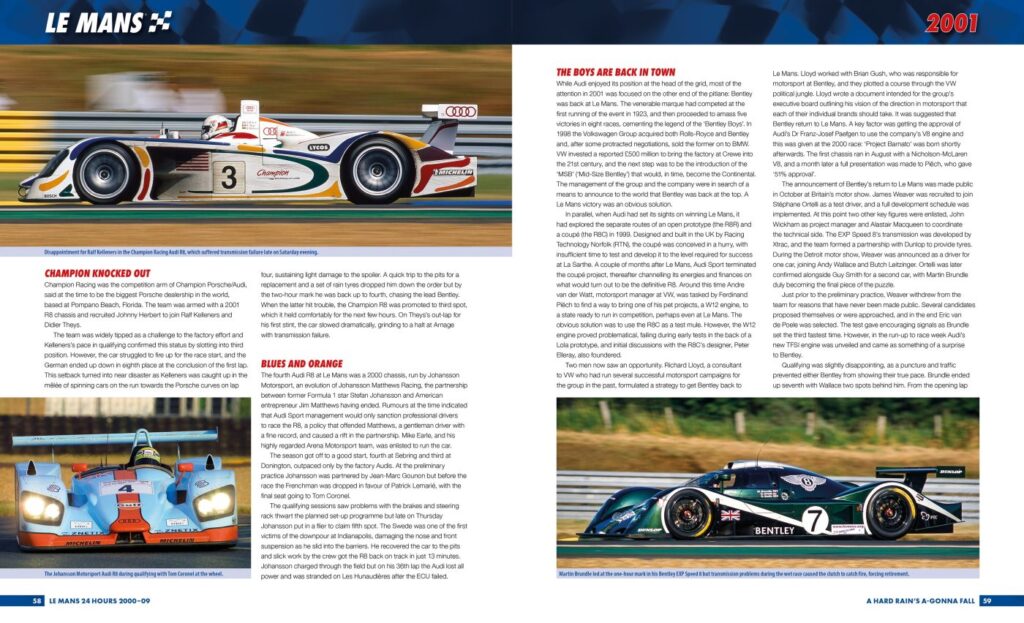
Although not officially recorded during the race, the Sauber-Mercedes C9 deserves its place in Le Mans history. In pre-race testing in 1989, the C9 reportedly reached 400 km/h (249 mph) on the Mulsanne Straight in speed record.
Why It Matters
- It confirmed that multiple cars were nearing the limits of safe speeds on the straight.
- The car went on to win the 1989 race, proving that extreme speed could be paired with durability.
- It directly influenced the FIA’s decision to introduce chicanes the following year.
A Perfect Blend of Power and Stability
The C9 used:
- A twin-turbo V8 producing over 720 horsepower
- A rigid aerodynamic package that maintained stability at near-aircraft speeds
The C9’s extraordinary velocity reinforced the need to make Le Mans safer—and its speed figures remain part of racing folklore.
🛠️ 4. The Chicanes Arrive: Post-1990 Speed Era
In 1990, Le Mans added two chicanes on the Mulsanne Straight, reducing maximum speeds dramatically to ensure driver and spectator safety. But the pursuit of speed didn’t stop—it simply evolved.
Modern Le Mans Speed Benchmarks
Today, depending on category and weather, top speeds peak around:
- 330–345 km/h (205–214 mph) for Hypercars
- 310–325 km/h (192–202 mph) for LMP2
- 290–300 km/h (180–186 mph) for GTE cars
While no longer hitting the dizzying highs of the 1980s, modern Le Mans cars face different challenges:
- Hybrid power deployment
- Strict fuel-flow regulations
- Balance-of-performance systems
- More emphasis on efficiency over straight-line speed
Even with these constraints, Le Mans remains one of the world’s fastest endurance races.
🏆 5. Audi R18 e-tron Quattro: The Hybrid Speed Era (2010s)
Audi’s dominance at Le Mans in the 2010s introduced a new kind of speed—efficiency speed.
While its top speeds rarely exceeded 330 km/h, the Audi R18:
- Could maintain high speed for longer durations
- Recovered energy under braking to boost acceleration
- Reduced drag while keeping cornering stability
The R18 redefined what “speed” meant at Le Mans: not just raw top speed, but sustainable, repeatable performance hour after hour.
✈️ 6. Toyota TS050 Hybrid: Modern Speed Mastery (2016–2020)
Toyota’s TS050 Hybrid, a multiple Le Mans winner, brought the modern top-speed race to its peak.
With 1000+ combined hybrid horsepower and sophisticated aerodynamics, the TS050 regularly reached:
- 330–340 km/h on modern Mulsanne
Why It’s Iconic
- It set some of the fastest race laps of the modern era
- It showcased hybrid power as a rival to traditional combustion pace
The TS050 didn’t break historical speed records, but it represented the pinnacle of a new generation of endurance racing.
🔥 7. “Speed Records” Beyond Top Speed: Lap Time Legends
While straight-line speed defines Le Mans history, lap speed represents overall performance. Notable records include:
Fastest Lap in Race Conditions
- Porsche 919 Hybrid Evo (unofficial testing) set staggering lap times in 2018 during a world tour, proving what a Le Mans-spec car could achieve without restrictions.
Fastest Qualifying Laps
Several LMP1 cars from Audi, Porsche, and Toyota have recorded some of the fastest laps ever seen after chicanes were installed, showcasing engineering that blends speed with efficiency.
🎯 What These Records Mean for the Future of Le Mans
The iconic speed records of Le Mans reflect three major eras:
1. The Wild West Era (pre-1990)
Huge engines, limitless speeds, minimal restrictions. Danger and innovation walked hand in hand.
2. The Regulated Safety Era (1990s–2000s)
Chicanes, speed caps, and refined engineering replaced brute-force velocity.
3. The Hybrid/Efficient Speed Era (2010s–present)
Technology now focuses on sustainable speed, aerodynamics, and energy management.
Looking forward, the Hypercar era and alternative fuels could bring new speed metrics—not in terms of top speed, but in:
- Energy efficiency
- Race pace consistency
- Hybrid acceleration
- Aerodynamic breakthroughs
While the days of 400 km/h on the Mulsanne Straight are gone, the pursuit of speed at Le Mans is far from over.
🏁 The Legacy of Speed at Le Mans
The most iconic speed records in Le Mans history are more than just numbers—they’re a reflection of motorsport’s relentless desire to push limits. From the rocket-like WM Peugeot P88 to the hybrid mastery of the TS050, each generation has left behind its own definition of speed record.
Le Mans isn’t just about going fast; it’s about staying fast for 24 hours. And that is what makes every speed record set on this legendary track not only iconic, but unforgettable.
Fans can follow updates, live streams, and track maps on SpeedsRun Online and affiliated social media channels.