When four global powers Planes each bring three of their finest fighters to contest the heavens, the result is a spectacle of speed, stealth, sensors and sheer engineering will. This guide profiles the 12 planes, the doctrines behind them, and where you can see or research them — from flight-test ranges to museum hangars. Interactive Maps | Speed & Altitude Records | Tech & Systems | Airshow Calendar
Why this showdown matters
Modern airpower is more than raw speed — it is sensor fusion, networked weapons, survivability and persistence. A “battle for supremacy” across multiple airframes reveals different philosophies: stealth and sensor fusion, brute speed and climb, or multirole flexibility.
United States — stealth, networked dominance
F-22 Raptor — air dominance and supercruise
The F-22 combines stealth, supercruise and advanced avionics to secure air superiority. It remains a benchmark for fifth-generation air-dominance fighters. Read the USAF fact sheet for technical and doctrinal details. :contentReference[oaicite:0]{index=0}
See it: many preserved F-22 displays and units operate from bases such as Joint Base Langley-Eustis (VA).

F-35 Lightning II — sensor fusion & multirole stealth
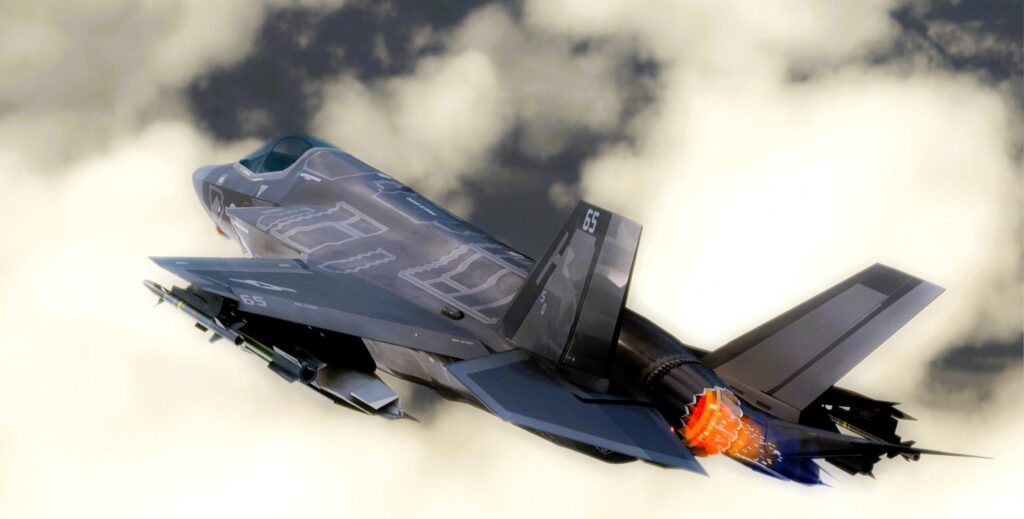
The F-35 family emphasizes sensor fusion, interoperability and survivability across variants (A/B/C). It’s the backbone of allied fifth-generation fleets and a central part of modern air campaigns. See Lockheed Martin’s F-35 fast facts for program details. :contentReference[oaicite:1]{index=1}
See it: F-35 squadrons and public displays are frequent at major bases; check event pages or the National Museum for preserved examples.
F-15EX Eagle II — thrust and load-carrying power
The F-15EX revives the F-15 lineage with modern avionics and heavy payload capacity — a high-performance air superiority and strike platform that emphasizes speed and endurance over stealth.
See it: heritage F-15s are visible at museums such as the National Museum of the U.S. Air Force (Dayton, OH).
Russia — super-maneuverability & high-speed interception
Sukhoi Su-57 — Russia’s fifth-generation candidate
The Su-57 is Russia’s modern stealth multirole fighter designed for air-to-air and strike missions. It emphasizes maneuverability and internal weapon carriage as part of a new-generation force structure. For manufacturer details and specs see the UAC/Sukhoi page. :contentReference[oaicite:2]{index=2}
See it: Su-57 public appearances typically occur at Zhukovsky or MAKS air shows near Zhukovsky / Ramenskoye (Moscow region).
Sukhoi Su-35 — super-maneuverable heavy fighter
The Su-35 is a highly agile, long-range air superiority fighter with powerful engines and advanced sensors — a workhorse of modern Russian aviation doctrine.
See it: historic examples and contemporary Russian fighters are often displayed at the Central Air Force Museum (Monino). :contentReference[oaicite:3]{index=3}
Mikoyan MiG-31 — the high-speed interceptor
The MiG-31 is a high-altitude, high-speed interceptor designed to chase fast, high-flying targets across vast territories — a classic example of Russia’s focus on reach and speed.
See it: preserved MiG-31s are also on display at Monino and other Russian museums. :contentReference[oaicite:4]{index=4}
China — rapid modernisation & stealth emergence
Chengdu J-20 — China’s stealth contender
The J-20 is China’s low-observable fighter, focused on long-range strike and sensor fusion. Its development marks a rapid Chinese push into fifth-generation airframe design. For background and development history see the J-20 overview. :contentReference[oaicite:5]{index=5}
See it: J-20 production and activities are centered around Chengdu — for analysts, public imagery and base locations near Chengdu are a key reference. (Example: Chengdu industrial area).
Shenyang J-16 — multirole heavy fighter
The J-16 adapts proven airframe designs to modern multirole missions with advanced avionics and strike packages — a backbone for high-volume operations.
See it: J-16s are common at domestic PLA Air Force bases; public imagery and flight demonstrations appear at national airshows.
Chengdu J-10C — agile multirole performer
The J-10C is an agile, single-engine multirole fighter fielded in large numbers, featuring AESA radar and modern avionics for air superiority and ground-attack missions.
See it: frequently seen at national airshows and training ranges across China.
France — omnirole flexibility & carrier options
Dassault Rafale — the omnirole French workhorse
The Rafale is a twin-engine omnirole fighter capable of air-to-air, ground strike and reconnaissance missions; it operates from both carriers and land bases. See Dassault Aviation’s Rafale page for specs and mission roles. :contentReference[oaicite:6]{index=6}
See it: Rafale squadrons operate from bases such as Mont-de-Marsan Air Base (France).
Dassault Mirage 2000 — a classic high-performance fighter
The Mirage 2000 (and its modernized variants) continues to serve several air forces as a capable air-defense and strike platform — a landmark design in French aeronautical history.
See it: preserved examples are displayed at French aviation museums and historic squadrons.
nEUROn (unmanned demonstrator) — France-led stealth UAV demonstrator
The nEUROn is a European unmanned combat aircraft demonstrator led by Dassault — an example of where future low-observable, unmanned strike might intersect with manned fighters in the sky.
See it: nEUROn demonstrations are occasional and tied to European test ranges and exhibitions.
Map locations — where to research or visit
Below are helpful map pins for fans and researchers — bases, museums and test centers where these types appear or are preserved:
- Edwards AFB / Air Force Flight Test Museum (USA) — historic supersonic test ground. View on Google Maps. :contentReference[oaicite:7]{index=7}
- Nellis AFB / Red Flag (USA) — major exercise and demonstration hub. View on Google Maps.
- Central Air Force Museum (Monino, Russia) — large preserved collection including MiG and Sukhoi types. View on Google Maps. :contentReference[oaicite:8]{index=8}
- Chengdu Aircraft Industrial Area (China) — production and test center for J-20 / J-10 families. View on Google Maps. :contentReference[oaicite:9]{index=9}
- Mont-de-Marsan Air Base (France) — Rafale operations and exercises. View on Google Maps.
Embed suggestion: to add an interactive map to your page, use Google Maps Embed (iframe) or your site’s mapping widget to pin the above coordinates on /maps.
Rules of engagement — safety, airspace & demos
Real-world demonstrations follow strict rules: approved corridors, altitudes, and separation minimums. Spectators should always follow official event guidance and local regulations — see our Events page for safety notes and viewing recommendations.
Further reading & primary sources
Manufacturer and service pages provide reliable technical overviews: USAF fact sheets, Lockheed Martin F-35 program pages, UAC/Sukhoi Su-57 overview, Chengdu J-20 reporting, and Dassault Rafale information. Use the citations embedded above to explore primary facts and museum references.
Want a printable map pack (PDF) of the bases, museum coordinates, and quick aircraft fact cards for your readers? I can generate a ready-to-download pack and iframe embeds for each pin — tell me which format you prefer (PDF, PNG map sheet, or embedded Google Maps iframe).
Key references: USAF F-22 fact sheet; F-35 program pages; UAC / Su-57 profile; Chengdu J-20 overview; Dassault Rafale technical page; Edwards AFB and Monino museum map pages. :contentReference[oaicite:10]{index=10}
Evolution of Aerial Doctrine
The doctrines guiding modern air combat have evolved beyond simple dogfighting. Each nation now emphasizes integrated network warfare — linking aircraft, drones, satellites, and ground sensors into a unified combat web. This evolution turns every fighter into a flying node of digital dominance.
The Stealth vs. Detection Arms Race
As stealth aircraft reduce radar signatures, radar systems evolve in response with multi-band detection, passive tracking, and AI-driven pattern recognition. This constant push-and-pull defines the invisible war in the sky — a battle not only of speed, but of perception.
Engines Forged for the Stratosphere
The powerplants driving modern fighters are marvels of thermodynamics. Variable cycle engines and 3D-printed components allow rapid acceleration, higher efficiency, and extreme reliability — enabling these jets to leap from idle to afterburner in seconds.
Weapons of the New Sky
Advanced air-to-air missiles such as the AIM-260, Meteor, and R-77-1 represent the cutting edge of long-range engagement. These weapons, guided by radar, infrared, and AI-driven algorithms, redefine how far and how fast combat can unfold.
AI and Autonomy in Air Combat
Artificial intelligence is rapidly reshaping aerial warfare. From automated threat recognition to drone wingmen that fly alongside manned jets, the fusion of AI with human judgment marks a turning point in combat aviation.
Electronic Warfare: The Invisible Weapon
Modern jets carry electronic warfare suites capable of jamming radar, spoofing missiles, and disabling enemy communication. The silent conflict across radio frequencies often decides who controls the sky long before missiles are launched.
Pilot Training and Virtual Simulation
Virtual reality, high-fidelity simulators, and live-virtual-constructive training allow pilots to rehearse missions against digital adversaries. These tools prepare aircrews for the psychological and physical demands of modern aerial combat.
Aerial Refueling: Extending the Reach
Aerial refueling is the logistical heart of modern air operations. By linking tankers like the KC-46 Pegasus or Il-78 Midas to fighter squadrons, nations project airpower across continents and oceans — extending flight times by thousands of miles.
Alliances and International Collaboration
Joint programs such as the F-35 initiative or European Typhoon consortium demonstrate how nations pool resources to maintain technological parity. Collaboration enhances interoperability and helps distribute research costs across allies.
The Role of Space in Aerial Supremacy
Satellites now provide targeting, reconnaissance, and communication support for every major aerial operation. The line between air and space is blurring, as orbital networks feed data directly to cockpits in real time.
The Dawn of Hypersonic Warfare
The next frontier lies beyond Mach 5. Hypersonic weapons and test aircraft are transforming strategic planning, shrinking global response times from hours to minutes, and challenging traditional air defenses.
Drones in the Battle Formation
Unmanned aircraft are no longer separate assets. Loyal wingman programs allow drones to fly alongside piloted jets, providing reconnaissance, jamming, or decoy functions that multiply a squadron’s power.
Greening the War Machine
As environmental impact becomes a global concern, even military aviation explores biofuels, hybrid propulsion, and emissions-reduction technologies to minimize the ecological footprint of air operations.
Economic Impact of Air Supremacy Programs
Fighter development drives thousands of jobs and entire industrial ecosystems — from materials science to electronics manufacturing. Every new jet program becomes an engine for national economic growth.
Airshows: The Theatre of Power
Global airshows like Farnborough, MAKS, and Paris serve as grand stages for nations to unveil their latest aerial marvels. Beyond the roar of engines, these events symbolize pride, innovation, and strategic influence.
Public Perception and Media Influence
Media coverage and cinematic depictions — from documentaries to Hollywood blockbusters — shape how the public perceives airpower. This narrative of heroism and technology fuels both recruitment and innovation.
Future Concepts: The Sixth Generation
Programs like the U.S. NGAD, U.K.’s Tempest, and Japan’s F-X define the future of aerial combat. Expect blended AI, adaptive engines, laser weapons, and seamless human-machine teaming within the next decade.
Global Museum Network for Aviation Enthusiasts
Aviation museums worldwide preserve this legacy. Use our interactive map to locate museums housing the aircraft mentioned — from Dayton, Ohio to Monino, Russia to Le Bourget, France.
Legacy and Lessons of the Sky’s Greatest Rivals
Each generation of air combat leaves behind lessons — about innovation, human courage, and the consequences of technological competition. These lessons fuel the next leap in humanity’s quest to dominate the skies.
The Psychology of Air Combat
Aerial warfare tests not just reflexes but psychology. Pilots must make split-second life-or-death decisions while enduring G-forces, sensory overload, and the isolation of the sky. The ability to remain calm under pressure is often what separates a survivor from a casualty.
Strategic Command and Air Superiority
Behind every jet in the sky stands a network of command centers, data analysts, and mission planners. Modern wars in the air are directed through encrypted communication channels and AI-enhanced decision systems that manage hundreds of simultaneous threats.
Fighter Formation Tactics
Formation flying remains critical even in the digital age. Tight formations like “finger-four” or “loose deuce” provide mutual support and radar coverage, balancing stealth and firepower while maintaining visual contact in combat.
Night Operations and Infrared Dominance
Under cover of darkness, Supersonic and stealth fighters rely on infrared search and track (IRST) systems, night-vision helmets, and heat-masking coatings to dominate the nocturnal battlescape.
Weather: The Invisible Adversary
Thunderstorms, high-altitude winds, and extreme temperatures all affect jet performance. Pilots learn to use weather tactically — hiding in clouds to avoid radar or using tailwinds to extend fuel range.
Fuel Innovation and Efficiency
The race for aerial supremacy is also a race for endurance. Advanced jet fuels and synthetic alternatives allow aircraft to travel farther and faster while reducing maintenance and environmental impact.
Human-Machine Interface: The Cockpit Revolution
Cockpits have evolved from analog gauges to augmented-reality displays and voice-controlled AI copilots. Pilots now receive real-time tactical overlays that highlight friendlies, targets, and terrain — essentially transforming the canopy into a 360° digital workspace.

Stealth Paint and Radar-Absorbing Coatings
The black and gray sheen on modern fighters isn’t just for looks. It’s a radar-absorbing polymer coating designed to scatter electromagnetic waves, making aircraft virtually invisible to most radar systems.
Pilot Suit Technology and Life Support
High-G flight suits now integrate smart sensors that monitor body temperature, oxygen levels, and heart rate. These systems detect stress overloads and automatically adjust air pressure to prevent blackout during violent maneuvers.
Data Link Warfare
In the digital era, victory depends on who controls the data. Secure networks like Link 16 and China’s equivalent systems allow aircraft to share radar feeds and target data instantly across thousands of kilometers.
Cyber Defense in Modern Aviation
As aircraft rely more on interconnected systems, cyber warfare becomes a new front. Protecting onboard software from hacking and data breaches is now as important as shielding the jet from missiles.
Naval Air Operations and Carrier Warfare
Aircraft carriers serve as floating fortresses that project airpower across oceans. Nations like the U.S., France, and China use carrier-based squadrons to maintain air presence in contested waters.
Pilot Selection and Training Standards
Only a fraction of applicants make it through pilot training. Programs across the U.S., Russia, China, and France evaluate reflexes, discipline, and cognitive processing under extreme pressure before awarding a single pair of wings.
The Economics of Air Dominance
Developing a modern fighter jet can cost billions. Nations must balance their defense budgets, weighing the cost of cutting-edge innovation against fleet size, maintenance, and long-term sustainability.
Export Diplomacy and Global Arms Trade
Fighter jet exports are powerful diplomatic tools. Deals between countries strengthen alliances, create dependencies, and shape the balance of power far beyond the battlefield.
Global Test Ranges and Flight Corridors
The world’s most advanced jets are tested in remote areas like Edwards Air Force Base in the U.S., Akhtubinsk in Russia, and Cazaux Air Base in France — where prototypes scream through skies closed to the public.
The Cultural Heritage of Aviation
Airpower has become part of national identity. From Russia’s “Knights” to France’s “Patrouille de France,” each country uses aerobatic teams to symbolize unity, discipline, and technological pride.
The Future of Piloting
With AI copilots, drone integration, and virtual cockpits, future pilots may act more as mission commanders than manual operators — orchestrating a symphony of autonomous systems mid-battle.
Frequently Asked Questions About Planes
1. What makes modern planes different from older aircraft?
Modern planes use advanced composites, stealth designs, and AI-assisted avionics that make them lighter, faster, and more efficient than older aircraft models.
2. How do fighter planes achieve supersonic speed?
Fighter planes achieve supersonic speed through afterburners and aerodynamic designs that minimize drag, allowing them to exceed the speed of sound.
3. Which planes are considered the most advanced in 2025?
As of 2025, planes like the F-35 Lightning II, Su-57 Felon, and the Chinese J-20 Mighty Dragon are considered the most technologically advanced.
4. What role do stealth planes play in modern warfare?
Stealth planes reduce radar visibility, allowing them to enter hostile airspace undetected and complete missions with minimal risk of interception.
5. How are planes tested before entering service?
Planes undergo rigorous testing at specialized airbases and research centers such as Edwards Air Force Base to ensure safety and performance standards.
6. What materials are used to build stealth planes?
Stealth planes are built using radar-absorbent materials like carbon composites and polymer coatings to reduce radar cross-section and heat signatures.
7. How do planes communicate during combat?
Planes communicate using encrypted radio links, data-sharing networks, and secure satellite channels to coordinate with command centers and other aircraft.
8. What is the difference between commercial and military planes?
Commercial planes are designed for passenger transport and fuel efficiency, while military planes prioritize speed, agility, and combat capability.
9. Why are some planes capable of vertical takeoff?
Planes with vertical takeoff capability, such as the F-35B, use vectored thrust engines that redirect exhaust downward, enabling short or vertical launches.
10. How are planes refueled in the air?
Planes are refueled mid-air by specialized tanker aircraft using boom or drogue systems, extending their range across continents and oceans.
11. Which country operates the largest fleet of military planes?
The United States currently operates the largest and most diverse fleet of military planes in the world, followed by Russia and China.
12. How do stealth planes evade radar detection?
Stealth planes evade radar by using angular surfaces that deflect radar waves, absorbing coatings, and avoiding heat trails that infrared sensors detect.
13. How fast can the fastest planes in the world fly?
Some experimental planes, like NASA’s X-15, reached speeds above Mach 6, while operational fighters such as the MiG-31 can reach Mach 2.8.
14. What are hypersonic planes?
Hypersonic planes are experimental aircraft capable of flying faster than Mach 5, potentially revolutionizing air travel and warfare.
15. How are drones different from planes?
Drones are unmanned, remotely piloted or autonomous aircraft, while traditional planes require human pilots onboard to operate.
16. Do stealth planes appear on radar at all?
Stealth planes can still appear on radar, but their signatures are significantly reduced, making them hard to track or lock onto with missiles.
17. What are the most iconic planes in aviation history?
Iconic planes include the SR-71 Blackbird, Spitfire, F-16 Falcon, and B-2 Spirit — each representing milestones in speed, design, or innovation.
18. How do planes withstand extreme altitudes?
Planes use pressurized cabins, oxygen systems, and specialized materials to operate in low-density, high-altitude conditions without structural failure.
19. Why do military planes use call signs?
Call signs give pilots unique identifiers for secure communication and tactical anonymity during missions.
20. How are planes stored and maintained?
Planes are stored in climate-controlled hangars and undergo periodic inspections to maintain airworthiness and readiness for deployment.
21. Which planes are best suited for air superiority?
Planes like the F-22 Raptor, Rafale, and Su-35 are designed for air superiority, equipped with advanced radar, agility, and long-range weaponry.
22. What are stealth bombers, and how are they different from fighter planes?
Stealth bombers like the B-2 Spirit are built to deliver payloads deep into enemy territory, while fighter planes focus on air-to-air combat and interception.
23. How do planes use AI during missions?
AI assists planes in navigation, target tracking, threat detection, and even autopilot decision-making, reducing pilot workload and increasing efficiency.
24. Are electric planes becoming a reality?
Yes. Companies like Airbus and NASA are developing electric and hybrid planes that aim to reduce fuel consumption and carbon emissions.
25. Where can aviation enthusiasts see legendary planes?
Fans can visit air museums worldwide such as the National Museum of the U.S. Air Force or RAF Museum London to explore historic planes up close.