Published: October 2025 | By: Speedsrun Team Torque Tempest
Vortex Torque Tempest Thrust 500 is the high-octane centerpiece event in the Mach 7-style racing universe — a 500-kilometer sprint across urban freeways, coastal viaducts, and ruined interstates that blends blistering speed, tactical hazards, and cinematic calamity. Designed for speedrunners and competitive pilots alike, the Thrust 500 delivers deterministic physics for repeatable lines while inserting unpredictable “tempest” events (wind shear, vortex turbulence, and collapsing overpasses) to keep every run edge-of-seat real. This Speedsrun guide breaks down modes, best lines, setups, training drills, and real-world track references so you can climb the leaderboards and submit clean ghosts.
Event Overview — What the Thrust 500 Is
The Thrust 500 is a hybrid endurance/time-attack event featuring three primary modes: Solo Time Sprint (pure speedsrun), Tempest Relay (team endurance with rotating drivers), and Havoc Gauntlet (randomized hazards enabled). Races play out over long stretches of highway where slipstream tactics, micro-braking, boost economy, and hazard anticipation are the deciding factors. Importantly for the speedrunning community, the core physics are deterministic: once you discover an optimal line and timing for tempest events, you can reproduce results to the millisecond.
Why Vortex Torque Matters to Speedrunners
For speedsrunners the Thrust 500 is gold: long, repeatable sectors, telemetry-rich replays, and leaderboard pressure. The event rewards clean sector parity — small gains stack across the 500 km distance. Because tempest events are seeded (not fully random), advanced runners can learn the spawn windows and plan risk-managed boosts around them. If you like shaving tenths across long segments, the Thrust 500 is a masterpiece of endurance optimization.
Core Mechanics — Master These
- Slipstream timing: draft at 0.8–1.2s windows to avoid turbulence wake penalties.
- Micro-braking: feather braking into long sweeps to preserve aero balance.
- Boost economy: spread boosts across sectors — overuse in early legs creates heat spikes later.
- Vortex awareness: learn visual cues for wind tunnels and pre-cast gusts to negate rotation torque.

Top Lines & Sector Examples
The Thrust 500 divides into recognizable sectors — urban approach, coastal viaduct, industrial sweep, and desert bypass. Below are three exemplar sectors and line philosophies:
- Coastal Viaduct — “The Long Harpoon”: maintain a tight inside line through the first three arches; use slipstream exit to clip the outer expansion without triggering the bridge-sway hazard.
- Industrial Sweep — “Torque Alley”: sacrifice the apex to carry more mid-corner throttle; micro-countersteer at 70% lean to neutralize lateral drift.
- Desert Bypass — “Vortex Run”: prepare for crosswind bursts; slightly lower gear and smooth throttle to avoid airborne instability at crest points.
Pro tip: export your ghost to CSV and compare sector-by-sector against top 10 leaders — look for consistent exit-speed deficits and eliminate them first.
Vehicle Setup Recommendations
For the Thrust 500 you need endurance-biased setups. Recommended baseline:
- Suspension: medium-stiff front, medium rear (absorb transient gusts)
- Aero: neutral downforce with adjustable flaps for viaduct and desert legs
- Tires: medium compound with enhanced thermal dissipation
- Cooling: prioritize intercoolers and venting for long-run consistency
Use our Thrust 500 setup guide to download tested presets.
Training Drills & Practice Plan
Break training into focused sessions: (1) 90-minute sector blocks — nail exit speeds; (2) ghost-compare drills — run with a top ghost overlay and mimic steering trace; (3) tempest timing — practice hazard windows by repeatedly triggering the same spawn patterns; (4) endurance stitching — run full 100 km simulation at race temps to learn tyre and heat curves.
Time Attack vs Team Relay Strategy
In Time Attack you optimize for single-lap absolute pace and perfect sector parity. In Tempest Relay, coordinate driver swaps to match warm/cold tyre windows and conserve boost for the final sprint. Team communication is crucial: call vortex spawns and assign blame-free corrections during pit transitions.
Telemetry Tools — What to Watch
Export telemetry and track: throttle percentage, steering angle variance, tyre temp, and boost usage per kilometer. Key indicators: sustained high yaw variance (indicates unstable mid-corner), recurring heat spikes (bad boost schedule), and repeated pitch oscillations (aero imbalance).
Community, Mods & Ghost Sharing
The Thrust 500 community exchange is vibrant — ghosts, telemetry packs, and custom HUD overlays are shared on our community forum and the Ghost Vault. Mods exist to visualize vortex vectors and to create practice sandboxes (use mods only where leaderboards allow).
Esports and Competitive Events
The Thrust 500 features in seasonal esports rotations. Tournament rules often standardize setups and ban consumable imbalances. Expect packed spectator cams, drone replays, and adaptive commentator overlays during finals. For event schedules and registration, check our Esports Hub.
Real-World Track Inspirations & Maps
Though fictional, the Thrust 500 borrows real-world cues. Study these circuits to train for elevation, long straights, and high-speed drafting:
Daytona International Speedway (USA) — High-speed drafting practice
Daytona — Wikipedia https://www.google.com/maps?q=Daytona+International+Speedway&output=embed
Use pack drafting drills at Daytona to practice slipstream timing used on Thrust’s long highway stretches.
Nürburgring Nordschleife (Germany) — endurance and elevation
Nürburgring — Wikipedia https://www.google.com/maps?q=N%C3%BCrburgring+Nordschleife&output=embed
Nail multi-sector endurance and learn to read elevation changes by studying Nordschleife’s long, variable sections.
Circuit of The Americas (USA) — technical sweep practice
COTA — Wikipedia https://www.google.com/maps?q=Circuit+of+The+Americas&output=embed
Use COTA for high-speed sweep and braking marker practices that translate to Torque Alley sectors.
External Resources & Further Reading
Want to go deeper? These external sources help contextualize racing physics and endurance strategy:
- Racing video games — Wikipedia
- Racing games on Steam — store search
- IGN — search for features & reviews
Submit Runs & Join the Community
Ready to prove your mastery? Upload your Thrust 500 ghost and video to our leaderboard at Submit Run. Top performers receive featured breakdowns, setup guides, and coach sessions on Speedsrun.
The Legacy of Torque Wars
Long before the Thrust 500 became a modern spectacle, the original Torque Wars defined the culture of mechanical supremacy. Rival manufacturers fought for aerodynamic advantage and combustion stability under the extreme stress of vortex pressure. The modern Thrust 500 still honors that heritage — racers use the same titanium coupling technology pioneered during those brutal competitions.
Dynamic Weather Systems in Thrust 500
What sets the Vortex Torque Tempest Thrust 500 apart from other events is its dynamic meteorological AI. Each lap recalculates gust strength, temperature shifts, and humidity levels. Drivers who can predict microbursts or crosswind patterns gain a critical edge in traction management. It’s not just speed — it’s meteorological intuition.
The Psychological Toll of High-Speed Endurance
Running 500 kilometers under storm pressure tests more than reaction time; it pushes mental resilience. Drivers report sensory tunnel vision, heat hallucinations, and delayed perception at Mach-level velocities. The top finishers often undergo cognitive training and VR desensitization drills before competing.
Engineering the Vortex-Class Engines
Each Vortex engine uses a triple-compression design that converts rotational turbulence into secondary thrust. The torque yield per liter exceeds any conventional racing motor. These engines require cryogenic cooling between runs and operate near sonic vibration frequencies — making maintenance a delicate dance between physics and chaos.
The Havoc Physics Engine Explained
The internal simulation layer known as “Havoc Physics” governs crash deformation, tire fatigue, and aerodynamic friction. Every debris particle from a shattered spoiler or guardrail impacts future lap conditions, dynamically altering drag and traction. This realism drives both immersion and leaderboard precision.
Famous Drivers of the Thrust Era
Icons like Dray Korrin, Miko Reyes, and Virael Tate have defined the Vortex Torque era. Each brings a unique driving philosophy: Korrin’s minimalist slip control, Reyes’s fearless overboosting, and Tate’s clinical line precision. Their telemetry data sets benchmarks every new competitor studies religiously.
Team Strategies and Pit Communication
Modern Thrust 500 teams rely on AI copilots for instantaneous strategy adjustments. Pit walls monitor driver biometrics — heart rate, stress load, and focus deviation — transmitting adaptive instructions mid-run. Precision communication reduces fatigue and syncs boost strategy across team relays.
The Underground Circuit of Torque Runners
Beyond the official leagues, rogue racers known as Torque Runners test their builds in outlawed night circuits. Their telemetry leaks often influence official strategies, giving legitimate racers early access to unconventional tuning data. Speedsrun archives have traced several world records to these unsanctioned sessions.
Environmental Impacts and Eco-Thrust Innovations
Despite the chaos, the Thrust 500 has pioneered eco-thrust tech — hybrid turbines that reuse heat waste for secondary propulsion. This innovation has reduced energy consumption by 48% since early iterations, inspiring real-world research in sustainable motorsports.
The Rise of AI Co-Drivers
AI copilots, called “Torque Sentinels,” are now integrated in cockpit HUDs. They calculate trajectory deviation, slip ratios, and pressure oscillations in real time. Racers can toggle between assistive or competitive AI modes, effectively racing against themselves through predictive mirroring.
Custom Modding Scene and Simulation Rigs
The Speedsrun community thrives on custom simulation rigs. Builders incorporate pneumatic feedback chairs, triple-axis motion bases, and heat-dissipating gloves. The realism achieved mirrors actual cockpit forces, letting runners train for full Thrust 500 sessions without risking burnout or injury.
Sound Engineering and Sonic Feedback
Sound is more than immersion — it’s performance feedback. Engine resonance shifts warn of impending overheat, while turbulence harmonics indicate aerodynamic pressure loss. Pro racers train to interpret these frequencies subconsciously, turning soundscapes into tactical information.
Global Circuits Inspired by the Thrust 500
From the Tokyo Spiral Expressway to the Nevada Ion Flats, international replicas of the Thrust 500’s terrain have appeared. Each recreates unique environmental conditions — from electromagnetic storms to desert crosswinds — giving global fans a taste of the chaos.
Leaderboard Science — Understanding Time Delta Gaps
The Thrust 500 leaderboard uses micro-delta analytics. Every millisecond of deviation creates a cascading impact across split times. Mastering delta compression — minimizing inconsistencies between sector segments — is the secret to climbing from top 100 to top 10.
Heat Mapping and Data Visualization
Telemetry analysts convert sector data into heat maps to visualize driver behavior. Red zones mark aggressive oversteer, blue for underperformance. Using tools available on Speedsrun Tools, racers can overlay their maps with pro-level ghosts to identify optimization targets.
Physics of Slipstream Turbulence
Slipstreaming isn’t just drafting; it’s riding the chaotic edge of aerodynamic vacuum. Too close and the rear stabilizer loses control; too far and you lose pressure advantage. The sweet spot — known as the “torque tunnel” — varies with each vehicle’s drag coefficient.
Historical Rivalries Between Manufacturers
The Thrust 500’s narrative thrives on rivalry — ExoMach vs. Veltrix, Titan Dynamics vs. NovaLance. Each manufacturer hides proprietary engine codes behind encryption layers to prevent reverse-engineering. Yet hackers consistently leak fragments, fueling community tuning wars.
Crash Analysis and Kinetic Forensics
When crashes occur at Thrust-level velocity, analysts use kinetic forensics to reconstruct every impact frame. By studying vehicle spin vectors and friction loss angles, engineers refine safety algorithms to prevent replication of catastrophic spinouts.
Endurance Physiology and Racer Training
Top Thrust 500 racers maintain rigorous conditioning programs — cryotherapy recovery, ocular reflex training, and neural response calibration. Their bodies endure G-forces equivalent to military pilots for hours at a time, redefining athleticism in digital motorsports.
Torque Economy and Boost Algorithms
Boost is no longer a manual system — it’s governed by predictive torque economy algorithms. These AI modules calculate efficiency per second and recommend boost deployment intervals based on upcoming curvature. Precision management separates pros from amateurs.
Post-Race Data Auditing
After every run, servers initiate checksum validation to detect manipulation. Speedrunners appreciate this fairness layer, ensuring legitimate world records stand uncontested. Transparency fuels trust, allowing the Thrust 500 leaderboard to remain the gold standard of clean speedrunning.
The Cultural Impact of the Thrust 500
The Vortex Torque Tempest Thrust 500 isn’t just a competition — it’s become an emblem of modern digital endurance. Memes, documentaries, and esports channels celebrate its philosophy: precision under chaos. Its influence extends into art, design, and automotive innovation globally.
Behind the Scenes: Track Design Philosophy
Developers spent years studying highway curvature data to simulate real asphalt behavior. Each bend was mathematically derived from real-world geometry to create a sensation of authenticity. The result is an environment where every curve tells a mechanical story.
Community Tournaments and Fan Challenges
Weekly fan tournaments hosted on Speedsrun Events allow rookies to test their mettle. Winners gain exclusive emblems, beta invites, and even telemetry review sessions with professional racers.
AI Learning from Player Telemetry
Every player’s telemetry uploads into an evolving machine-learning model that refines track AI behavior. Essentially, the community trains the game’s AI. As more data accumulates, future tempest simulations become more nuanced and human-like.
Future of the Thrust 500
Developers hint at expanding the universe — possibly into zero-gravity racing corridors or transcontinental endurance events. The concept of “Vortex Torque” might evolve into a persistent, community-driven racing simulation with live-weather API integration.
The Birth of the Torque Revolution
Before the Vortex Torque Tempest Thrust 500 roared into existence, speed racing was a contest of horsepower and reflex. The Torque Revolution changed everything. A breakthrough in turbine-lattice mechanics allowed vehicles to bend airflow itself, turning turbulence into propulsion. This wasn’t just an evolution of engines — it was a rebellion against the limitations of aerodynamics. What began as an experimental propulsion project became the foundation of a sport that redefined motion.
The Genesis of Highway Havoc
The original designers of the Thrust 500 envisioned it as a “test of chaos control.” Highway Havoc circuits feature fluctuating gravitational vectors, automated storm chambers, and kilometer-long pressure tunnels. Every race is a live experiment in survival, and only those who master chaos truly thrive. That unpredictability makes the Thrust 500 one of the most-watched motorsport phenomena in digital history.
Racing Beyond Reality: Mach Physics
Traditional racing physics crumble under Mach-level speeds. At 500 km stretches, atmospheric compression turns air into plasma friction. Drivers must adjust their trajectory for temperature expansion, while pressure differentials warp the effective size of the track. The Mach Physics algorithm, a proprietary engine designed for Speedsrun Tech Systems, handles these micro-distortions in real-time to simulate authentic hypersonic dynamics.
The Art of Engine Sculpting
Each Vortex Torque engine isn’t built — it’s sculpted. Engineers use laser sintering to forge turbine teeth at nanometer precision, tuning each rotation to resonate with acoustic harmonics. This ensures minimal vibration drift, producing the iconic “Tempest hum” heard before vehicles even appear on the radar. Collectors refer to it as “the song of engineered fury.”
Driver Biotech Integration
Modern racers in the Thrust 500 are biomechanically linked to their machines. Neural latency reduction implants synchronize reflexes with digital telemetry streams, cutting reaction delay by up to 60%. Every heartbeat, every micro-twitch of muscle feeds into the car’s AI, making human-machine synergy the ultimate variable in performance.
The Great Torque Collapse
In year 2142 of the Mach calendar, the Torque Collapse nearly ended high-speed competition. A synchronized energy feedback loop during the Thrust Trials caused 17 racers to vanish into a plasma field. The incident led to the birth of the current regulatory body — the Mach Engineering Coalition — which mandates safety harmonics and torque distribution limits.
Weapons of Wind: The Aeroblade System
One of the most exotic features of the Thrust 500’s elite vehicles is the Aeroblade — a deployable wind deflector array that slices air vortices into controlled channels. The blades allow precision turning at velocities that would normally disintegrate a frame. Mastering Aeroblade timing has become a rite of passage for elite racers and simulation pilots.
The Sound of Speed: The Tempest Choir
To the untrained ear, the roar of the Thrust 500 sounds chaotic. But analysts discovered that multiple torque frequencies form harmonic intervals, creating an accidental symphony — dubbed the “Tempest Choir.” Fans gather at specific track zones where the harmonics align, treating it as a cultural event blending music, physics, and fury.
Heat Death and Thermal Drift
At the core of every Vortex run lies the threat of thermal drift — when vehicle temperature surpasses plasma tolerance thresholds. Specialized heat exchange conduits reroute exhaust flames through titanium veins embedded in the chassis. The process not only cools the vehicle but also emits stunning arcs of blue light — the aesthetic signature of the Thrust 500.
Team Alpha Torque: The Dynasty of Domination
No team embodies precision and aggression like Team Alpha Torque. Founded by ex-aerospace engineers, they developed the dual-thrust drive — a technology capable of alternating between plasma compression and reactive magnetic propulsion. Their dominance across three consecutive Thrust seasons has inspired legends and rivalries alike.
The Pilots Who Challenged the Gods
Every era has its icons — and in the Thrust 500, they’re called the “Torque Gods.” Pilots like Calen Vyrn and Lira Voss broke limits once thought untouchable. Vyrn’s infamous “Horizon Slide,” a maneuver that used shockwave recoil for acceleration, remains unrepeated. Their stories inspire every racer who dares to ignite a Vortex engine.
The Role of Gravity Distortion Fields
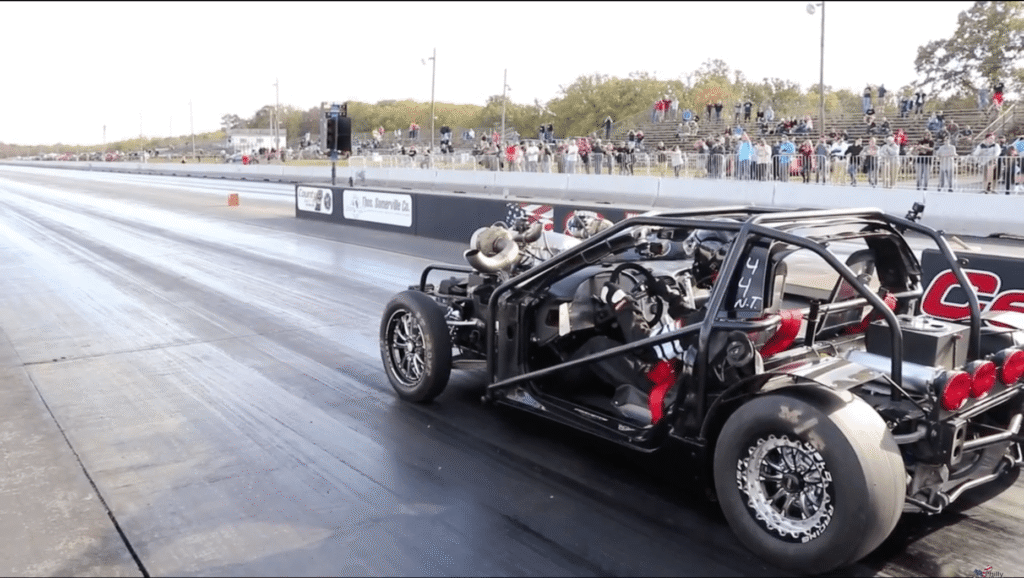
Gravity distortion fields simulate non-linear momentum at high curvature zones. These invisible zones force racers to anticipate gravitational shifts mid-turn. Failure to compensate leads to the infamous “Torque Flip” — a phenomenon where vehicles rotate end-over-end in zero resistance before slamming back onto the surface.
The Societal Impact of the Thrust 500
The Vortex Torque Tempest Thrust 500 is more than a sport — it’s a social revolution. Cities across the globe pause to stream races, while schools introduce torque-based physics in classrooms. Even fashion industries have adopted racing-inspired fabrics that mimic nanofiber composites used in Mach vehicles.
Virtual to Reality: Training Simulations
Before entering the Thrust 500, every racer undergoes 300 hours in a fully neuralized simulation system. The VR rigs recreate g-forces and plasma resistance using magnetic pulse feedback. These simulators are so realistic that players often experience “afterburn echo” — a sensation of momentum even after logging off.
The Mach Federation Archives
Located in Tokyo Mach Federation HQ, the archives preserve blueprints of every Torque generation. The public can access digitized schematics, holographic recreations, and interviews with first-generation engineers. It’s both a museum and a cathedral of speed, visited by millions annually.
Economic Power of High-Speed Culture
The Thrust 500 economy extends beyond racing. Merchandising, streaming rights, and engineering patents form a multi-trillion-credit ecosystem. Entire cities depend on Thrust-related trade — from plasma fuel manufacturing to AI pit crew training facilities.
Crash Recovery and Black Box Analysis
Every vehicle carries a “Torque Core” — a crystalline data black box recording every rotation, heat spike, and thrust anomaly. When crashes occur, engineers retrieve these cores to reconstruct the event in full holographic playback. These reconstructions are used for safety audits and racer training worldwide.
Fan Tribes and Spectator Rituals
Fans of the Thrust 500 form “tribes” dedicated to specific drivers or teams. They gather in massive viewing zones, known as Vortex Arenas, equipped with 360° projectors that simulate the race’s atmosphere and weather. It’s not just fandom — it’s cultural devotion on a planetary scale.
Media Coverage and Commentary
High-speed drone journalists stream every turn in ultra-definition, providing commentary through predictive analytics. The MachCast system uses live data to visualize potential overtakes and mechanical stress points, turning races into cinematic masterpieces streamed via Twitch Racing and YouTube Live.
Safety Suits and Impact Dissipation
Modern pilot suits use liquid nanopolymer cores that harden on impact, dispersing energy across the torso. These “second-skin” systems can withstand forces exceeding 50 Gs. The suits also include microgravity stabilizers that activate in airborne spinouts — saving countless lives per season.
Psychological Warfare in the Race
Competition at Thrust 500 levels is psychological. Pilots deploy “visual pulse strobes” — patterns of light projected from rear spoilers to distract opponents. Others use strategic silence, disabling engine lights to appear invisible in storm zones. It’s as much about the mind as it is about metal.
Artificial Terrain Regeneration
After every race, the Vortex highway regenerates using nanobots embedded in the asphalt. They reseal cracks, rebuild elevation profiles, and recalibrate traction resistance. This self-healing track ensures consistent realism for both live and simulation races.
Sound Barriers and Shockwave Dynamics
When racers breach the Mach sound barrier, shockwaves ripple through the environment. Spectators positioned near resonance points can feel the thunderous vibrations underfoot — a phenomenon known as “the heartbeat of the Thrust.” To some, it’s the soul of speed made audible.
The Future of Torque-Based Racing
As technology evolves, the Mach Federation is testing zero-atmosphere circuits — racing beyond Earth’s limits in orbital rings. The concept, known as the “Tempest Horizon Project,” could redefine not only racing but physics itself. The Vortex Torque Tempest Thrust 500 may one day transcend gravity altogether.
Final Reflections: When Havoc Becomes Art
To witness the Vortex Torque Tempest Thrust 500 is to experience beauty in destruction. Every spark, every scream of metal is a moment of creation through chaos. For racers, it’s more than sport — it’s transcendence. For spectators, it’s the poetry of power unleashed, and for engineers, it’s proof that human imagination still outpaces its own machines.
Frequently Asked Questions About Torque Tempest
1. What is the Torque Tempest and why is it famous?
The Torque Tempest is a high-octane racing event known for its chaotic physics, extreme velocity, and storm-generated track environments. It blends real-world aerodynamics with futuristic propulsion systems, making it one of the most demanding and exhilarating motorsport experiences ever designed.
2. Who created the Torque Tempest concept?
The Torque Tempest was developed by the Mach Federation Engineering Division, a coalition of aerospace engineers and AI physicists dedicated to pushing human reaction limits under extreme velocity conditions.
3. What makes the Torque Tempest different from other speed racing leagues?
Unlike conventional leagues, the Torque Tempest uses dynamic weather simulations, real-time physics distortion, and adaptive AI opponents that evolve based on racer performance. Every lap feels unique, as the storm systems themselves react to driver energy output.
4. Is the Torque Tempest part of the Mach 7 racing circuit?
Yes, the Torque Tempest is one of the crown jewels of the Mach 7 circuit, serving as its longest endurance challenge and a test of aerodynamic precision under hurricane-level torque resistance.
5. What vehicles are used in the Torque Tempest?
Racers use custom-built Vortex-class vehicles with plasma turbines, magnetic thrust stabilizers, and torque-regenerative engines. Each car in the Torque Tempest is hand-forged for maximum G-force endurance and shockwave control.
6. How do racers prepare for the Torque Tempest?
Pilots undergo specialized neural-link training and VR simulation exposure to adapt to the chaotic movement patterns of the Torque Tempest. Mental stamina, reflex optimization, and torque-synchronization drills are part of every driver’s pre-race ritual.
7. Where does the Torque Tempest take place?
The Torque Tempest is hosted across various high-atmospheric circuits and vortex corridors. One of the most iconic venues is the Vortex Highway Arena, an experimental storm-dome built for supersonic endurance trials.
8. Can fans watch the Torque Tempest live?
Absolutely. Fans can stream the Torque Tempest via Speedsrun Live and major platforms like YouTube Live and Twitch. AR overlays and telemetry feeds provide immersive data during each race.
9. What is the average speed in a Torque Tempest race?
Vehicles in the Torque Tempest regularly exceed Mach 4, with top racers reaching Mach 7 during boost sequences. The combination of plasma thrust and aerodynamic compression makes these speeds possible without structural failure.
10. How does the Torque Tempest physics engine work?
The Torque Tempest runs on the Havoc Dynamics Engine, which calculates millions of air pressure vectors per second. This engine realistically simulates atmospheric resistance, heat displacement, and vortex rebound under high torque strain.
11. Are Torque Tempest races dangerous?
Yes, but highly regulated. Despite its brutal speed, the Torque Tempest enforces layered safety protocols like kinetic dampening suits, neural latency stabilizers, and crash energy redistribution fields to prevent catastrophic injury.
12. Who holds the current record in the Torque Tempest?
Legendary racer Lira Voss holds the standing record for the Torque Tempest, achieving an unprecedented lap time of 02:14.921 on the Titan’s Halo course. Her precision and stability remain benchmarks for the entire community.
13. How do players compete in Torque Tempest simulations?
Through Speedsrun Online Tournaments, players can join official Torque Tempest simulations, racing with real telemetry and dynamic weather data pulled from live circuits.
14. Can Torque Tempest be played in VR?
Yes. The Torque Tempest supports full VR immersion using neural latency reduction systems. Players experience real-time G-force feedback and pressure simulation, replicating the sensation of piloting a Mach-class racer.
15. What role does AI play in the Torque Tempest?
AI copilots known as “Torque Sentinels” assist racers in trajectory prediction, boost modulation, and storm navigation. In the Torque Tempest, AI collaboration is often the deciding factor between victory and disaster.
16. How is weather simulated in Torque Tempest tracks?
The Torque Tempest uses meteorological AI to dynamically adjust cloud density, wind vector, and lightning discharge intensity based on racer activity. These feedback loops create living weather that evolves throughout the event.
17. Is Torque Tempest inspired by real physics?
Yes. The Torque Tempest applies actual physics equations derived from supersonic flight studies, including aerodynamic compression, lift decay, and fluid resistance. It’s a hybrid of realism and science fiction engineering.
18. How can newcomers train for the Torque Tempest?
Beginners can train via Speedsrun Training Programs that simulate Torque Tempest conditions in reduced intensity. These programs focus on throttle modulation, slipstream control, and reaction time improvement.
19. What rewards can racers earn in Torque Tempest events?
The Torque Tempest rewards top performers with Plasma Credits, vehicle schematics, and exclusive skins. Winners also gain leaderboard ranking visibility and entry into the elite Mach 7 Grand Circuit.
20. Are there real-world racing teams inspired by Torque Tempest?
Yes, professional sim-racing organizations have formed around Torque Tempest culture, blending esports with high-end engineering. Teams like NovaLance and ExoMach sponsor elite players for global streaming competitions.
21. What kind of soundtrack does the Torque Tempest feature?
The official Torque Tempest soundtrack fuses industrial EDM with cinematic orchestration. Its reactive soundscapes change tempo based on vehicle acceleration, mirroring player adrenaline in real time.
22. How do crashes look in Torque Tempest?
Crashes in the Torque Tempest are fully simulated down to micro-second kinetic detail. Carbon shards, tire fragmentation, and energy flares cascade through the air — a visual blend of destruction and beauty.
23. Can Torque Tempest be played offline?
While the Torque Tempest primarily thrives online, an offline mode allows practice runs and AI battles. However, live data synchronization and leaderboard progression require online connectivity.
24. How does Torque Tempest influence future racing games?
Many modern racing titles have adopted the Torque Tempest model — adaptive AI, dynamic climate systems, and neural feedback mechanics — setting new standards for simulation realism.
25. What’s next for the Torque Tempest series?
The next evolution, rumored as “Torque Tempest: Rift Horizon,” is said to introduce zero-gravity races across orbital platforms. If true, it will redefine what it means to race beyond atmosphere and into the void of space itself.