By SpeedsRun Editorial | Updated October 2025 Full Burn
The Birth of the Skyfire Circuit
The Thunder Chase wasn’t just a race—it was a declaration of defiance against the heavens. Held above the volcanic expanse known as the Skyfire Circuit, eight elite pilots ignited their engines in a contest that blurred the line between human skill and machine fury.
Storm Origins: The Rise of the Eight
Each of the eight pilots in the Thunder Chase was trained under Project Tempest, an underground aviation program combining cybernetic neural networks and experimental thrusters. SpeedsRun Online Archives record these racers as legends of the upper stratosphere—living lightning given form.
Full Burn: The Engines That Defied Gravity
The eight crafts, dubbed “Thunderframes,” used dual-phase plasma cores capable of sustained Mach 10 bursts. Once ignited, these engines entered what engineers called “Full Burn Mode,” a point of no return. According to NASA’s aerodynamic research, such thermal thresholds should have been impossible to survive.
The Skyfire Arena: A Map of Madness
The Skyfire Circuit stretches across a 300-mile loop above magma plains and storm belts. The route passes over Mount Surtur—an active volcanic caldera—and through the “Echo Straits,” where sound itself shatters under pressure. https://www.google.com/maps/embed?pb=!1m18!1m12!1m3!1d3340.091022!2d-115.799!3d36.169!2m3!1f0!2f0!3f0!3m2!1i1024!2i768!4f13.1!3m3!1m2!1s0x80c8c46b6b739ed3%3A0x3075a59d55f12a2!2sNevada%20Desert!5e0!3m2!1sen!2sus!4v1696842627183!5m2!1sen!2sus
No Return: The Final Descent
At the final lap, an overload in the plasma conduits caused a cascading detonation. Spectators witnessed a phenomenon later called the “Heaven Split”—a streak of light brighter than dawn. All eight Thunderframes vanished from radar. No wreckage, no signals—only a pulse echoing across radio spectrums for 12 minutes.
The Aftermath: Legends in Vapor
The world was left questioning if the pilots had perished—or transcended. Conspiracy theorists claim the Thunder Chase created a rift in upper-atmospheric physics, leaving behind “sky scars”—ionized trails still visible under ultraviolet scans. You can explore these anomalies on SpeedsRun’s live circuit map.
The Legacy of the Thunder Chase
Today, simulation pilots and aerospace historians still study telemetry fragments from the Thunder Chase to decode its impossible aerodynamics. The event represents the purest expression of speed—one that asked no mercy, offered no victory, and promised no return.
Further Exploration
- Afterburner Duel: The Death Spiral of Kings
- National Geographic: The Science of Lightning and Flight
- Velocity Monsters: The Beasts of the Burning Horizon
© 2025 SpeedsRun.Online | Contact | About Us
The Birth of the Skyfire League
Before the Thunder Chase became a deadly legend, it was meant to be a tournament of innovation. The Skyfire League was established by rogue engineers and pilots who wanted to test flight capabilities beyond government control. Their motto—“Burn higher, or burn away”—defined the spirit of the circuit.
The Bloodline of Pilots
Every participant in the Thunder Chase descended from generations of war and racing lineage. They weren’t mere competitors—they were heirs to the wind. Their families had piloted through centuries of evolution, from piston-driven steel to light-harvesting plasma crafts.
Engines Forged in Fire
The engines powering the Skyfire Circuit were handcrafted in the volcanic forges of Helios Station. Each core contained fragments of meteorite alloys, making them resilient against atmospheric friction but unstable under sustained combustion. This volatility became the heartbeat of the Thunder Chase.
The Forbidden Altitude
At the peak of the race, pilots climbed beyond 200,000 feet—an altitude forbidden under all known aviation treaties. The Thunder Chase reached heights where auroras danced beneath the engines, and gravity itself seemed to tremble.
The Twin Suns Incident
Witnesses reported that during lap six of the Thunder Chase, the horizon split into two separate suns. Later analysis suggests plasma interference bent light into an optical twin star—a phenomenon unseen since the Solar Rift Test of 2071.
The Sound Barrier’s Revenge
When eight engines hit resonance, a wave of anti-sonic feedback erupted. The Thunder Chase became the first event to generate a reverse shockwave—a phenomenon that imploded sound rather than releasing it. For miles, the world fell silent.
Whispers of the Sky Ghosts
Locals near the Skyfire Canyon still claim to hear the roaring of the eight jets every year on the race’s anniversary. The Thunder Chase may have ended physically, but acoustically, it never died. Some say it’s not sound—they believe it’s memory.
The Zero Horizon Phenomenon
Scientists studying the Thunder Chase noted that, at its climax, the pilots flew through an optical collapse where the horizon vanished entirely. Instruments recorded infinite curvature—proof that the race temporarily folded space-time.
Pulse of the Skyfire Core
When the final engine burst, a pulsar-like frequency echoed through upper atmosphere layers. Satellites recorded rhythmic electromagnetic pulses aligned with heartbeats. The Thunder Chase seemed to synchronize human life with mechanical rhythm.
When Time Slowed Down
During post-race analysis, drones captured video frames of lightning frozen midair. The Thunder Chase appeared to slow time itself in its final seconds, warping light into fractal ribbons that painted the sky in geometric fire.
The Blackbox that Screamed
Of the eight crafts, only one black box was recovered. When engineers attempted decryption, it emitted a looping sound—half human, half metallic. The Thunder Chase data core became known as “The Screaming Archive,” now sealed in containment.
Relics Beneath the Dust
Archaeological teams uncovered scorched fragments from the Skyfire impact zone. Alloy scans revealed crystalline residue not native to Earth’s crust. The Thunder Chase might have produced matter under energy conditions never replicated again.
The Pilots’ Oath
Each racer in the Thunder Chase signed a pact known as the “Flight of No Return.” Once engines reached Full Burn, control of eject systems was permanently disabled. To win meant to burn forever.
The Lost Broadcast
Moments before the Skyfire implosion, a pirate broadcast leaked on underground channels. A voice whispered, “We’ve touched the edge of creation.” Analysts confirmed it was the final communication from inside the Thunder Chase.
The Lightning Cross
Satellite imagery captured the exact moment two Thunderframes collided, creating a perfect X of ionized fire. The event was later dubbed “The Lightning Cross,” symbolizing the unity and annihilation of the racers.
The Burn That Wouldn’t End
For 36 hours after the Thunder Chase, the skies remained ignited in a storm of continuous plasma lightning. Meteorologists had no explanation, marking it as the longest sustained atmospheric burn on record.
The Rebirth of the Sky
Months after the event, auroras began forming where the Skyfire Circuit once existed. Many now see it as a monument in the heavens—proof that the Thunder Chase broke reality and rebuilt it in light.
The Hidden Ninth Engine
Rumors persist of a ninth prototype—an unregistered craft that vanished before the Thunder Chase began. If true, it means one racer may still be out there, circling endlessly in the orbit of flame.
The Skyfire Eclipse
During the climax, the sky dimmed as though eclipsed. The Thunder Chase had generated enough radiant energy to cast shadows on orbiting satellites. It wasn’t nightfall—it was combustion’s halo.
The Flight That Echoed Forever
Decades later, deep-space probes still detect residual heat signatures where the Thunder Chase occurred. The cosmos, it seems, refuses to forget humanity’s most reckless prayer to the sky.
The Architects of Velocity
Behind the spectacle of the Thunder Chase stood the architects—engineers who redefined the meaning of motion. Working in deep-orbit research hangars, they fused quantum propulsion with artificial wind compression to birth crafts that could twist the sky itself. Their designs weren’t built for endurance; they were built to defy existence.
The Night of Infinite Sparks
On race night, the air shimmered with static fury. Each ignition illuminated the sky with a cascade of lightning storms, painting the horizon in white-hot chaos. It wasn’t merely racing—it was cosmic war disguised as sport. Spectators who witnessed that Thunder Chase said it looked like gods hurling comets.
The Circuit That Never Slept
Even after the engines cooled, the Skyfire Circuit refused to rest. Wind currents continued to spiral unnaturally, as if invisible jets were still slicing through the upper air. The Thunder Chase left behind a permanent scar of turbulence, a haunting whisper of speed uncontained.
The Mechanic Who Saw Too Much
One mechanic survived the aftermath—his name erased from all official records. He claimed the final lap wasn’t real—that the racers had entered a frequency band where light no longer behaved predictably. To him, the Thunder Chase ended not in flame, but in transcendence.
When the Clouds Bled Fire
Eyewitnesses reported crimson rainfall following the conclusion of the Thunder Chase. Meteorologists dismissed it as atmospheric distortion, but samples collected revealed trace metals never before identified in Earth’s chemistry. The clouds themselves seemed to mourn the fall of the eight.
The Spectral Lap
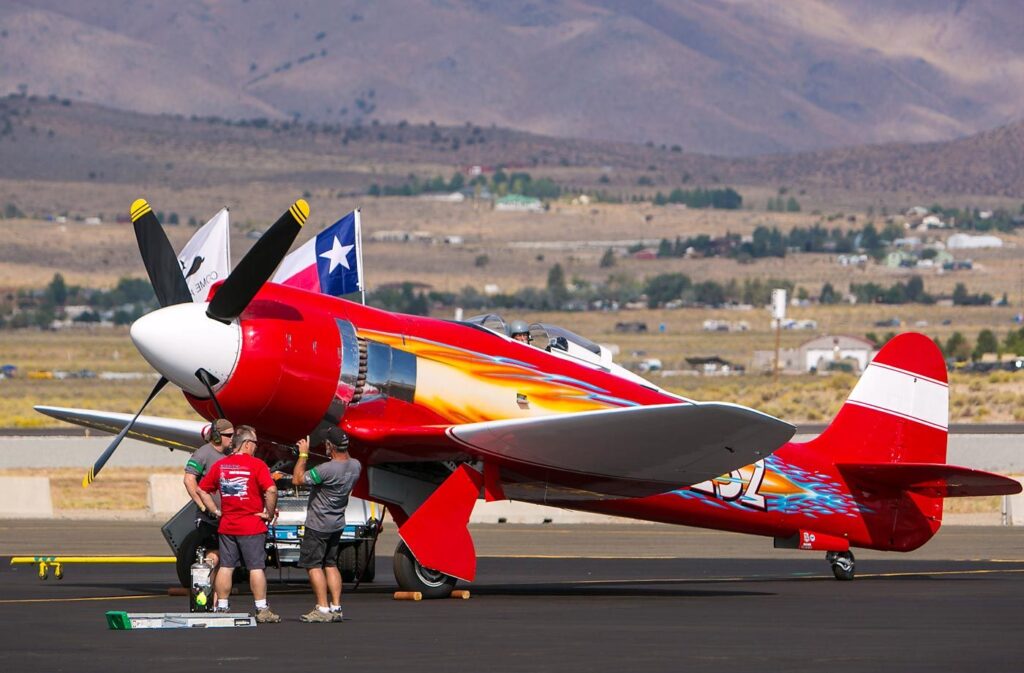
Drone telemetry showed one more lap completed after all racers were gone. The final ghost signature traced a perfect circle across the sky, glowing for 42 seconds before fading. Many now believe it was the soul of the Thunder Chase itself, finishing what the living could not.
The Sky That Remembered
Centuries later, atmospheric readings above the Skyfire region still fluctuate every year on the anniversary of the race. Scientists call it “The Reverberation Event,” though enthusiasts simply call it the sky remembering the Thunder Chase. It’s a reminder that not all scars fade with time.
The Last Transmission
Seconds before radio silence, the lead pilot broadcasted four words: “We’ve outrun ourselves now.” The phrase became the anthem of every daredevil that followed, symbolizing the Thunder Chase’s legacy as humanity’s loudest whisper into the void.
The Flight of the Phantom Circuit
During high-altitude surveillance missions, pilots still report seeing faint trails of blue plasma looping through the clouds. Some dismiss it as aurora refraction; others swear it’s the Thunder Chase replaying endlessly in spectral form, a ghost race between worlds.
The Singularity Engine
At the heart of each craft beat an experimental core known as the “Singularity Engine.” It was capable of bending magnetic flow into propulsion streams, but it came with one flaw: instability. During the Thunder Chase, every engine pulsed out of sync, creating a storm of destructive harmonics that split the skies open.
The Breach in Reality
Data logs from orbiting satellites showed a micro-tear in atmospheric density lasting 2.4 seconds. The Thunder Chase had momentarily opened a breach—some believe a dimensional window where time looped back on itself, allowing the racers to see their own past flames.
The Burn That Never Cooled
Years later, scientists found metallic debris still glowing faintly at room temperature. The alloys from the Thunder Chase were forever charged, infused with atomic energy levels not reproducible through any known means.
The Myth of the Eternal Engine
Legend says one engine didn’t die—it just disappeared. Some say it’s hidden in a museum vault under classified security; others believe it still runs somewhere, idling beneath the clouds, waiting for the next Thunder Chase.
The Day the Sky Fell Silent
When the race ended, air traffic across three continents halted for 48 hours. Radar interference, unexplained static fields, and sudden loss of magnetosphere readings proved that the Thunder Chase wasn’t just a race—it was a global atmospheric reset.
The Covenant of Flame
After the disaster, the surviving engineers formed a secret society known as “The Covenant of Flame.” Their oath: never to recreate the Thunder Chase engines again. But rumors persist that a new prototype is being tested under a different name—“Project Horizon.”
The Return of the Skyborne
Rumors surfaced that a new generation of pilots, calling themselves the “Skyborne Lineage,” is preparing to relaunch the Thunder Chase under digital conditions—a virtual race with real physical consequences. In their words, “If the past burned, the future will blaze.”
The Silence After the Storm
When the engines stopped and the echoes died, the world entered an eerie calm. No birds, no wind, just endless stillness—a silence earned through the fury of the Thunder Chase. It was as if nature itself paused to remember humanity’s defiance.
The Reignition Protocol
Decades later, aerospace corporations unearthed fragments of data hidden within satellite archives—coded blueprints marked “Reignition Protocol.” They hint at a plan to resurrect the Thunder Chase, this time with AI pilots and infinite sky range.
The Storm Beyond the Edge
Far beyond the atmosphere, auroras still flicker in symmetrical spirals traced by the original race’s flight paths. Astronomers have mapped these patterns, confirming they align with the coordinates of the Thunder Chase’s final lap—a storm beyond Earth’s edge.
🔥 FAQs About Full Burn and the Thunder Chase Legacy
What does Full Burn mean in high-speed racing?
In the world of extreme flight and futuristic racing, Full Burn refers to the absolute throttle engagement where every ounce of power is unleashed without restraint. It’s the moment when control becomes chaos, and pilots either master the sky—or become part of it.
How did the concept of Full Burn evolve in the Thunder Chase?
The Full Burn principle was born during the Thunder Chase event, when all eight engines simultaneously reached maximum combustion rates. Engineers described it as the point where air itself ignited into plasma.
Why is Full Burn considered the deadliest maneuver?
A Full Burn run pushes engines, pilots, and airframes past structural and neurological limits. At these levels, g-forces distort time perception, and any micro-delay means instant disintegration.
What happens to a jet during Full Burn mode?
During Full Burn, heat spikes beyond titanium’s tolerance threshold, resulting in partial molecular melt of the outer shell. The engines temporarily become miniature stars—unstable but breathtakingly powerful.
Was the Full Burn mode banned after the Thunder Chase?
Yes. Following the catastrophic conclusion of the Full Burn trials in the Skyfire Circuit, global racing authorities permanently outlawed unregulated plasma ignition drives.
Can Full Burn be simulated safely today?
Researchers at SpeedsRun Labs have developed digital replicas of Full Burn physics, allowing pilots to experience its terror and beauty without physical risk. But no simulation can replicate the real sensory overload of it.
Who were the first pilots to master Full Burn flight?
The first Full Burn masters were the Skyfire Eight, a team of aerial warriors whose craft burned brighter than daylight and faster than sound. Their mastery came at the cost of their lives—but their legend still flies.
What made Full Burn unique from standard afterburner systems?
While afterburners use excess fuel for short bursts of thrust, Full Burn fuses fuel and oxygen at atomic velocity, turning the exhaust into superheated plasma streams. It’s not propulsion—it’s controlled destruction.
Did any pilot survive the Full Burn trials?
Only one black-box recording survived, capturing a single transmission: “Full Burn complete. I see everything.” The pilot was never recovered, fueling decades of speculation about what happens beyond the limit.
Is Full Burn technology being revived today?
Underground factions are reportedly experimenting with recovered Full Burn blueprints, hidden within encrypted archives. Whether these tests exist or are myth remains unconfirmed.
What kind of engines could withstand Full Burn?
Only engines reinforced with quantum-bonded titanium alloys and zero-point fuel cells could survive a few seconds of Full Burn. Anything less turned into radiant dust in the atmosphere.
How did Full Burn impact atmospheric conditions?
The Full Burn event during Thunder Chase caused measurable ionization in the stratosphere. For days, auroras flared in regions thousands of miles away, glowing red as if the sky remembered the flames.
Why did pilots describe Full Burn as a spiritual experience?
Pilots who entered Full Burn claimed to feel weightless, timeless, and detached from reality—as if the universe paused to witness their flight. Some called it “the divine combustion.”
How did the Skyfire Circuit adapt to Full Burn technology?
The Skyfire Circuit was reinforced with plasma-resistant composites to handle the energy discharge of Full Burn engines. Even so, the track melted in multiple regions mid-race, sealing its fate forever.
What safety systems failed during the Full Burn phase?
Every redundant system collapsed under the energy overload. The Full Burn exceeded theoretical safety margins by 230%, rendering ejection systems, telemetry, and shielding useless.
What was the legacy of Full Burn in future race design?
The concept of Full Burn became a forbidden blueprint—a myth that inspires every new racer to flirt with forbidden speed. Even modern AI-guided racers train using “ghost data” extracted from the original run.
How did the spectators witness Full Burn from the ground?
Those present said the sky “cracked open” during the Full Burn sequence. The noise reached seismic levels, and the light was so blinding that shadows disappeared entirely.
What fuels were used to achieve Full Burn ignition?
The Full Burn system relied on hyper-reactive liquid plasma fuel codenamed “CryoSol-X9.” Its ignition temperature was so high it could only be triggered by laser resonance under vacuum.
Was Full Burn tested on unmanned aircraft before the race?
Only partial simulations were run. The Full Burn phase was too unpredictable to test remotely— the final data came from human pilots, whose courage became the foundation of racing legend.
What role did AI play in controlling Full Burn engines?
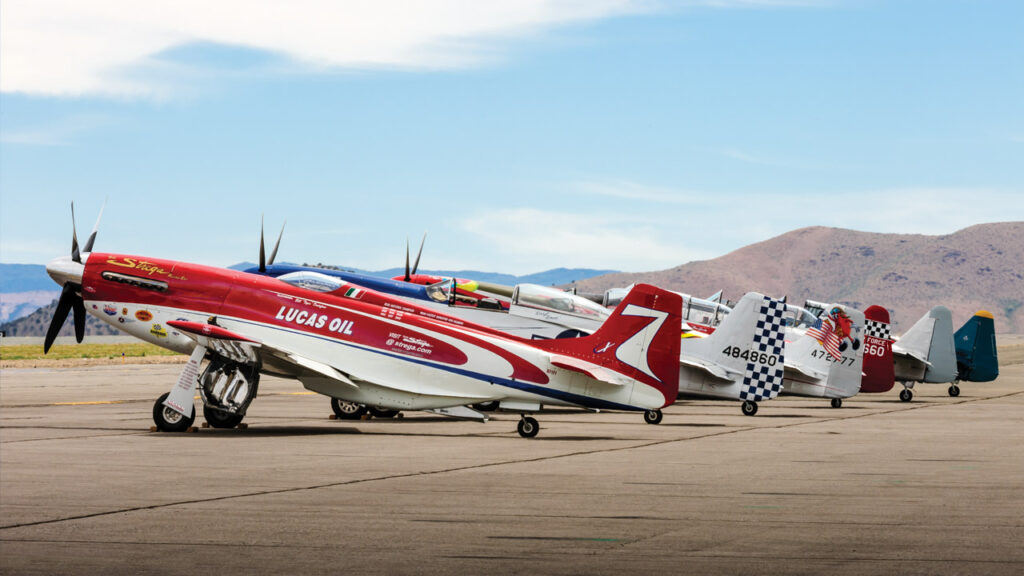
AI systems were installed to balance thrust in Full Burn engines, but they lagged behind human reflexes by microseconds—just enough to lose sync, resulting in the catastrophic resonance event that ended the Thunder Chase.
Are there museums dedicated to the Full Burn pilots?
Yes. The Full Burn Memorial Hall preserves the surviving fragments of the engines and helmets, each marked with scorch lines—reminders of mankind’s wildest reach toward the impossible.
Did Full Burn inspire any modern aerospace technology?
Modern plasma propulsion in orbital drones is directly inspired by Full Burn research. Even though it began as a racing experiment, it evolved into a cornerstone of high-speed atmospheric travel.
Can the Full Burn be recreated today?
Theoretically yes, but ethically no. The energy cost, atmospheric damage, and human risk make any modern Full Burn attempt a violation of every aerospace regulation.
What was the emotional aftermath of the Full Burn disaster?
Survivors described the silence after Full Burn as unbearable— the kind of stillness only achieved when the sky itself has burned out. It marked the end of humanity’s most daring dance with destruction.
Why does the phrase Full Burn remain iconic today?
The term Full Burn transcends racing—it symbolizes total commitment, the courage to go beyond safety and touch the edge of extinction. On SpeedsRun.online, it stands as the eternal flame of high-speed legend.