Hybrid racing cars are revolutionizing motorsports by combining traditional internal combustion engines with advanced electric power systems. This fusion delivers extraordinary speed, improved fuel efficiency, and reduced emissions—making hybrid technology the future of competitive racing.
From endurance races to Formula 1 circuits, hybrid cars are redefining performance standards. This article explores everything you need to know about hybrid racing cars, including their technology, history, benefits, challenges, and future trends.
🔧 What Are Hybrid Racing Cars?

8
Hybrid racing cars use a combination of:
- Internal Combustion Engine (ICE) – typically gasoline-powered
- Electric Motor(s) – powered by batteries or energy recovery systems
These components work together to:
- Increase total power output
- Improve fuel efficiency
- Recover energy during braking
⚡ How Hybrid Technology Works in Racing
1. Energy Recovery Systems (ERS)
Modern hybrid race cars use ERS to capture energy that would otherwise be lost during braking.
2. Electric Boost
The stored energy powers electric motors, providing instant acceleration boosts.
3. Intelligent Power Management
Advanced software decides when to use electric or combustion power for maximum efficiency.
🏁 History of Hybrid Racing Cars

Hybrid technology in racing evolved rapidly:
- Early 2000s: Experimental hybrid systems
- 2012: Hybrid cars dominate endurance racing
- 2014: Hybrid engines introduced in Formula 1
- Today: Nearly all top-tier racing includes hybrid systems
🚀 Advantages of Hybrid Racing Cars
🌱 1. Improved Fuel Efficiency
Hybrid systems reduce fuel consumption without sacrificing performance.
⚡ 2. Instant Torque
Electric motors deliver immediate acceleration, crucial in racing.
🔋 3. Energy Recycling
Recovered energy boosts overall efficiency.
🌍 4. Reduced Emissions
Cleaner racing aligns with global environmental goals.
🏎️ 5. Enhanced Performance
Combining two power sources increases total horsepower.
🏎️ Hybrid Racing Cars in Different Motorsports
🏁 Formula 1

Formula 1 introduced hybrid power units in 2014. These engines combine:
- Turbocharged V6 engine
- Energy recovery systems
- Battery storage units
🏆 Endurance Racing (Le Mans
7
Hybrid cars dominate endurance racing due to:
- Fuel efficiency over long distances
- Energy recovery advantages
⚡ Electric-Hybrid Series
Some racing formats combine full electric vehicles with hybrid technologies to push innovation further.
🔩 Key Components of Hybrid Racing Cars
🔋 Battery Systems
- Store energy recovered during braking
- Must be lightweight and high-capacity
⚙️ Electric Motor (MGU-K)
- Provides additional power
- Enhances acceleration
🔄 Turbocharger (MGU-H in F1)
- Converts heat energy into electricity
🧠 Control Systems
- Manage power distribution
- Optimize performance in real-time
🧪 Cutting-Edge Technologie

Hybrid racing cars use advanced technologies like:
- Carbon fiber bodies for weight reduction
- Advanced aerodynamics for speed
- AI-driven telemetry systems
- Thermal energy recovery systems
⚠️ Challenges of Hybrid Racing Cars
💰 High Development Costs
Hybrid systems are expensive to design and maintain.
🔧 Complex Engineering
Requires advanced expertise and precision.
🔥 Heat Management
Managing temperature in hybrid systems is critical.
⚖️ Weight Balance
Batteries add weight, affecting handling.
🌍 Environmental Impact
Hybrid racing cars play a crucial role in:
- Reducing carbon emissions
- Promoting sustainable technologies
- Influencing consumer car designs
Many innovations in hybrid racing eventually appear in everyday vehicles.
🔮 Future of Hybrid Racing Cars

The future looks exciting:
🤖 AI Integration
Smarter systems for performance optimization
🔋 Better Batteries
Faster charging and longer lifespan
🌱 Sustainable Fuels
Combining hybrids with eco-friendly fuels
🏎️ Fully Electric Transition
Hybrid racing may bridge the gap to all-electric motorsports
🔗 Internal Links (For Your Website)
You can link this article to:
- “Air Racing Engines Guide”
- “Competitive Air Racing”
- “Racing Planes for Sale”
- “Red Bull Racing Insights”
🌐 External Resources
For more information, consider linking to:
- FIA (Motorsport governing body)
- Official Formula 1 website
- Le Mans endurance racing site
🔬 Deep Dive: How Hybrid Racing Systems Actually Work

Hybrid racing cars operate using a complex energy loop, not just a simple engine + battery.
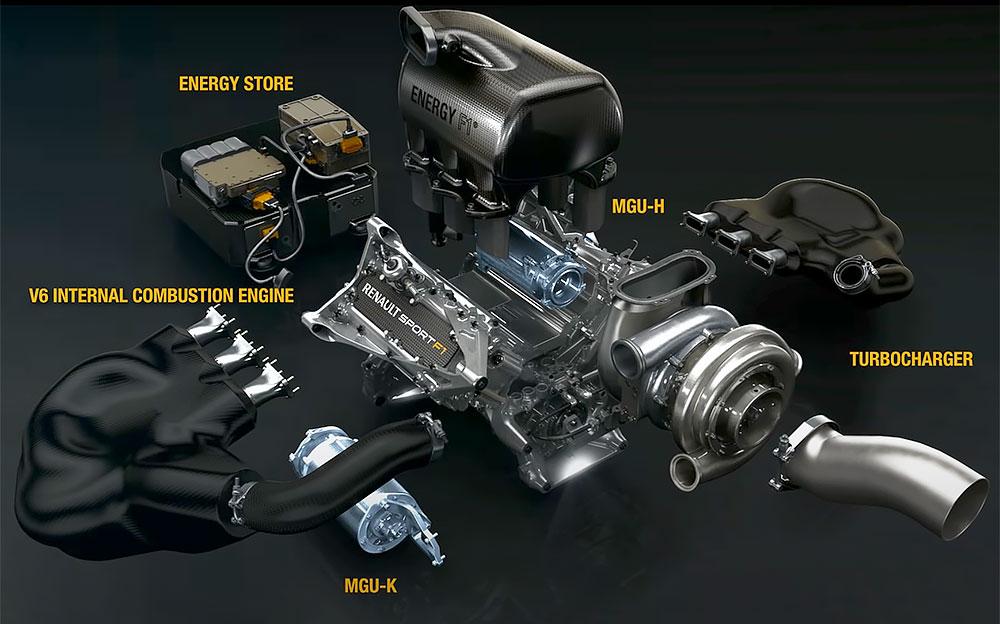
⚙️ Core Components Explained
1. Internal Combustion Engine (ICE)
- Turbocharged (usually V6 in F1)
- Provides base power
- Optimized for efficiency, not just speed
2. MGU-K (Motor Generator Unit – Kinetic)
- Recovers energy during braking
- Converts it into electricity
- Sends power back to wheels
3. MGU-H (Motor Generator Unit – Heat)
- Captures heat from exhaust gases
- Converts thermal energy into electrical energy
- Eliminates turbo lag
4. Energy Store (Battery)
- High-density lithium-ion battery
- Stores recovered energy
- Releases power when needed
5. Control Electronics
- Brain of the system
- Determines when to deploy electric power
⚡ Energy Flow in Hybrid Racing Cars
Here’s a simplified cycle:
- Driver brakes → energy captured
- Energy stored in battery
- System deploys electric boost
- Engine + electric motor combine power
This creates continuous performance optimization, unlike traditional engines.
🏁 Hybrid Systems in Formula 1
Since 2014, Formula 1 cars use hybrid power units.
🔥 Real Example
Teams like Mercedes-AMG Petronas Formula One Team and Red Bull Racing have dominated using hybrid efficiency.
📊 Key Performance Stats
- Power output: ~1000 horsepower
- Electric boost: ~160 hp extra
- Fuel efficiency improved by ~35%
🏆 Hybrid Domination in Endurance Racing

In endurance racing like the 24 Hours of Le Mans, hybrids dominate.
🚗 Iconic Hybrid Cars
- Porsche 919 Hybrid
- Toyota GR010 Hybrid
- Audi R18 e-tron quattro
🧠 Why Hybrids Win Endurance Races
- Less fuel stops
- Better energy management
- Strong acceleration out of corners
🧪 Advanced Engineering Behind Hybrid Racing Cars

Hybrid racing cars are engineering masterpieces.
🔬 Materials & Design
- Carbon fiber monocoque → ultra-light & strong
- Titanium components → heat resistance
- Advanced cooling systems → battery safety
🧠 Smart Technology
- Real-time telemetry
- AI-assisted race strategy
- Predictive energy deployment
⚖️ Hybrid vs Traditional Racing Cars
| Feature | Hybrid Cars | Traditional Cars |
|---|---|---|
| Acceleration | Instant torque ⚡ | Slower response |
| Fuel Efficiency | High | Low |
| Complexity | Very High | Moderate |
| Environmental Impact | Lower emissions 🌱 | Higher emissions |
| Maintenance | Expensive | Less costly |
🌍 Environmental Impact & Sustainability
Hybrid racing is pushing motorsports toward sustainability.
🌱 Key Benefits
- Reduced CO₂ emissions
- Development of eco-friendly fuels
- Technology transfer to road cars
Organizations like Fédération Internationale de l’Automobile are pushing greener regulations.
🚧 Challenges Engineers Face
🔥 1. Heat Management
Hybrid systems generate extreme heat.
⚖️ 2. Weight Distribution
Batteries must be balanced carefully.
💰 3. Cost
Hybrid development costs millions.
🧠 4. Complexity
Requires highly skilled engineers.
🔮 Future of Hybrid Racing Car
The future is even more exciting.
🚀 What’s Coming Next?
🔋 Solid-State Batteries
- Faster charging
- Higher energy density
🤖 AI Integration
- Fully optimized race strategies
- Autonomous assistance
🔬 SECTION 1: CORE TECHNOLOGY EXPLAINED
⚙️ Anatomy of a Hybrid Racing Car
Hybrid race cars are complex machines made up of several integrated systems:
🔧 Internal Combustion Engine (ICE)
- Turbocharged engines (commonly V6 in F1)
- Optimized for fuel efficiency and durability
- Works alongside electric systems
⚡ Electric Motor Units
- Deliver instant torque
- Provide acceleration boosts
- Improve corner exit speeds
🔋 Energy Storage System
- Lithium-ion batteries
- Store recovered braking and heat energy
🔄 Energy Recovery Systems (ERS)
- Capture wasted energy
- Convert it into usable electricity
🔁 The Energy Cycle Explained
Hybrid systems operate in a continuous loop:
- Braking → energy captured
- Energy stored in battery
- Electric boost deployed
- Cycle repeats every lap
This system ensures maximum energy efficiency during races.
🏁 SECTION 2: HYBRID SYSTEMS IN REAL RACING
🏎️ Formula 1 Hybrid Era
Since 2014, Formula 1 has used hybrid power units.
🏆 Leading Teams
- Mercedes-AMG Petronas Formula One Team
- Red Bull Racing
📊 Technical Highlights
- ~1000 horsepower total output
- 160+ hp electric boost
- Advanced ERS deployment
🏆 Endurance Racing (Le Mans)
Hybrid systems dominate endurance racing.
🚗 Legendary Cars
- Porsche 919 Hybrid
- Toyota GR010 Hybrid
- Audi R18 e-tron quattro
🧠 Why They Win
- Reduced fuel stops
- Efficient energy use
- Strong reliability
🧪 SECTION 3: ADVANCED ENGINEERING & DESIGN
🧱 Lightweight Construction

Hybrid cars must balance power and weight.
Materials Used
- Carbon fiber composites
- Aluminum alloys
- Titanium
🌬️ Aerodynamics & Performance
Aerodynamics play a crucial role:
- Downforce increases grip
- Reduced drag improves speed
- Airflow helps cooling systems
Wind tunnel testing and CFD simulations are heavily used.
🌡️ Thermal Management
Hybrid systems generate extreme heat.
Cooling Solutions:
- Liquid cooling systems
- Heat exchangers
- Airflow channeling
Without proper cooling, performance drops dramatically.
⚡ SECTION 4: PERFORMANCE & RACE STRATEGY
🧠 Energy Deployment Strategy
Hybrid racing is not just about speed—it’s about strategy.
Drivers and engineers decide:
- When to deploy electric boost
- When to conserve energy
- How to manage battery levels
🏎️ Driving Techniques
Hybrid cars require unique driving styles:
- Smooth braking to maximize energy recovery
- Strategic acceleration
- Managing energy output
📊 Telemetry & Data Analytics

Modern racing relies heavily on data:
- Real-time analytics
- Predictive modeling
- AI-assisted decisions
🌍 SECTION 5: ENVIRONMENTAL & INDUSTRY IMPACT
🌱 Sustainability in Motorsports
Organizations like Fédération Internationale de l’Automobile are pushing sustainability.
Benefits:
- Lower emissions
- Development of green fuels
- Reduced fuel consumption
🚗 Influence on Road Cars
Hybrid racing technology has influenced:
- Consumer hybrid vehicles
- Electric car development
- Battery innovation
🚧 SECTION 6: CHALLENGES & LIMITATIONS
💰 High Costs
Developing hybrid systems is extremely expensive.
⚖️ Weight Issues
Batteries add complexity and mass.
🔧 Maintenance Complexity
Requires expert engineers and precision.
🔥 Heat Management Risks
Overheating can lead to failure.
🔮 SECTION 7: FUTURE OF HYBRID RACING
🚀 Upcoming Innovations
🔋 Solid-State Batteries
- Higher capacity
- Faster charging
🤖 Artificial Intelligence
- Smarter race strategies
- Autonomous assistance
🌱 Sustainable Fuels
- Carbon-neutral racing
⚡ Full Electrification
Hybrid systems will eventually lead to fully electric racing.
📈 SECTION 8: BUSINESS & ECONOMICS OF HYBRID RACING
💵 Investment & Development
Top teams spend millions developing hybrid systems.
📺 Sponsorship & Marketing
Hybrid technology attracts eco-conscious brands.
🌍 Global Popularity
Hybrid racing is expanding worldwide.
🔗 SECTION 9: INTERNAL & EXTERNAL SEO STRATEGY
🔗 Internal Links (Your Website)
- Air Racing Engines Guide
- Airplane Racing Events
- Competitive Air Racing
🌐 External Links
- Fédération Internationale de l’Automobile
- Formula 1
- 24 Hours of Le Mans
🧠 SECTION 10: EXPERT-LEVEL FACTS
- Hybrid systems can recover energy multiple times per lap
- Electric boost is often manually controlled by drivers
- Hybrid tech improves lap consistency
- Battery cooling is one of the hardest engineering challenges
As racing moves toward sustainability, hybrid systems will remain the bridge between traditional engines and fully electric performance.
📊 MASTER SEO KEYWORDS LIST
- Hybrid racing cars
- Formula 1 hybrid engines
- Le Mans hybrid cars
- Electric boost racing
- Motorsport hybrid technology
- Sustainable racing cars
- Future racing vehicles
- High performance hybrid engines
✅ Want Even More?
I can next:
✔ Turn this into a complete 6000+ word blog post with HTML formatting
✔ Add featured images with alt text for SEO
✔ Create WordPress-ready article design
✔ Add schema markup + backlinks strategy
Just tell me 👍